The SpaceX IPO Was the Signal. Hard Tech Is the Story.
SpaceX's record-breaking $160 debut created the first trillionaire and turned thousands of engineers into millionaires. But the real story is what it means for capital markets and hard tech startups.
SpaceX listed on the Nasdaq on June 12, 2026. It was the largest IPO in history, and also the least conventional one.
At $135 per share, almost no one could actually buy at the offering price. Bloomberg reported 4x oversubscription, meaning external institutional investors missed their allocations and had to chase the mere 4% float on the open market. The stock opened at $150, hit $176 intraday, and closed at $160.95 — up 19%. Market capitalization reached nearly $2.3 trillion.
But the headline numbers are not the most interesting part. The structure behind them is.
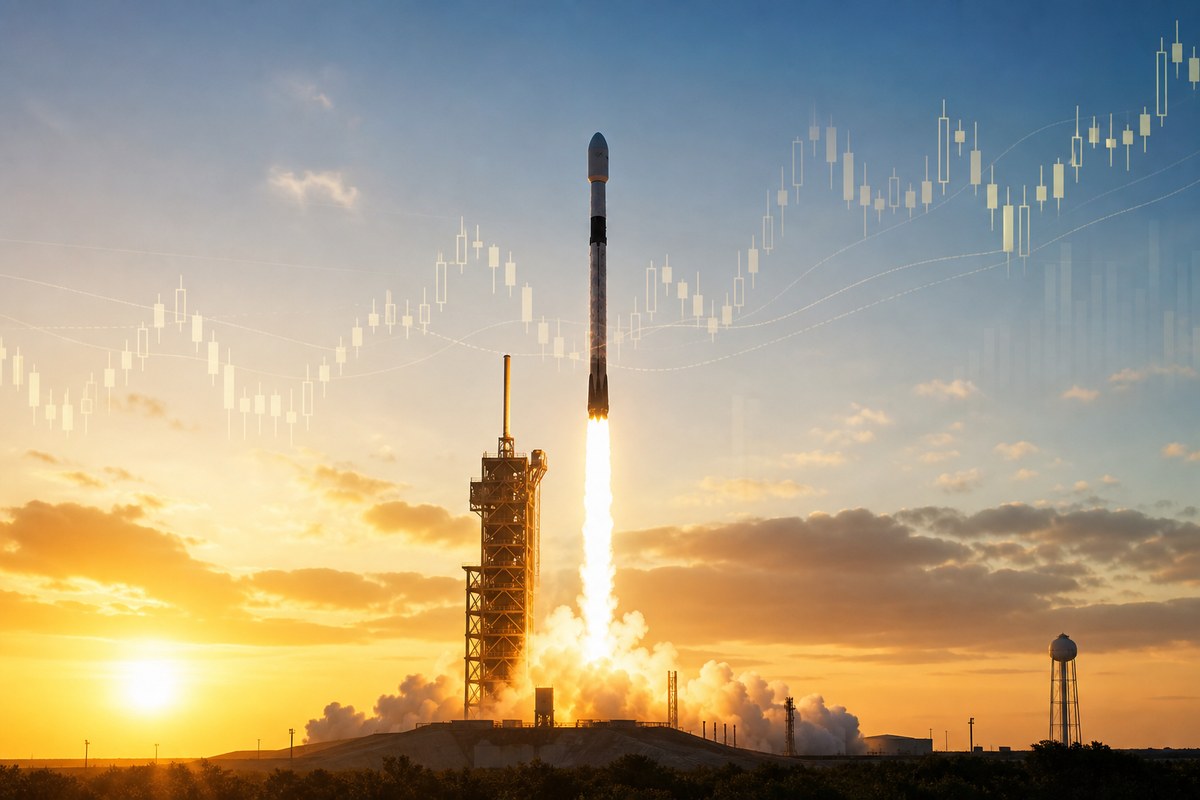
SpaceX did something unprecedented: it made index rules change before its listing
Normally, a newly public company must wait months before being added to major indices. SpaceX compressed that timeline to days by successfully lobbying multiple index organizations to change their inclusion rules. This means passive funds and large institutions must buy in bulk within a short window, compounding upward price pressure.
This is a textbook case of a private company controlling supply and demand before even going public. SpaceX also resolved all major litigation risks before the IPO. The institutional order book was essentially “buy what you can, ask questions later.”
Wealth distribution: the biggest venture payday in history
The opening price made Elon Musk the world’s first trillionaire. His wealth comes from his 42% stake in SpaceX combined with his holdings in xAI and Tesla.
But the venture capital returns are equally staggering, based on the IPO price:
- Founders Fund (invested $600M, owns 3%): stake worth over $50B — an 83x return
- Sequoia Capital: stake worth over $20B
- Andreessen Horowitz: stake worth over $10B
More interesting than the VC numbers are the employee figures. The New York Times reported that about 4,400 current and former SpaceX employees became millionaires, and roughly 400 became centimillionaires. SpaceX employs roughly 23,000 people, meaning nearly 20% of the workforce just achieved financial independence.
This will have a lasting impact on the space talent market. When hundreds of engineers suddenly have millions of dollars, do they keep working or start companies? History suggests the latter. When Palantir went public in 2020, dozens of former employees founded data analytics startups. The “space startup ecosystem” is about to accelerate sharply.
Three technology lines justify the $2.3 trillion valuation
The market is not pricing SpaceX on brand. It is pricing three distinct hard-tech pathways:
Starship
Fully reusable heavy-lift launch vehicle — the technical core of every SpaceX business. Per-launch cost has dropped to the single-digit millions. Higher reusability means higher launch frequency, which changes the unit economics of the entire space economy. Not a feature improvement; a structural cost rewrite.
Starlink
Several million subscribers globally for satellite broadband. This is SpaceX’s most predictable revenue stream. With second-generation satellites deploying, bandwidth and latency will improve further. Long term, Starlink could compete with terrestrial 5G/6G, especially in low-density regions and cross-border connectivity. Analysts estimate a standalone valuation between $50B and $80B.
Orbital data centers
SpaceX’s most speculative line — running data centers in orbit. If viable, it solves terrestrial data centers’ energy and land constraints while offering low-latency global data processing. Still in concept validation, but already attracting cloud computing giants’ attention.
The merger rumor nobody is ignoring
SpaceX president Gwynne Shotwell publicly hinted at a possibility that changes everything: SpaceX merging with Tesla.
A merged entity would span electric vehicles, space transport, satellite internet, AI computing, and humanoid robots. The narrative practically writes itself: Tesla’s autonomous driving data processed in orbit, Starlink providing global connectivity, Starship enabling intercontinental rapid transport, and Optimus robots operating in SpaceX factories.
Risks are real: antitrust scrutiny, combined debt exceeding $100B, and the cultural clash between an aerospace company and an automotive one. But the market has started pricing this possibility in.
Signal: the hard-tech premium era
SpaceX’s IPO is a signal of a deeper shift — capital markets are paying a premium for hard tech that they previously reserved for software platforms.
For the last decade, the highest-valued companies were all software: Microsoft, Google, Meta. Their common traits were asset-light, high-margin, globally scalable. SpaceX inverts all of that: capital-intensive, low-margin-at-scale, cyclical, physically constrained.
The market gave it nearly $2.3 trillion anyway. That means investor taste is undergoing a fundamental rotation. For founders, this means a new window: raising capital for hard tech — space, biotech, energy, robotics — may be getting easier.
In a way, SpaceX’s IPO is the hard-tech equivalent of the iPhone moment for mobile startups. Not the peak of the trend, but the moment the trend becomes visible to everyone.
Sources: TechCrunch, Wired, Bloomberg, The New York Times
Morning Briefing: Greenspan, SpaceX, Hormuz Strait, and the Global Economy
Alan Greenspan dies at 100, SpaceX sheds $400bn, 400+ ships queue near Hormuz, and America's allies look to go independent — a round-up of the day's top economic stories.

Nietzsche’s Philosophy
What remains when inherited sources of truth, morality, and meaning lose their authority?
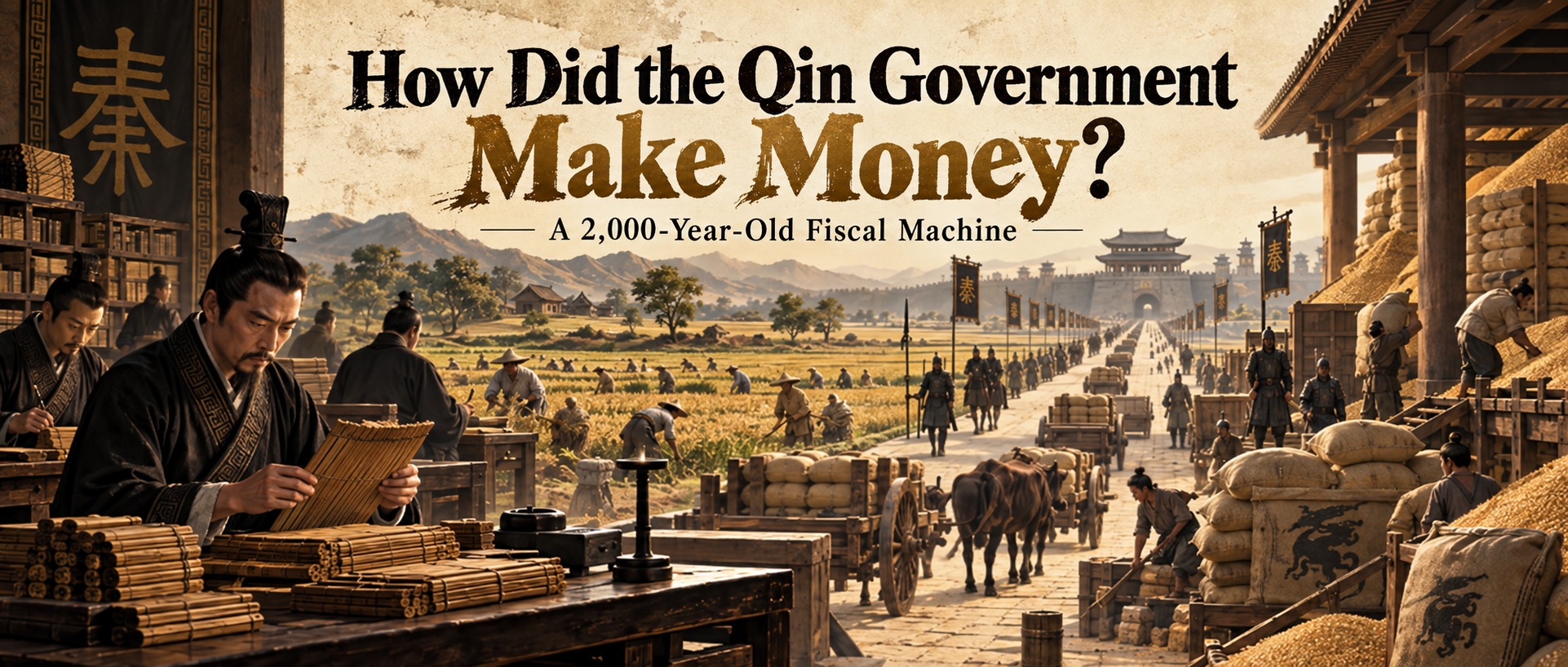
From Land Taxes to Corvée Labor: How Qin Funded an Empire
Qin had no modern income taxes or bond market. Its fiscal power came from turning land, households, grain, labor, and military manpower into resources the state could identify and mobilize.