Pakistan and the New Rules of a Multipolar World
Pakistan shows how middle powers use geography, security capacity, cross-border networks and diplomacy to create strategic room without rigid alignment.
To understand a multipolar world, stop asking only which side a country is on. Ask how many different actors need it for different reasons.
01 Why Pakistan Is a Useful Lens on Multipolarity
When people discuss the world order, attention usually gravitates toward the largest powers: who is rebuilding alliances, who controls technology, and who is rewriting the rules of trade and security. Yet the shape of the next international system will not be determined by major powers alone. A growing group of states located at strategic crossroads, equipped with specialized capabilities and cross-border networks, are using great-power rivalry to create room for themselves.
Pakistan is an unusually revealing case. It is often associated with economic stress, political instability, military influence and persistent security crises. By conventional measures, it seems an unlikely candidate for rising international influence. But it has never become irrelevant. It possesses nuclear weapons, a large military, a location linking South Asia, Central Asia, the Middle East and the Indian Ocean, and long-standing relationships with the United States, Iran, the Gulf states and Turkey.
Recent diplomatic activity has renewed attention to Pakistan’s capacity to communicate across rival camps. The broader lesson is more important than any single negotiation: internal weakness does not automatically erase external leverage. Geography, security capabilities and relationships can give a country influence far beyond what its economic size would suggest.
02 A Middle Power Is Not a Smaller Great Power
The term “middle power” is not simply a ranking based on GDP. It describes a role. Middle powers cannot dictate global rules on their own, but they can shape specific regions, issues and coalitions in ways that exceed their overall size.
Great powers rely on comprehensive strength. Middle powers rely on specialization. One controls energy, another a maritime chokepoint, another advanced military capabilities, and another the ability to connect actors that do not trust each other. They do not need to be strong everywhere. They need to be difficult to bypass somewhere.
Pakistan combines several forms of leverage. Geography provides corridor value. Military capabilities secure a seat at the table. Religious, labor and remittance networks create durable ties. Decades of dealing with competing partners have also produced diplomatic experience. Pakistan may not design the global system, but it can serve as a connector, buffer and messenger within it.
03 Pakistan’s Four Sources of Leverage
The first is geography. Pakistan sits at the intersection of several regions and opens onto the Indian Ocean near some of the world’s most sensitive energy routes. Geography does not automatically produce prosperity, but it continually generates strategic value in trade, transport, energy security and military planning.
The second is security capacity. Nuclear deterrence, a large standing military, combat aircraft, missiles and decades of counterterrorism experience give Pakistan a security profile far above that of a typical developing country. Reuters, citing the International Institute for Strategic Studies, reported roughly 660,000 active personnel and an estimated nuclear stockpile of around 170 warheads. External powers may disagree with Pakistan’s domestic politics, but they cannot treat it as irrelevant.
The third is cross-border networks. Labor migration, remittances, religious connections and long-standing security partnerships bind Pakistan to the Gulf at more than the governmental level. Contracts can be rewritten and leaders replaced, but networks built through households, employment and security dependence are harder to dissolve.
The fourth is communication. A mediator does not have to be universally admired. It must be able to speak with actors that refuse to speak directly to one another. Pakistan’s decades of shifting relationships have been costly and controversial, but they have also created channels. Much of its influence comes from remaining able to carry messages when others cannot.
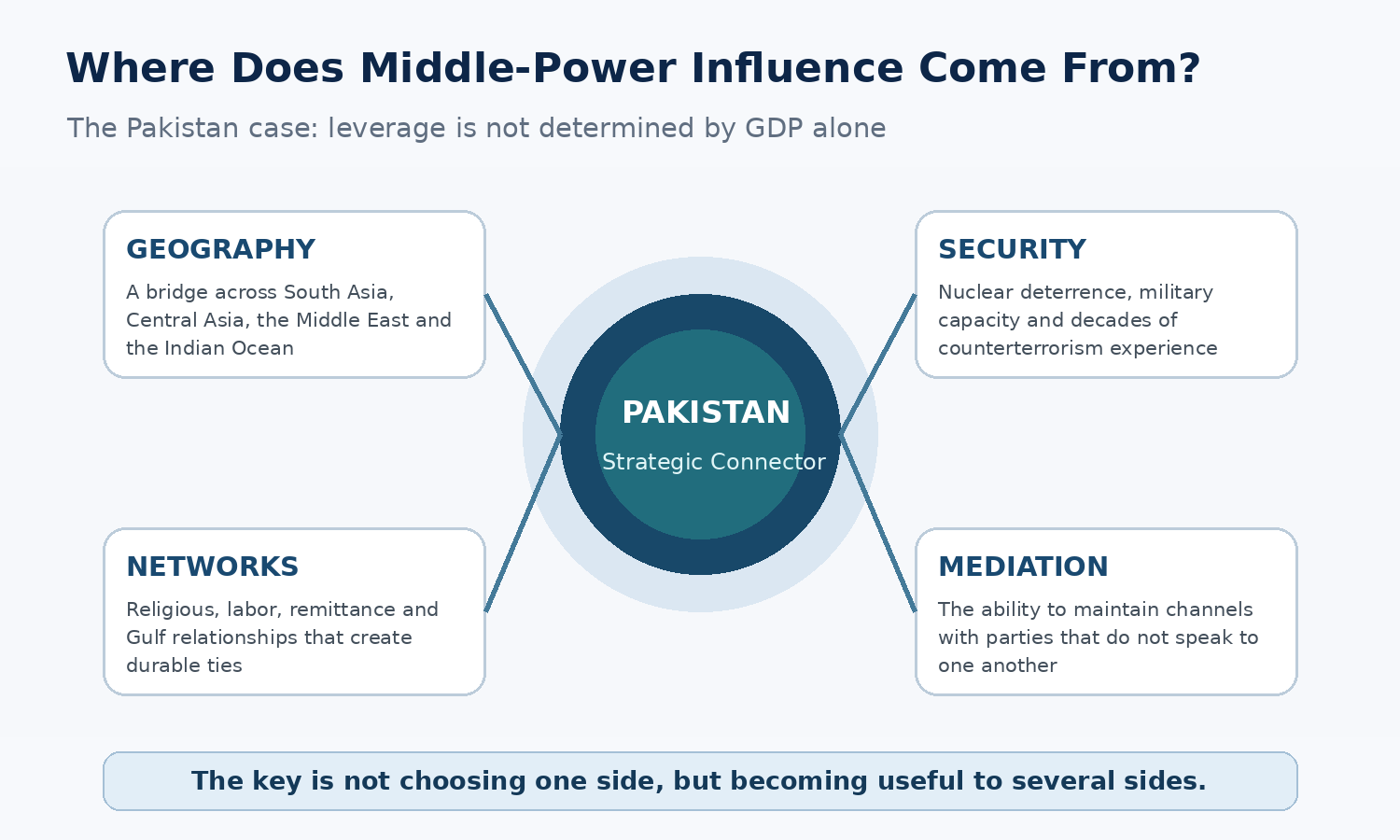 Figure 1. Geography, security, networks and mediation are Pakistan’s four sources of leverage.
04 Non-Alignment Is Not the Same as Having No Position
One of the most common misunderstandings of multipolarity is to treat the refusal to choose a permanent side as weakness, opportunism or lack of principle. What many middle powers are practicing is not classic neutrality but multi-alignment: cooperation with one partner on security, another on energy and investment, and others on regional politics, trade or religious affairs.
The objective is not to maintain equal distance from everyone. It is to avoid being locked into a single partner across every issue. This is often described as strategic autonomy: the ability to benefit from external partnerships while preserving the option to adjust course.
The Noema essay uses the idea of “variable geometry” to describe this pattern. Different problems produce different coalitions. Security arrangements, energy deals, trade corridors, climate negotiations and crisis diplomacy may each involve a different set of states. The emerging order resembles a network that is constantly rewired rather than a few fixed blocs.
Variable geometry means different coalitions for different problems—not permanent loyalty to one bloc.
05 Four New Rules of a Multipolar World
Rule one: indispensability matters more than comprehensive power. A middle power does not have to replicate a superpower. It needs to control a corridor, resource, capability or network that others cannot easily replace.
Rule two: coalitions will increasingly form around issues rather than identities. Many future partnerships will rest not on shared ideology or permanent loyalty, but on a specific security need, energy transaction, transport route or diplomatic crisis. They will be flexible, useful and sometimes temporary.
Rule three: domestic fragility and international influence can coexist. Weak governance and economic stress limit national power, but they do not necessarily erase strategic value. International influence is not a prize awarded for good domestic performance. It emerges from the interaction of location, capabilities and external demand.
Rule four: the sharper the rivalry among major powers, the more room exists for states in the middle. When the strongest actors distrust one another and cannot solve regional conflicts, supply-chain problems or energy risks alone, they need local partners, intermediaries and ad hoc coalitions. Middle powers are not merely objects of competition; they can design transactions of their own.
06 This Is Not an Argument for Romanticizing Pakistan
To recognize Pakistan’s strategic relevance is not to endorse its political system or every aspect of its foreign policy. The military has exercised deep influence over politics, constraining civilian institutions. Economic development, education, healthcare and public services remain under pressure. Domestic insurgencies, regional tensions and fiscal weakness continue to consume national capacity.
The Noema essay was written by a Pakistani author and presents a distinctly national perspective. Its account of Pakistan’s diplomatic role is optimistic. It is best read not as a neutral verdict, but as an example of how Pakistan increasingly understands and presents its own place in the international system.
The important question is not whether Pakistan has completed a clean “rise.” It is how a country with serious internal constraints can still protect its relevance by concentrating on a few strengths and maintaining multiple external relationships.
07 Stop Asking Only, “Whose Side Is It On?”
We often begin our analysis of a country by asking which side it supports, which camp it belongs to and whom it opposes. That binary method was useful in a more rigid international order. Today it increasingly produces the wrong answers.
More useful questions are: What does this country fear most? What does it need? What does it possess that others need? On which issues does it depend on different partners? Which relationships are temporary bargains, and which are embedded in society and the economy?
Viewed through this framework, Pakistan is not simply moving between competing powers. It is balancing security, energy, regional conflict, economic survival and social networks at the same time. Many other middle powers are making similar calculations with different assets.
Conclusion: The Future Belongs to Connectors
A multipolar world will not automatically be fairer or more peaceful. More participants may create more options, but also more transactions, temporary alliances and unpredictable conflicts.
It does, however, change one old rule. Small and medium-sized states are not limited to obedience, permanent alignment or withdrawal. If they can become indispensable on a critical issue, they can create room between stronger powers and sometimes shape the direction of negotiations.
Pakistan’s story shows that power is not measured only by economic output or international reputation. It is also measured by how many regions a country connects, how many channels it can keep open, and how many problems it can help solve when others cannot act alone.
To understand the new rules of a multipolar world, we must replace the old map of fixed camps with a more complex network: who depends on whom, who can communicate, who controls a corridor, and who cannot be bypassed in a crisis.
Sources
- Bina Shah, “Pakistan’s Rise to a Middle Power”, Noema Magazine, July 7, 2026.
- “In the Eye of the Storm: Pakistan’s Balancing Act in the Evolving Geopolitical Order”, Harvard Kennedy School Belfer Center, June 5, 2026.
- Reuters, “What is Pakistan military’s strength and capability?”, July 17, 2026.
- Alan Beattie, “A new economic order will be built piece by ad hoc piece”, Financial Times, July 2026 (paywalled).
Editorial note: This essay analyzes strategic behavior; it does not endorse Pakistan’s political system or all of its policies.
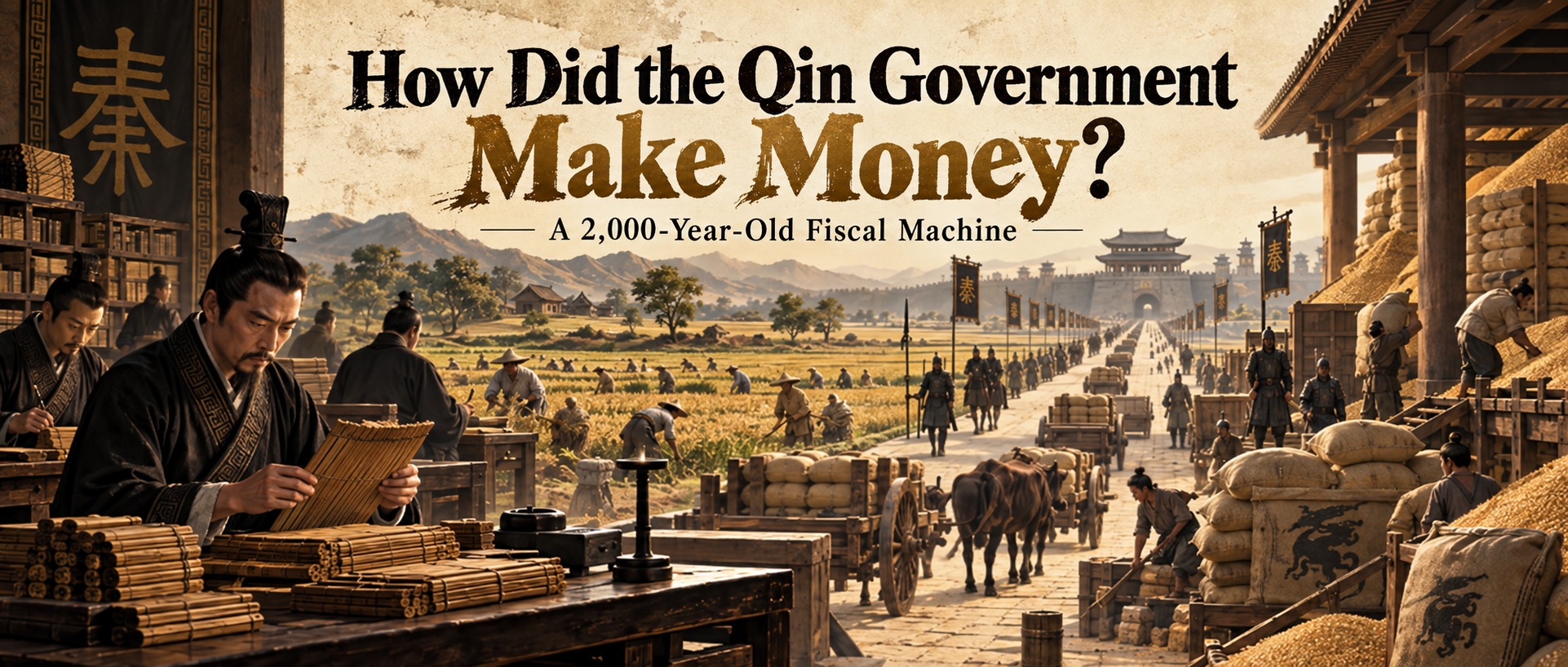
From Land Taxes to Corvée Labor: How Qin Funded an Empire
Qin had no modern income taxes or bond market. Its fiscal power came from turning land, households, grain, labor, and military manpower into resources the state could identify and mobilize.
Why Progress Gets Stuck
Medicine reveals why scientific knowledge does not automatically become affordable, scalable improvements in everyday life.
How Singapore Governs
How parliamentary government, professional administration, open markets, fiscal rules, compulsory savings and public housing reinforce one another.