Is Italy Really Rich? Growth, Jobs, Population, Education and the North–South Divide
Italy is wealthy but slow, resilient but divided. A comprehensive look at its economy, labour market, demographics, education, welfare system and the persistent North–South gap.
Italy is easy to misread. A traveller sees ancient buildings, small family shops, modest retail wages and young adults living with their parents, and may conclude that the country has simply stopped developing. Yet Italy remains one of the world’s largest economies. Its 2024 GDP was about USD 2.38 trillion and GDP per person exceeded USD 40,000. It has globally competitive capabilities in machinery, automotive components, pharmaceuticals, food, furniture, fashion and tourism.[1]
The more accurate description is that Italy is wealthy but slow, resilient but divided. It possesses the productive assets, household wealth and public institutions of a mature high-income country, while struggling to generate new income quickly enough. The problem is not the absence of jobs or welfare. It is the weak growth of productivity and real wages, the uneven quality of jobs, the ageing of the population and the unequal distribution of services between regions and generations.
To understand the country, average salary figures are not enough. The key questions are whether firms can create more high-value jobs, whether purchasing power recovers, whether the demographic structure remains fiscally sustainable, whether education leads to appropriate work, and whether citizens in different regions can access comparable public services.
01 The central paradox: rich in assets, slow in new opportunity
The central question about Italy is not whether it is rich or poor — it is both at once. The country possesses world-class industrial clusters, household wealth and universal public services, yet struggles to convert those assets into rapidly rising incomes for its younger generation.
This is the theme that runs through every dimension we examine below: the economy creates value, but not enough new jobs at high wages; the population is long-lived, but shrinking at the base; the welfare state is generous, but tilted toward the old; and the national system offers the same formal rights everywhere, but produces vastly different outcomes in Milan versus Calabria.
02 Economy: world-class industrial districts, limited acceleration
Italy’s productive model is built around dense networks of small and medium-sized firms. Northern regions such as Lombardy, Veneto and Emilia-Romagna combine machinery, vehicles, chemicals, pharmaceuticals, food and design in specialised industrial districts. Many firms are small, but they occupy valuable niches in global supply chains. Tourism and cultural industries convert heritage into recurring service exports across Rome, Milan, Venice, Florence and the southern coasts.
The model is highly effective at protecting quality and tradition, but less effective at scaling firms and spreading digital investment. Many micro-enterprises have limited access to capital and depend on family management. Productivity growth has therefore remained weak. Real GDP expanded by 0.7% in 2024 and by roughly 0.5% in 2025. In the first quarter of 2026, GDP grew 0.2% from the previous quarter and 0.7% year on year: resilient, but hardly dynamic.[2][3]
Public debt constrains the policy response. At the end of 2025, Italy’s government debt stood at about 137.1% of GDP, the second-highest ratio in the EU after Greece.[4] This does not imply an imminent solvency crisis: Italy has substantial private wealth, a deep financial system and the euro-area institutional framework. But it means that every new tax cut, family programme or industrial subsidy competes with interest costs and fiscal rules.
EU recovery funds, infrastructure, energy investment and digitalisation can support demand in the near term. Long-run prosperity, however, depends on productivity, administrative capacity, faster justice and the ability of successful firms to grow.
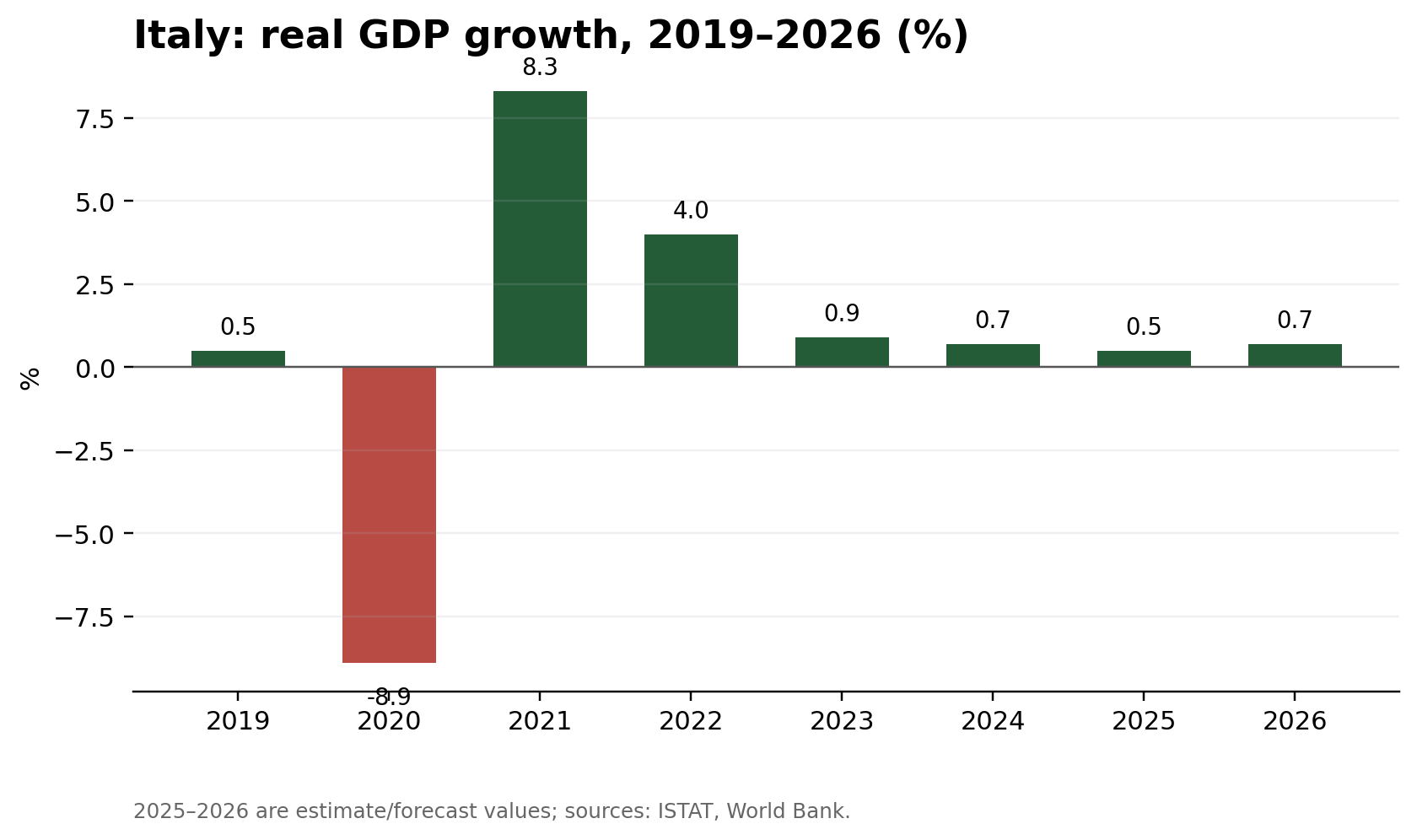 Figure 1. After the post-pandemic rebound, Italy returned to a low-growth path.
03 Jobs: lower unemployment, but insecurity has not disappeared
Italy’s headline labour market has improved. In February 2026, the employment rate was 62.4%, the unemployment rate 5.3% and youth unemployment 17.6%.[5] These are comparatively strong recent figures. But a falling unemployment rate does not automatically mean better work. People who stop actively searching — discouraged youth, carers and the long-term inactive — are not counted as unemployed.
The youth employment rate exposes the deeper problem. In 2025, only 47.6% of Italians aged 20–29 were employed, the lowest share in the EU.[6] Longer education explains part of the gap, but so do regional scarcity, temporary contracts, seasonal tourism, low starting pay and skills mismatches. Graduates can find jobs in Milan or Bologna, yet rents absorb a large share of income; in the south, living costs may be lower but suitable professional jobs are fewer.
Real wages explain why employment gains have not translated into confidence. In the first quarter of 2026, Italian real wages were growing again, but they remained 6.1% below their level in early 2021 — the largest remaining gap among major OECD economies.[7] A shop assistant, hotel worker or junior office employee may therefore receive a higher nominal salary and still feel worse off after housing, food and energy costs.
The labour market is divided by region, gender and contract type. Northern industrial and service centres offer more opportunities; female employment remains particularly low in the south; and stable jobs coexist with temporary and seasonal work.
04 Population: fewer births, longer lives and a growing role for migration
Italy had about 58.943 million residents on 1 January 2026, with net migration keeping the total population broadly stable.[8] Natural population change is much more severe. In 2025 there were roughly 355,000 births and 652,000 deaths, while fertility fell to 1.14 children per woman. Life expectancy reached 81.7 years for men and 85.7 for women.[9]
Low fertility is not simply a matter of preference. Unstable work, expensive housing, later partnership formation, uneven childcare and unequal care responsibilities postpone first births and reduce the probability of a second child. Strong family networks often compensate: grandparents provide childcare, housing or cash. This helps many households, but it also widens inequality between young adults with and without family assets.
Ageing affects three balance sheets at once: firms need workers, families need carers and the state must finance pensions and health care. As the working-age population shrinks, shortages are likely in construction, manufacturing, health, care work, tourism and digital occupations. Migration is therefore not only a cultural or political issue — it is part of Italy’s labour and demographic strategy.
The decisive question is whether migrants remain concentrated in low-paid informal work or become stable residents with recognised qualifications, language skills, housing and access to schools.
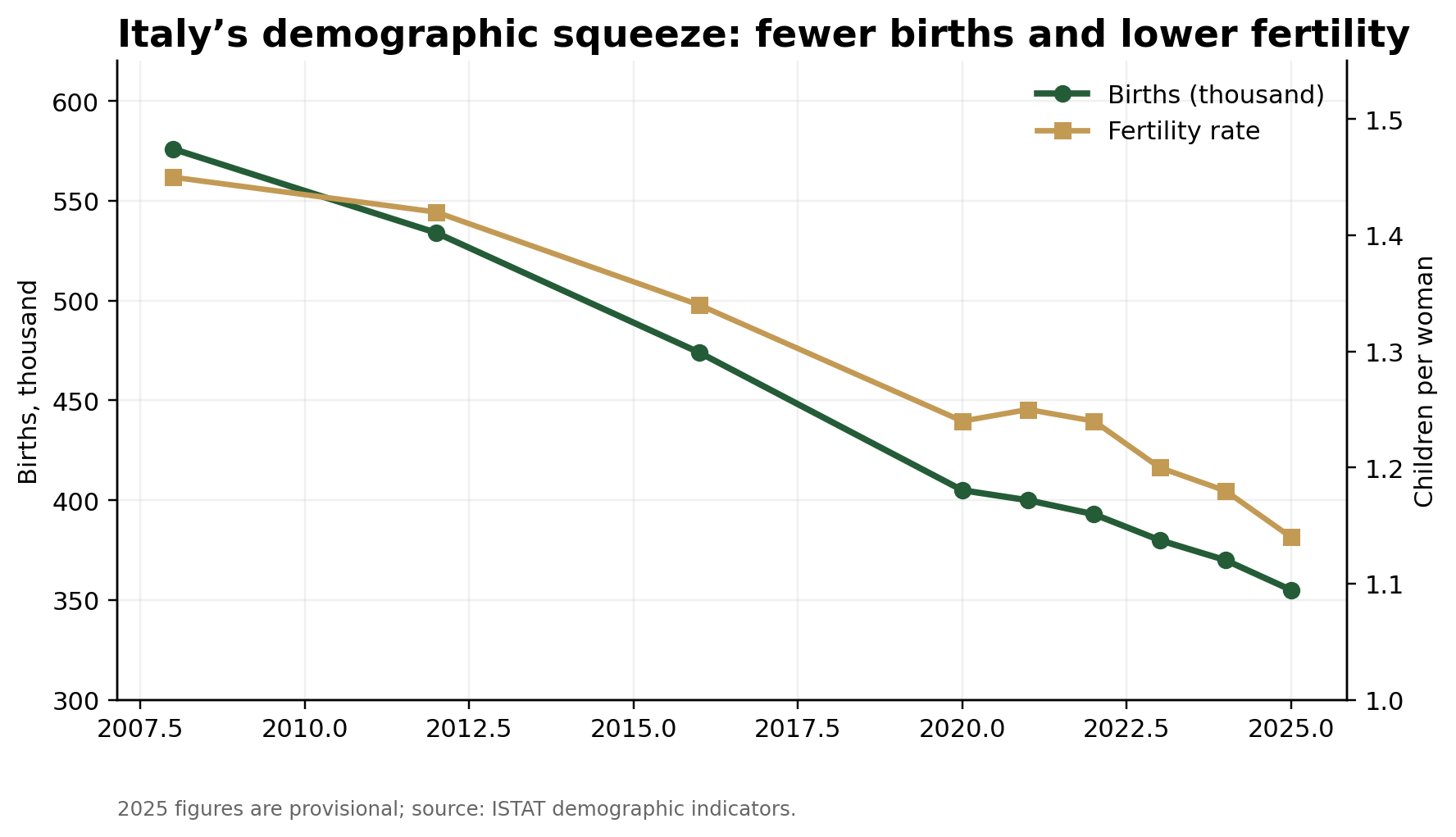 Figure 2. Births have fallen steadily since 2008 while fertility has reached a new low.
 Illustration. Italy’s demographic challenge combines long life expectancy with a shrinking younger population.
05 Education: broad access, but weak transitions into tertiary study and work
Italy has a wide public education system and a strong humanistic tradition. Over the last decade, early leaving from education and training among 18–24-year-olds fell from 15% in 2014 to 9.8% in 2024, close to the EU average of 9.3%.[10] This is a real achievement.
The larger weakness appears at the transition to higher education and employment. In 2024, only 31.6% of Italians aged 25–34 held a tertiary qualification, compared with 44.1% across the EU. The employment rate of recent tertiary graduates was 77.8%, also below the EU’s 86.7%.[10] Tuition may be moderate at public universities, but the opportunity cost is high when graduate pay is weak and career progression slow.
Vocational education faces a similar disconnect. Only 24.7% of recent VET graduates had experienced work-based learning in 2024, compared with an EU average of 65.2%. Their employment rate was 63.7%, versus 80% in the EU.[10] This helps explain the coexistence of employer complaints about shortages and youth complaints about opportunity.
Regional inequality runs through the whole education chain. Early leaving, childcare shortages and weak basic skills are more common in the south and islands.
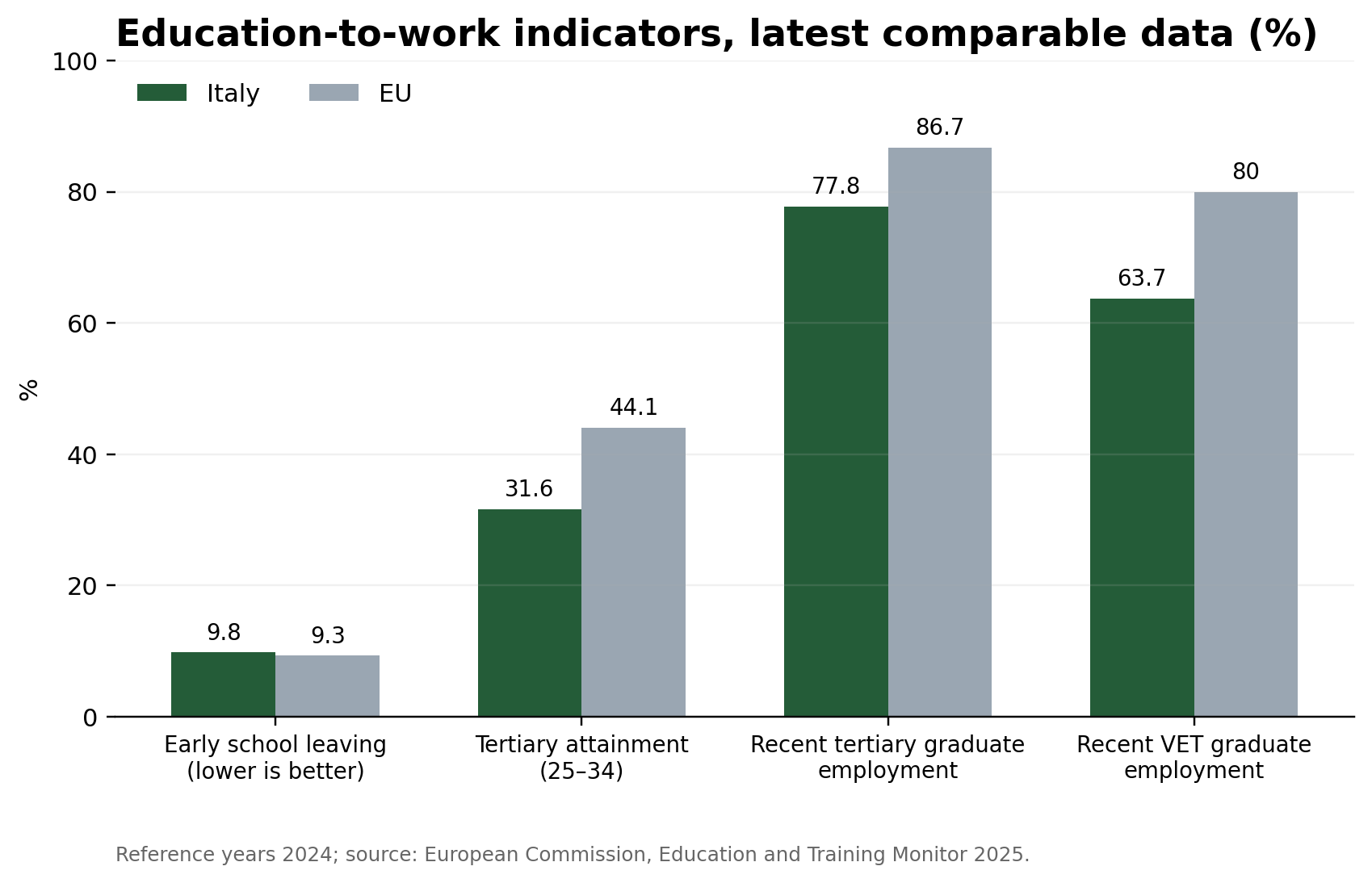 Figure 3. Early school leaving has improved, but tertiary attainment and graduate employment still lag behind the EU.
06 Welfare: universal protection, pension-heavy priorities
Italy does have a substantial welfare state. The National Health Service provides universal coverage, and the country combines pensions, unemployment and income support, disability benefits, family allowances and municipal social services. Public health care and schools substantially reduce catastrophic household risks.
The system is, however, heavily oriented towards older generations. Pension spending was about 15.5% of GDP in 2023, the highest share in the EU. Cash payments accounted for 76.4% of social protection benefits, also among the highest shares.[11][12] In practice, more welfare reaches households through pensions and transfers, while childcare, housing, long-term care and employment services are more uneven.
Childcare shows the contrast. Formal participation among children aged 0–2 reached 39.4% in 2024, around the EU average. Yet provision exceeded 40% in several central and northern regions and remained below 12% in Campania and Calabria.[10]
Nor has welfare eliminated poverty. In 2024, more than 5.7 million people — 9.8% of the population — were in absolute poverty. The household rate was highest in the south and islands at 10.5%.[13]
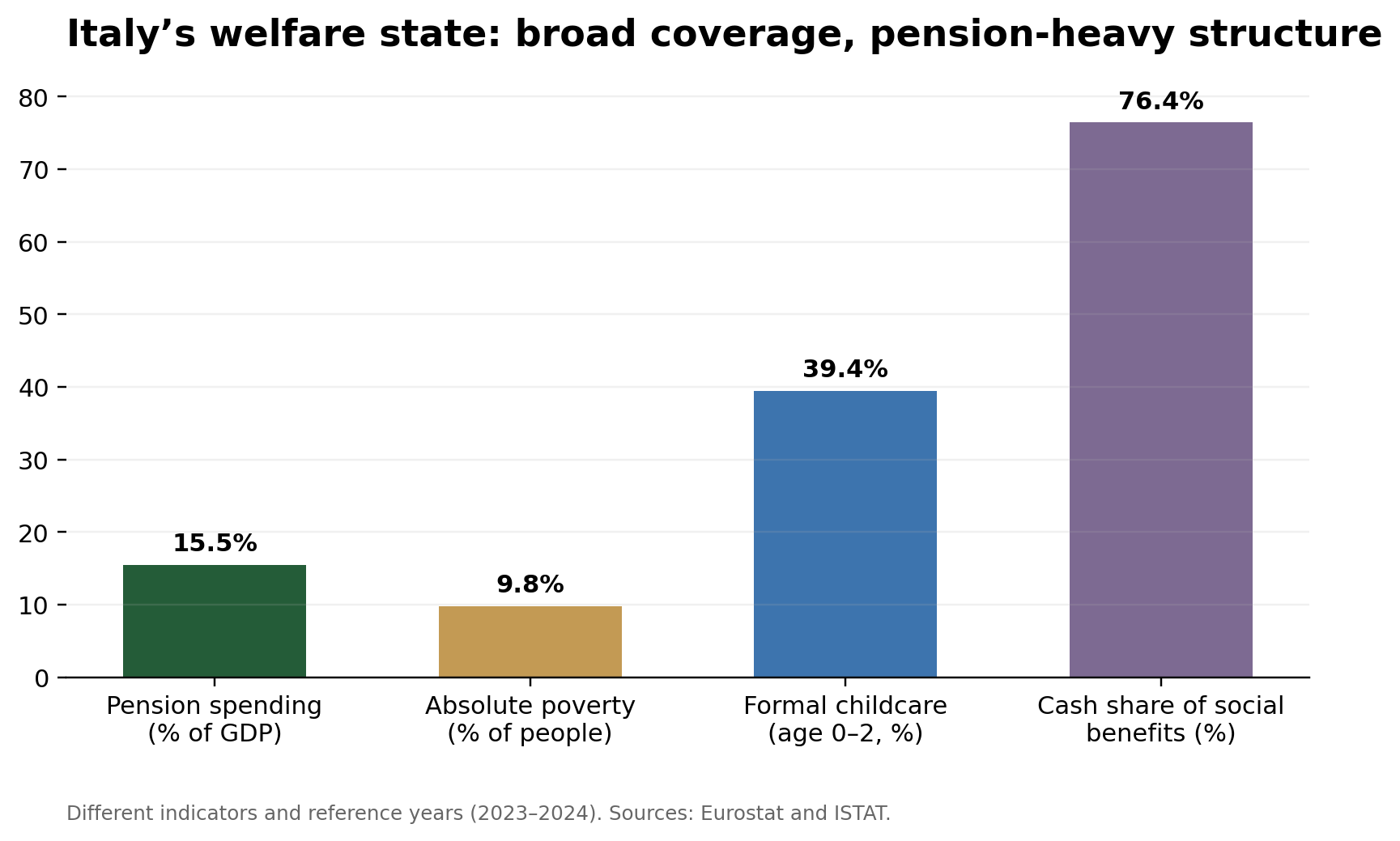 Figure 4. Italy provides broad social protection, but its welfare mix remains pension- and cash-heavy.
07 The North–South divide: one national system, different lived realities
The gap between Milan and Naples, or Bologna and Calabria, is not merely cultural. It reflects differences in industrial density, employment, infrastructure, schools and administrative capacity. In 2024, the female employment rate was only 39.4% in southern Italy, compared with 68.2% in the northeast and 66.9% in the northwest.[10]
The north benefits from accumulated advantages: export clusters, stronger connections between firms and technical education, denser transport and a larger tax base. The south faces a reinforcing cycle of limited jobs, youth migration, informal work and weaker services. When skilled young people leave, local human capital and consumer demand decline, further reducing the incentive for investment.
Closing the gap requires more than one-off business subsidies. It requires reliable schools, childcare, transport, digital infrastructure, effective courts and local administrative capacity.
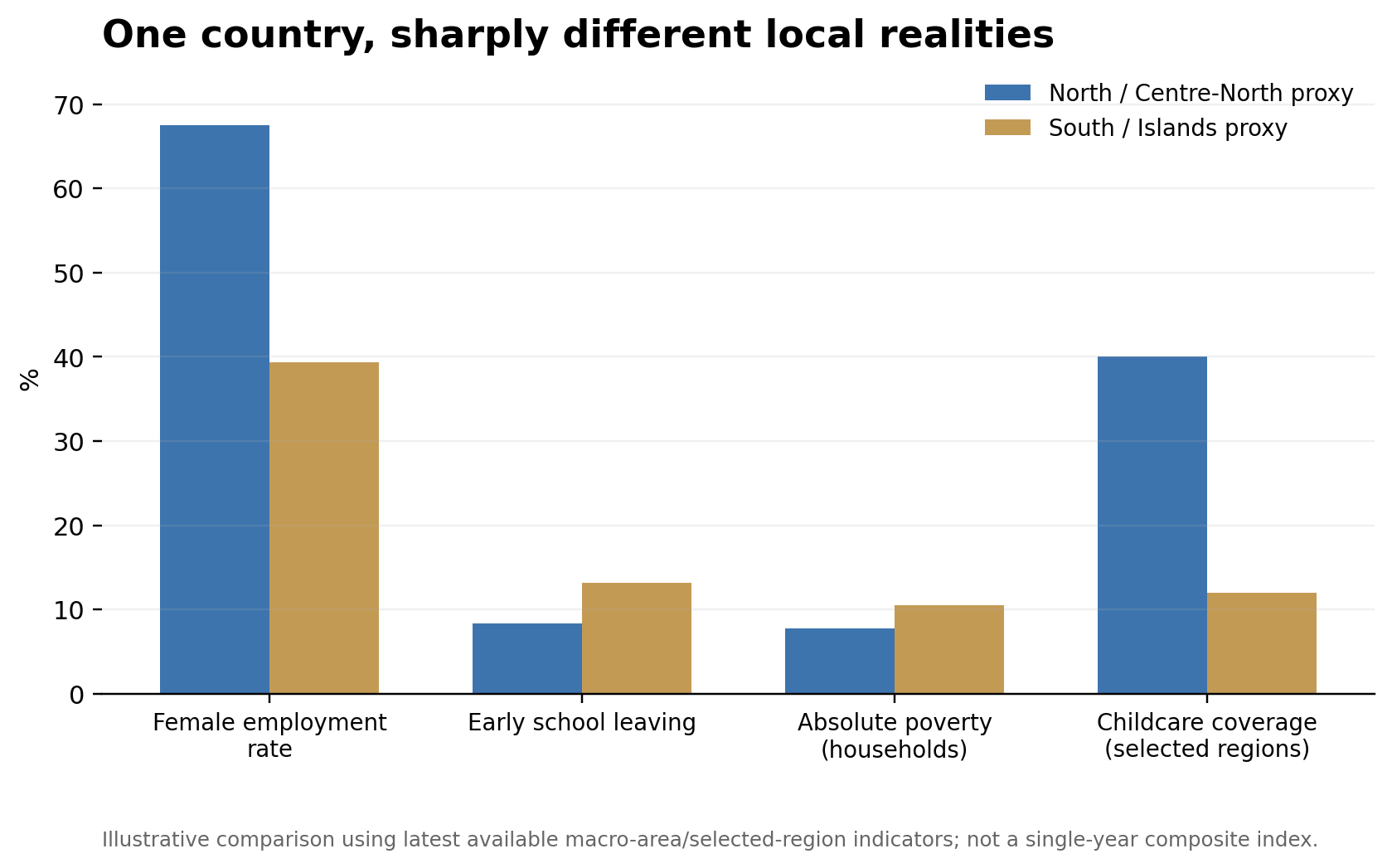 Figure 5. Regional inequality appears across employment, education, poverty and childcare.
08 What this means for ordinary households
Italy’s quality of life is supported by real strengths: public health care and education limit extreme risks; food, public space and urban life are attractive; paid leave and labour protections are meaningful; and family networks provide practical support. Households with an owned home can often maintain a comfortable standard of living even on modest current income.
The entry barrier for younger adults is much higher. Wage growth is slow, high-quality jobs are concentrated in a few cities, rents are expensive where opportunities are strongest, and mortgages often require parental help. Childcare depends heavily on location, while temporary workers struggle to obtain credit and plan a family. The result is a distinctive structure: a rich country, asset-owning families and cash-constrained youth.
This is why Italy can simultaneously feel relaxed and anxious. The society values family, leisure and place, yet many young people postpone leaving home, partnership and parenthood or search for careers abroad. It is not simply a story of “high welfare and low effort,” but of a mature society balancing inherited wealth against weak growth and ageing.
09 Five variables that will define Italy’s next phase
- Whether EU recovery funds become productive digital, transport, energy and education assets rather than temporary construction spending.
- Whether real wages continue to recover, especially for young and lower-paid service workers.
- Whether childcare, housing and female-employment policy improve the conditions for independent family formation.
- Whether vocational schools, universities and employers build more effective pathways from learning to work.
- Whether southern regions develop durable clusters of industry and public services capable of slowing the loss of population and talent.
Italy’s future will not be determined by a single election or tourist season. The real test is whether the country can convert inherited wealth, brands and institutions into wages, housing, education and opportunity that the next generation can actually feel.
Data and references
[1] World Bank — Italy country data (2024–2025 data) [2] ISTAT — Italy’s Economic Outlook 2025–2026 (5 Dec 2025) [3] ISTAT — Preliminary Estimate of GDP, Q1 2026 (30 Apr 2026) [4] Eurostat — Government debt at the end of Q4 2025 (22 Apr 2026) [5] ISTAT — Employment and unemployment, February 2026 [6] Eurostat — Young entrepreneurs and youth employment in 2025 (21 Apr 2026) [7] OECD Employment Outlook 2026 — Italy (8 Jul 2026) [8] ISTAT — Population and households / Demographic Indicators 2025 (31 Mar 2026) [9] ISTAT — Births and fertility of the resident population 2024 (30 Oct 2025) [10] European Commission — Education and Training Monitor 2025: Italy [11] Eurostat — Social protection statistics overview (2026 update, 2023 data) [12] Eurostat — Social protection benefits (2025 update, 2023 data) [13] ISTAT — Poverty statistics, year 2024 (17 Dec 2025) [14] OECD Economic Surveys: Italy 2026 (Apr 2026)
Data uses the latest published releases available at the time of writing. Reference years differ by indicator.
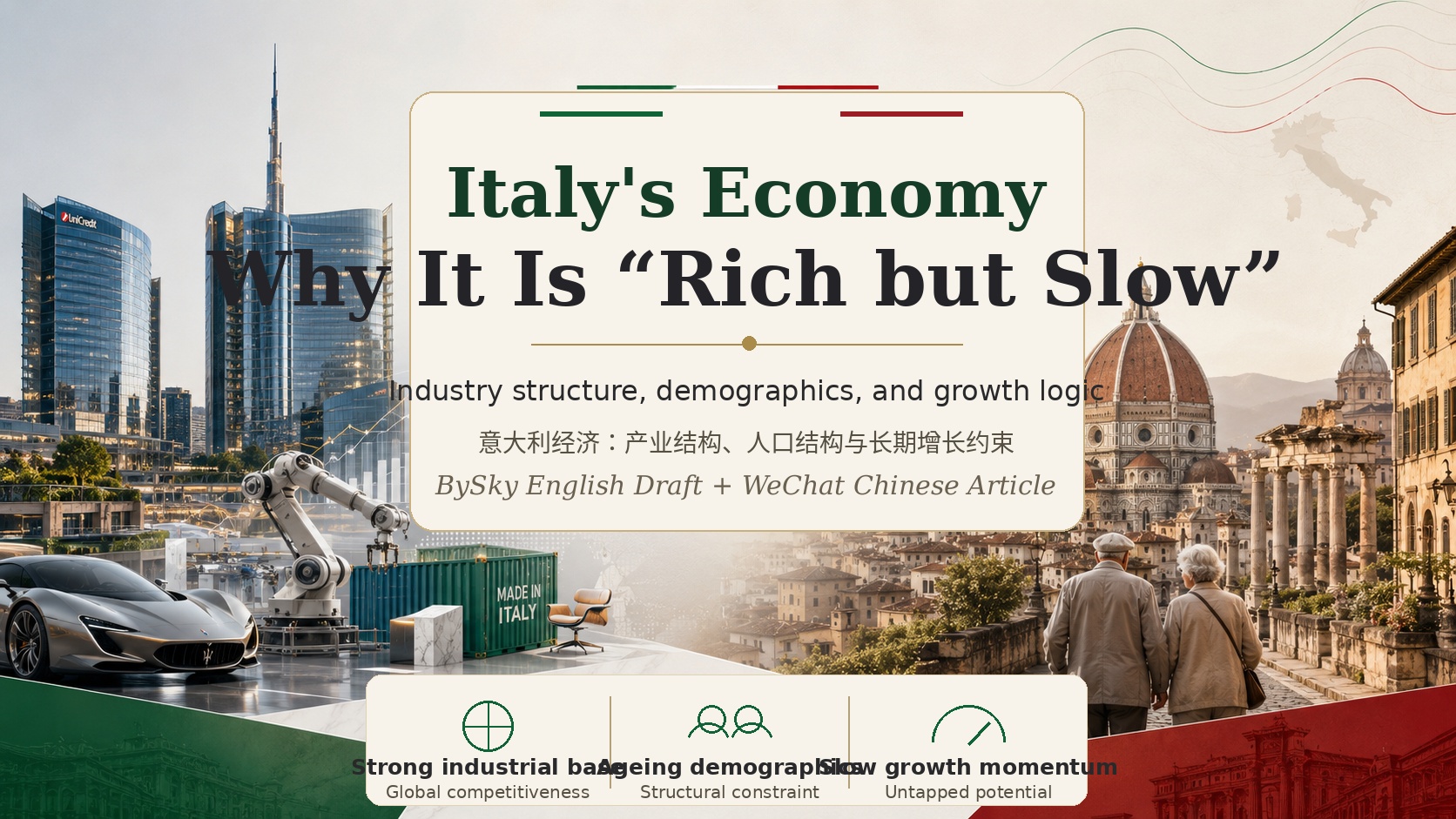
Italy's Economy Is Rich, Skilled — and Getting Old
Italy is a wealthy, advanced economy with deep industrial capabilities, world-class brands, a powerful tourism engine — and one of the oldest populations in Europe.
Morning Briefing: Greenspan, SpaceX, Hormuz Strait, and the Global Economy
Alan Greenspan dies at 100, SpaceX sheds $400bn, 400+ ships queue near Hormuz, and America's allies look to go independent — a round-up of the day's top economic stories.

Nietzsche’s Philosophy
What remains when inherited sources of truth, morality, and meaning lose their authority?