A Brief History of France: From Monarchy and Revolution to the Republic
How France built a centralized state and spent two centuries negotiating liberty and authority, equality and elite rule, revolution and republican government.
French history can look unusually chaotic from a distance: dynasties fall, republics appear, empires return, and constitutions are rewritten. Yet beneath the political turbulence lies a surprisingly coherent story. France spent centuries building a centralized state, then more than two hundred years debating who should control that state and what rights ordinary citizens should possess.
1. Before France: Gaul, the Franks, and the Birth of a Kingdom
Much of modern France formed part of Roman Gaul. After the western Roman Empire collapsed, Frankish rulers established power across the region. The division of Charlemagne’s empire in 843 created a western Frankish realm that gradually evolved into the core of France. In 987, Hugh Capet became king, beginning a dynasty that would anchor the monarchy for centuries.
But medieval kings did not control France in the modern sense. Powerful dukes and counts governed large territories, raised troops, collected revenue, and often acted with considerable independence. The early history of France is therefore best understood as a long process of centralization: the crown slowly absorbed, defeated, inherited, or administratively subordinated competing centers of power.
2. The Hundred Years’ War and the Making of a French Political Community
The Hundred Years’ War between England and France helped accelerate this process. What began as a dynastic struggle over territory and succession became part of a broader transformation in political identity. Local loyalties remained strong, but the experience of prolonged war strengthened the idea of France as a shared political community.
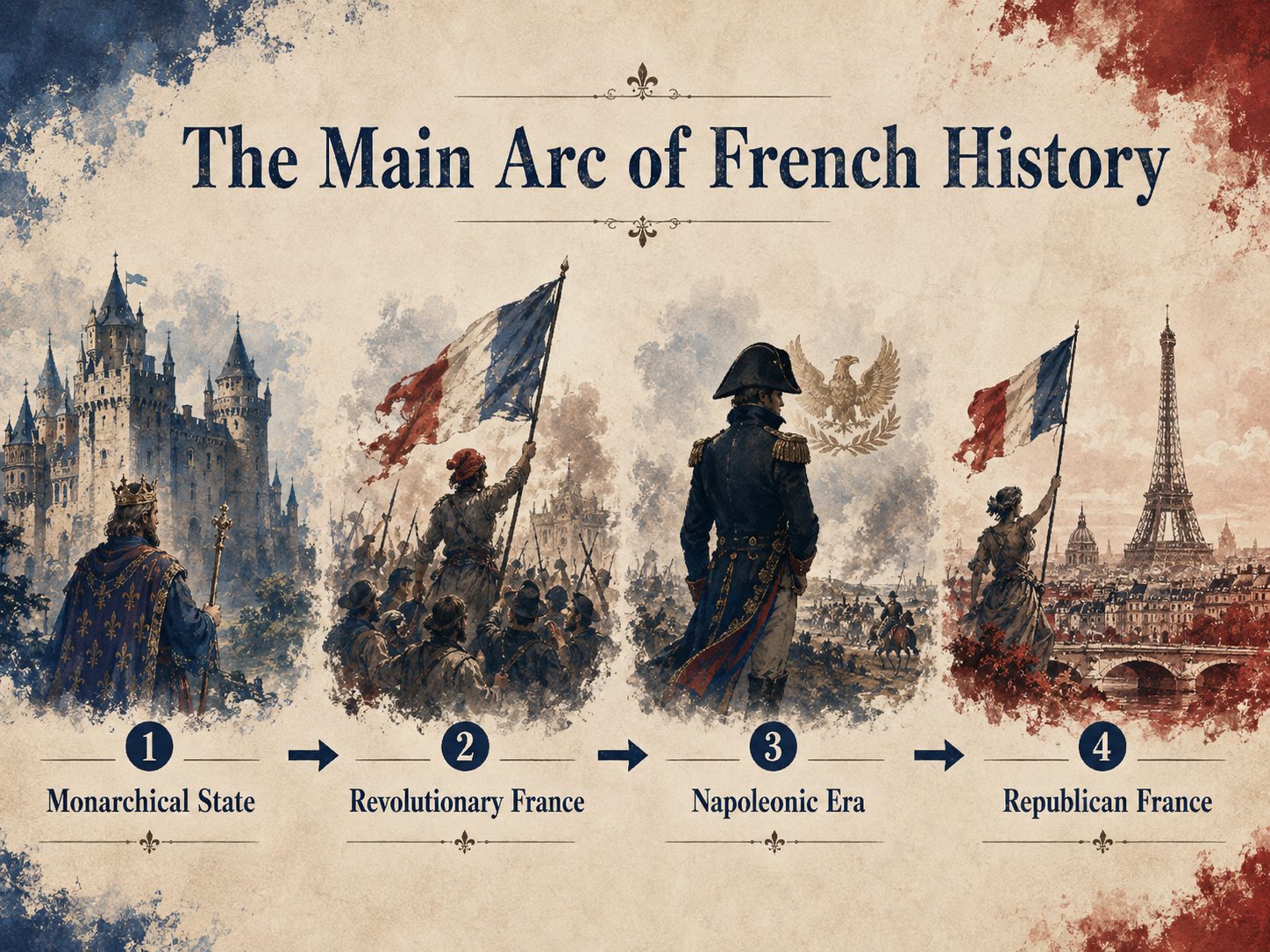
The long arc: monarchy, revolution, the Napoleonic state, and the republic.
3. Louis XIV and the High Point of Monarchical Centralization
By the seventeenth century, the French monarchy had become one of Europe’s most powerful centralized states. Louis XIV, the “Sun King,” turned Versailles into more than a palace. It was also an instrument of rule: aristocrats were drawn into court life while administrative authority, taxation, justice, and military power became increasingly concentrated around the crown.
This period left a durable legacy. France developed a strong tradition of national administration, central planning, and political concentration in Paris. Even after the monarchy disappeared, the centralized state itself survived.
4. 1789: From Subjects to Citizens
The monarchy’s strength came at a cost. War, royal expenditure, fiscal inefficiency, and a social order filled with legal privileges produced a deep financial and political crisis. In 1789, the attempt to solve a budget problem opened a much larger question: why should a king possess political authority by birth?
The French Revolution changed the source of political legitimacy. Sovereignty was no longer understood simply as the possession of a monarch; it increasingly belonged to the nation and its citizens. Liberty, equality, rights, citizenship, nationhood, and republican government entered European political life with extraordinary force.
The Revolution did not merely replace a ruler. It transformed the vocabulary through which modern politics would be argued.
5. Napoleon: Ending the Revolution, Institutionalizing Its Results
Revolutionary France soon discovered that destroying an old order was easier than governing a new one. Political instability, violence, and institutional experimentation created the conditions for Napoleon Bonaparte’s rise. He seized power in 1799 and crowned himself emperor in 1804.
The apparent contradiction is important: France overthrew a king and then accepted an emperor. Yet Napoleon did not simply restore the old regime. He codified law, reorganized administration, reformed taxation, strengthened education, and built institutions that carried many revolutionary principles into a durable state structure.
In that sense, the Revolution demolished the old political world, while Napoleon helped organize the new one.
6. The Nineteenth Century: Political Instability, Social Modernization
Between 1815 and 1870, France moved through restoration monarchy, constitutional monarchy, republic, and empire. The regime changed repeatedly, but modernization continued. Railways expanded, finance developed, industrial production grew, and cities were transformed.
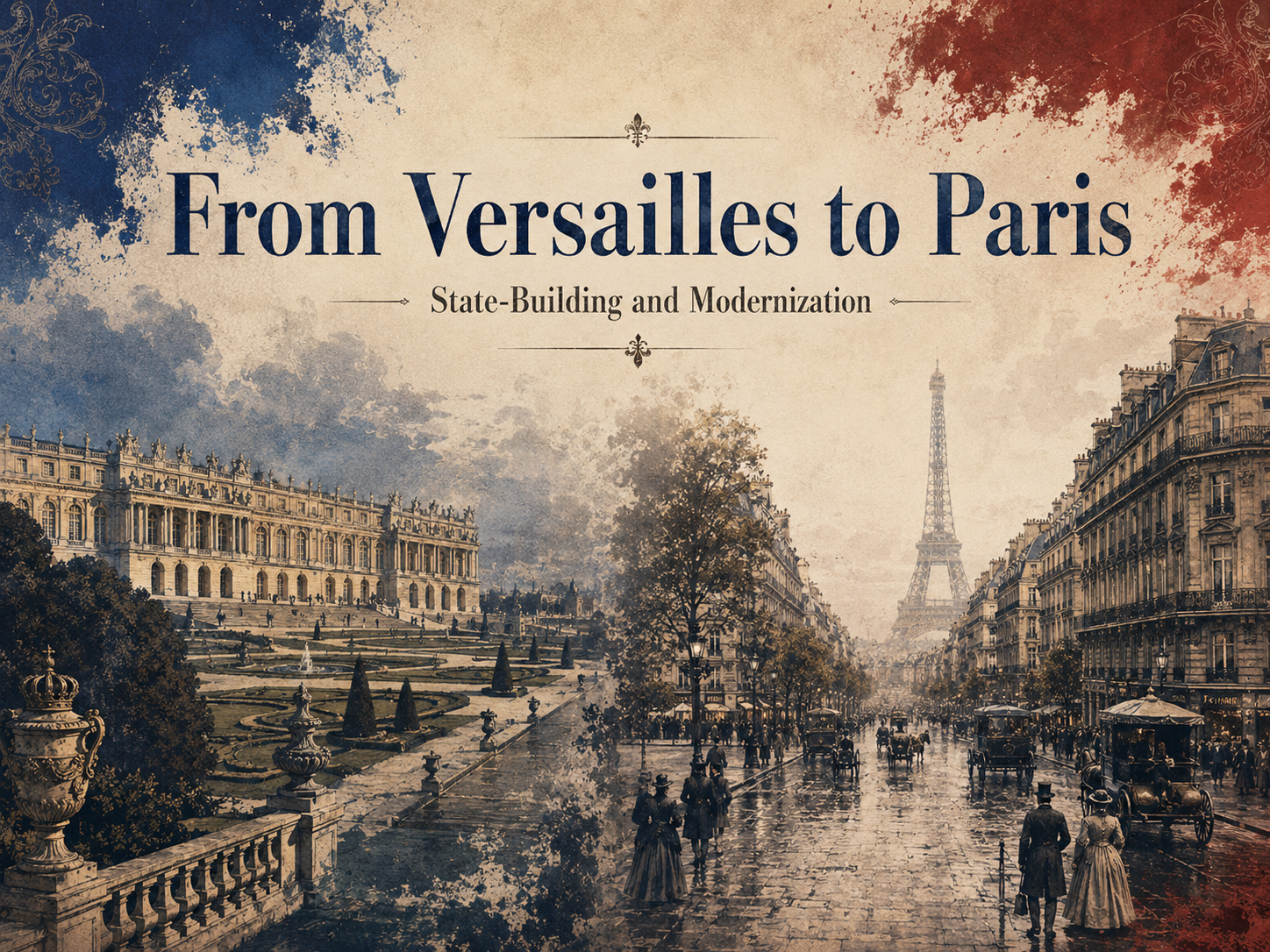
From Versailles to Paris: state-building did not disappear with monarchy; it changed form.
The rebuilding of Paris under Napoleon III and Baron Haussmann is especially revealing. Wide boulevards, sewers, parks, standardized façades, and new transport arteries created much of the cityscape now considered “classic Paris.” What appears timeless was, in fact, a major nineteenth-century modernization project driven by state power.
7. The Third Republic and the Normalization of Republican France
After the defeat of Napoleon III in 1870, the Third Republic gradually stabilized. Parliamentary government, mass public education, secular citizenship, and republican institutions became deeply rooted. The question of restoring a monarchy faded from practical politics. The republic ceased to be a temporary revolutionary experiment and became the normal form of the French state.
8. A Global Power, Then Two National Traumas
At the turn of the twentieth century, France was a global military, financial, imperial, and cultural power. Paris helped define modern art, fashion, literature, architecture, and urban life. Yet the two world wars imposed enormous human and material costs. The defeat and occupation of 1940, followed by the Vichy regime and the Free French movement, became a profound test of national legitimacy.
Charles de Gaulle emerged from this period as a symbol of state continuity: governments could collapse, but France as a political entity had to endure.
9. The Postwar Settlement: Growth, Planning, and the Welfare State
After 1945, France entered a period of rapid growth often called the Trente Glorieuses, the “Thirty Glorious Years.” Housing, transport, electricity, nuclear power, industry, education, health care, and social protection expanded dramatically.
The result was a distinctive model: a market economy combined with a powerful administrative state, extensive public services, and a broad welfare system. France did not abandon capitalism, but it expected public institutions to shape markets and protect social cohesion.
10. The Fifth Republic: Democracy with a Strong Executive
Political instability under the Fourth Republic, combined with the Algerian crisis, led to a constitutional break in 1958. De Gaulle returned to power and helped establish the Fifth Republic. The new system strengthened the executive and especially the presidency while retaining parliamentary government.
The institutional design reflected a recurring French concern: how can democratic participation coexist with stable and effective state authority?
11. Three Tensions That Still Define Modern France
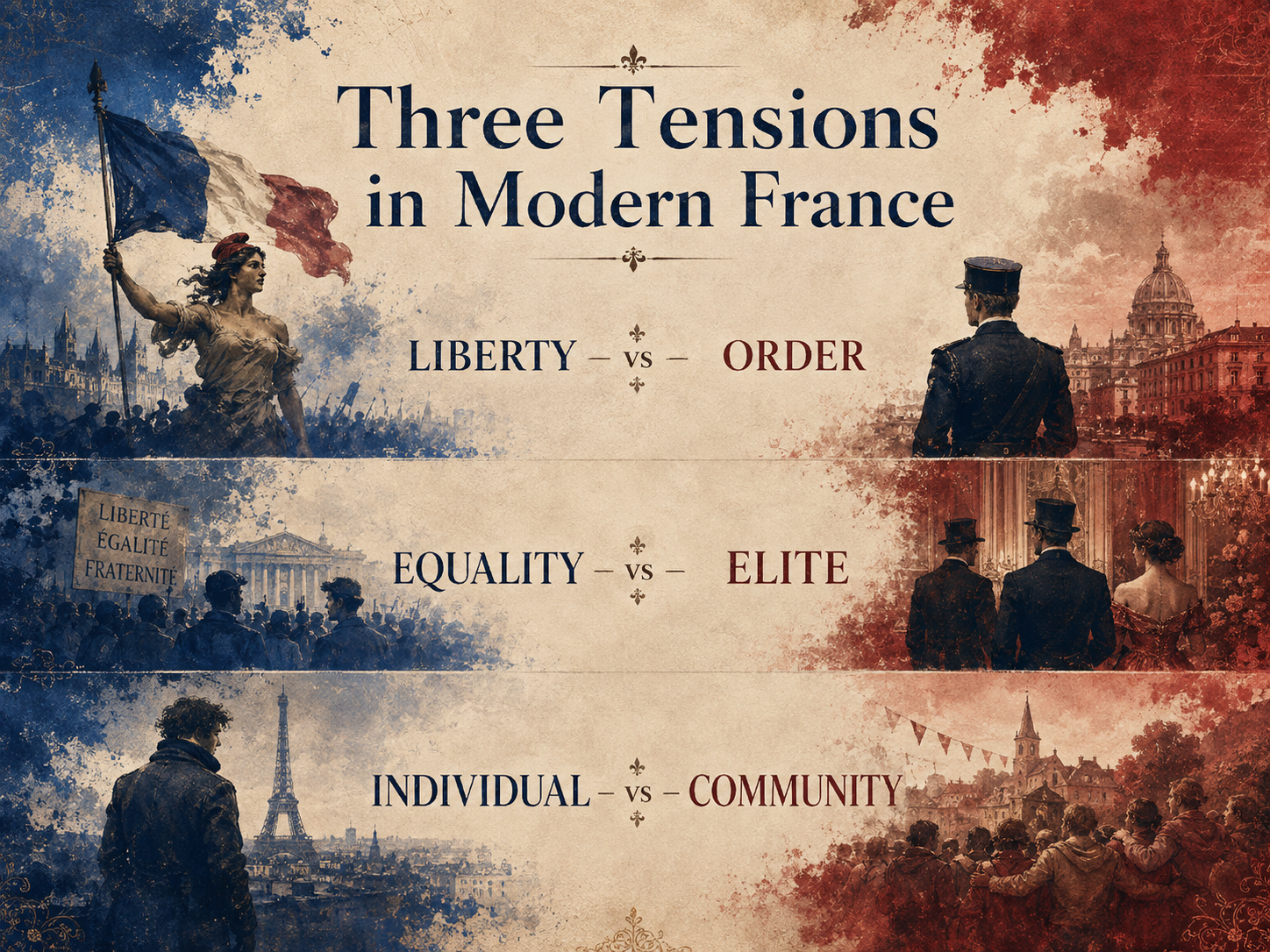
Modern France can be understood through three persistent tensions. The first is liberty versus order. French political culture strongly protects protest, strikes, and public dissent, while the French state remains highly centralized and administratively powerful.
The second is equality versus elite. Republican ideology rejects inherited legal privilege, yet France has long relied on elite schools, competitive examinations, senior civil servants, and professional administrative networks to govern the state.
The third is individual versus community. French society places great value on private life, leisure, labor rights, and personal autonomy, but it also accepts high taxation in exchange for public health care, education, pensions, unemployment protection, and other collective guarantees.
Conclusion: A Country Rebuilt Again and Again
Britain is often described as a political system that changed gradually. The United States began by designing new institutions from the ground up. France followed a different path: it repeatedly broke with an old political order and then rebuilt the state in a new form.
That is why French history is not best remembered as a sequence of numbered republics. Its deeper story is the continuous negotiation between liberty and authority, equality and elite rule, revolution and state power, individual autonomy and collective solidarity.
Those tensions are not relics of the past. They remain visible in French elections, street protests, education, pension reform, secularism, public services, and the enduring political centrality of Paris.

An Economic History of France
How France evolved from an agrarian kingdom into a modern economy through royal finance, revolution, industrialization, state planning, welfare, and high-value industry.
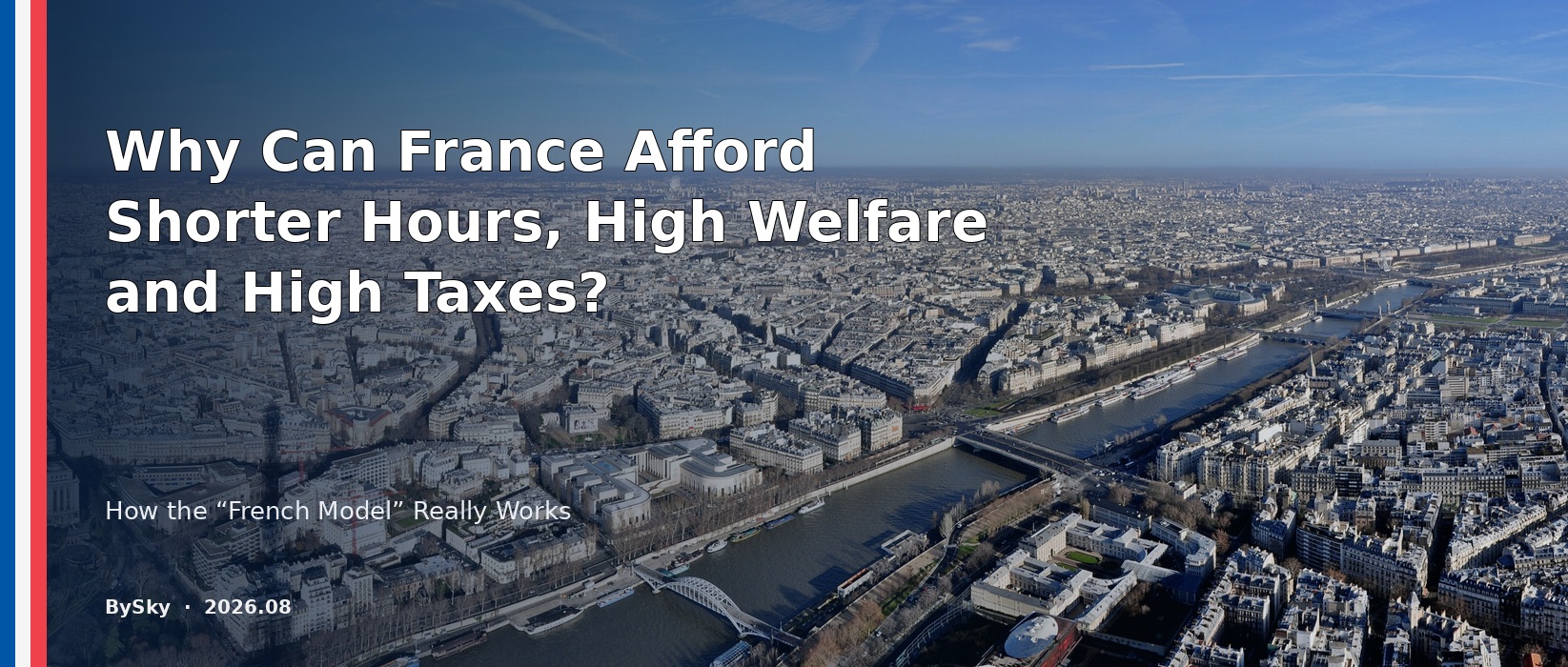
How Can the French Work Less and Still Afford Generous Welfare?
How the French model exchanges a large share of private income for collective security—and why ageing, weak growth and public debt are making that bargain more expensive.
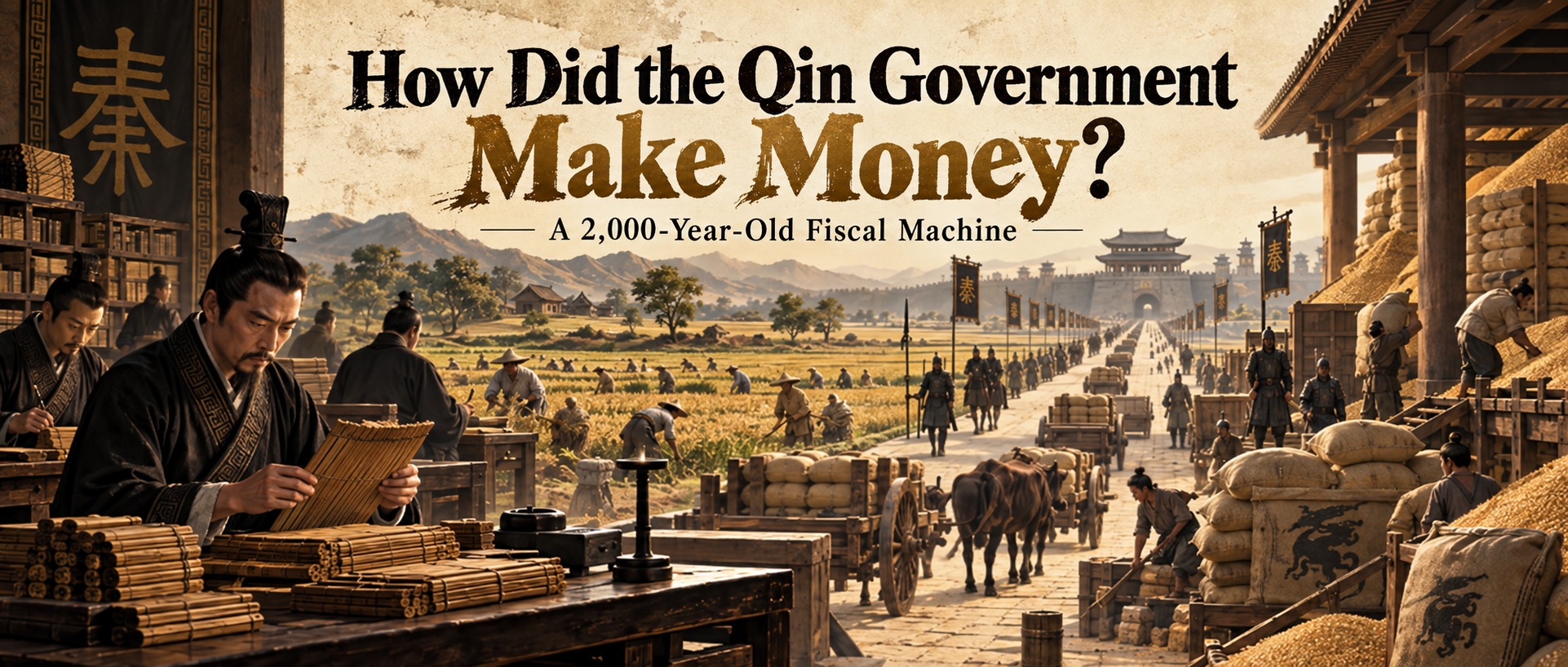
From Land Taxes to Corvée Labor: How Qin Funded an Empire
Qin had no modern income taxes or bond market. Its fiscal power came from turning land, households, grain, labor, and military manpower into resources the state could identify and mobilize.