From Chatting to Working: Why AI Agents Finally Matter
AI is no longer just answering questions. A new generation of AI agents is starting to understand tasks, use tools, and deliver outcomes.
For the past two years, most people have understood AI as a very capable chat assistant: you ask a question, it answers; you ask for a draft, it writes; you ask for a translation, it converts. That version of AI is useful, but it still leaves most of the real work to the human sitting in front of the screen.
Now the interface is changing. A new generation of AI agents, represented by tools such as OpenAI Codex, is moving from “answering” to “executing.” These systems can understand a task, break it into steps, use tools, generate files, check outputs, and push work toward a deliverable result.
That is why AI agents finally matter to ordinary users. They are not merely better chatbots. They are beginning to enter the actual workflow of knowledge work.
What has changed?
The key shift is that AI is moving from a conversational interface to an execution interface. In the past, we mostly used AI by typing a prompt and receiving text. Now, an agent can act more like a supervised digital worker: reading files, editing code, analyzing data, generating reports, and moving several tasks forward in parallel.
In June 2026, OpenAI said Codex is no longer just a coding tool. It is increasingly helping people across professions automate routine work, move faster, and remove bottlenecks in modern knowledge work. OpenAI also said Codex has more than 5 million weekly active users, more than six times its user base since the desktop app launched in February, while knowledge workers now represent about 20 percent of users and are growing more than three times as fast as developers.
This suggests a broader pattern: although developers remain the first heavy users of agents, the use cases are spreading into documents, spreadsheets, research, workflow automation, and lightweight internal tools.
What can ordinary people use agents for?
When people hear words like Codex, agents, or workflows, they often assume the topic still belongs to programmers. That misses the point. The real question is whether a task can be delegated. If a piece of work can be described as a goal, a set of materials, a group of rules, an execution process, and a review step, an agent may be able to handle part of it.
Document processing: read PDFs, Word files, webpages, and spreadsheets; extract key information; generate summaries and checklists. Data handling: clean spreadsheets, classify records, calculate statistics, and create charts. Content creation: draft articles, refine titles, create bilingual versions, and suggest visuals. Workflow automation: recognize invoices, generate expense summaries, flag exceptions, and produce reports. Lightweight tools: turn repeated operations into a webpage, mini-app, or internal tool for reuse.
Why is this a turning point?
First, model capabilities are beginning to support longer tasks. When OpenAI introduced the Codex app, it described a world where developers orchestrate multiple agents across projects, delegate work, run tasks in parallel, and trust agents to take on projects that can span hours, days, or even weeks.
Second, the toolchain is catching up. Codex App supports multiple agents in separate threads, worktrees, skills, and automations. These may sound technical, but they all point in the same direction: AI is being moved from the chat box into the working environment.
Third, the user base is changing. Axios reported on June 25 that a new report from OpenAI, Columbia, Duke, and the University of Pennsylvania shows agentic tools like Codex taking on more complex delegated tasks. In a sample of individual users who allowed data to be used for research, 80.6 percent submitted at least one Codex request estimated to represent more than 30 minutes of work by an experienced human. Non-developers are also among the fastest-growing user groups.
Taken together, these signals suggest that agents are moving from novelty to workflow.
A practical example: expense reports and document sorting
Imagine sorting a batch of invoices or reimbursement documents. The traditional process is repetitive: download files, open them one by one, extract amounts and dates, enter information into a spreadsheet, check exceptions, and produce a summary.
With an agent, the workflow can become: read files, extract amounts and dates, classify items by rules, flag anomalies, generate an Excel table, and write a short explanation. The human does not disappear. The human defines the rules, checks the risky parts, and approves the final result.
That is where agents are useful: not in replacing judgment, but in running through the many low-creativity steps that still require care.
How to delegate work to an AI agent
The skill ordinary users need is not necessarily programming. It is delegation. A simple five-step loop works well:
- Define the goal: what do you want at the end — an article, table, checklist, webpage, or script?
- Provide the context: collect the files, links, background, and examples in one place.
- Set the rules: specify format, scope, exclusions, naming conventions, time range, and acceptance criteria.
- Run and review: let the agent work, but verify key facts, sensitive data, and final conclusions.
- Save the workflow: keep prompts, checklists, and templates so the process can be reused.
OpenAI’s guide on “Codex-maxxing for long-running work” makes a similar point: ambitious goals should be broken into verifiable steps, and users need to know when to delegate execution to Codex and when human oversight is most valuable.
Agents are powerful, but they are not magic
The more agents can do, the more boundaries matter. They may read files, call tools, and execute commands. That means unclear permissions, vague instructions, and unchecked outputs can create real risk.
- Do not hand sensitive files to tools you do not trust.
- Do not let an agent delete, overwrite, or send files without confirmation.
- Do not treat AI outputs as final truth, especially in finance, law, policy, or investing.
- Reusable workflows should include logs, versioning, and human review points.
The future is not simply about AI replacing humans. It is about humans learning how to manage AI teams. People who can define tasks, set rules, and review results will gain leverage. People who only ask vague questions may get vague automation.
From answers to outcomes
AI agents do not require everyone to become a programmer. They require more people to become good delegators of digital work.
Yesterday, we used AI to get answers. Tomorrow, we will use AI to move work forward.
That is why the move from chatting to working matters. AI is not just learning to speak better. It is learning to do more. The opportunity for ordinary people is to turn their own work into clear, repeatable processes that agents can execute, check, and improve.
AI will not replace you, but people who use AI well are already replacing those who do not.
Sources
- OpenAI, “Codex is becoming a productivity tool for everyone,” June 2, 2026.
- OpenAI, “Introducing the Codex app,” February 2, 2026; Windows update, March 4, 2026.
- OpenAI, “Codex-maxxing for long-running work,” June 22, 2026.
- Axios, “AI agents are here for real this time,” June 25, 2026.
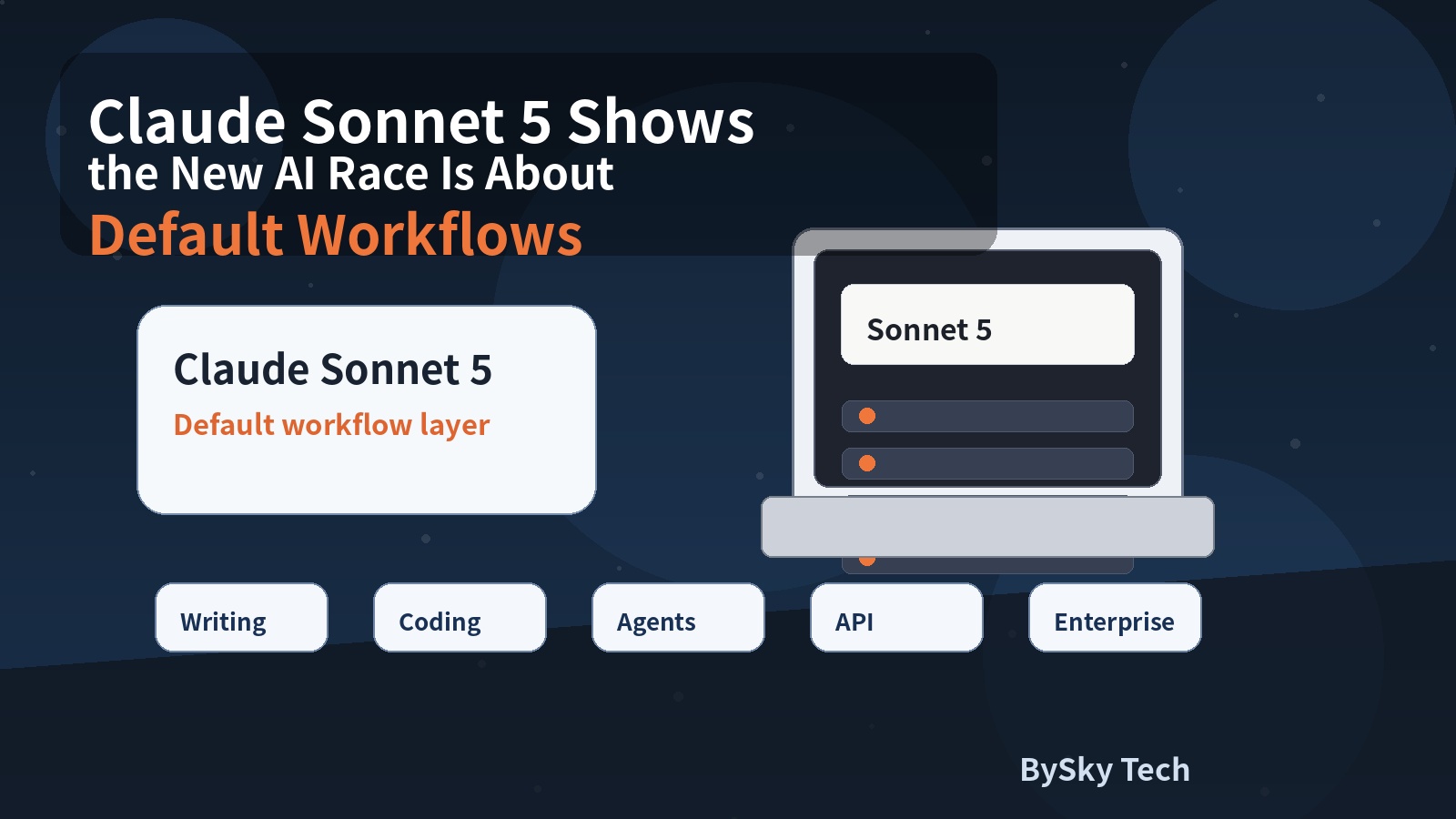
Claude Sonnet 5 Shows the New AI Race Is About Default Workflows
The next moat may be the place a model occupies in daily work, not only its benchmark score.

ChatGPT Adoption Shows AI Is Becoming a Daily Global Utility
OpenAI data reveals that users send 50% more messages after 6 months, non-English speakers now make up the majority of active users, and the number of distinct use cases per user has doubled — signaling ChatGPT is moving from a novel chatbot to a daily global utility.

AI Agents Are Moving From Chat to Delegated Work
OpenAI research shows 80.6% of Codex users have delegated tasks exceeding 30 minutes of human work. The age of AI-as-chatbot is giving way to AI-as-delegated-worker, and the implications extend far beyond software engineering.