Claude Sonnet 5 Shows the New AI Race Is About Default Workflows
The next moat may be the place a model occupies in daily work, not only its benchmark score.
Opening: This Is Not Just Another Model Launch
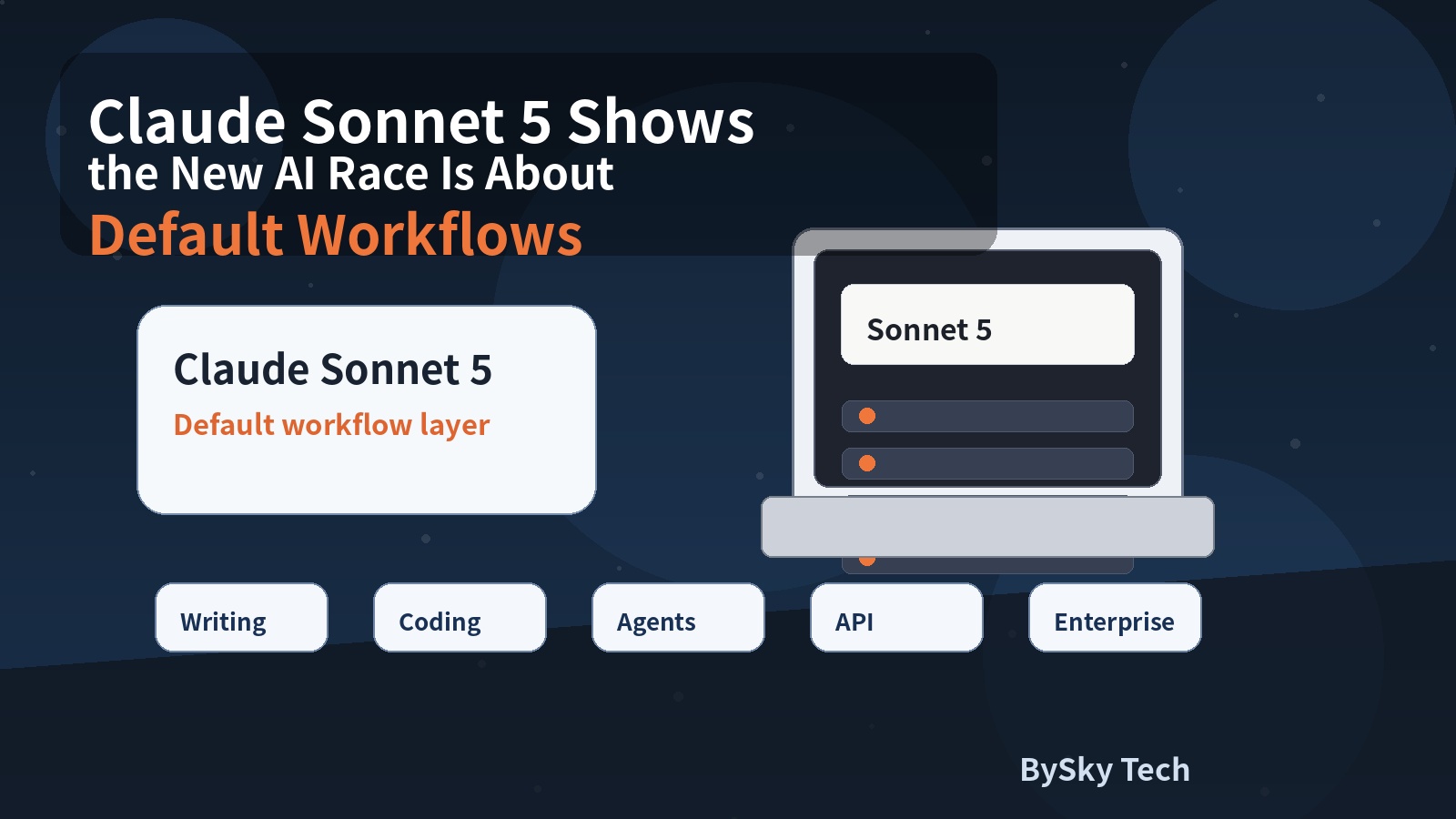
On June 30, 2026 in the United States, or July 1 in Beijing time, Anthropic introduced Claude Sonnet 5. The product positioning matters more than the date. Sonnet 5 became the default model for Claude Free and Pro users, while also becoming available across Max, Team, Enterprise, Claude Code, and the Claude Platform.
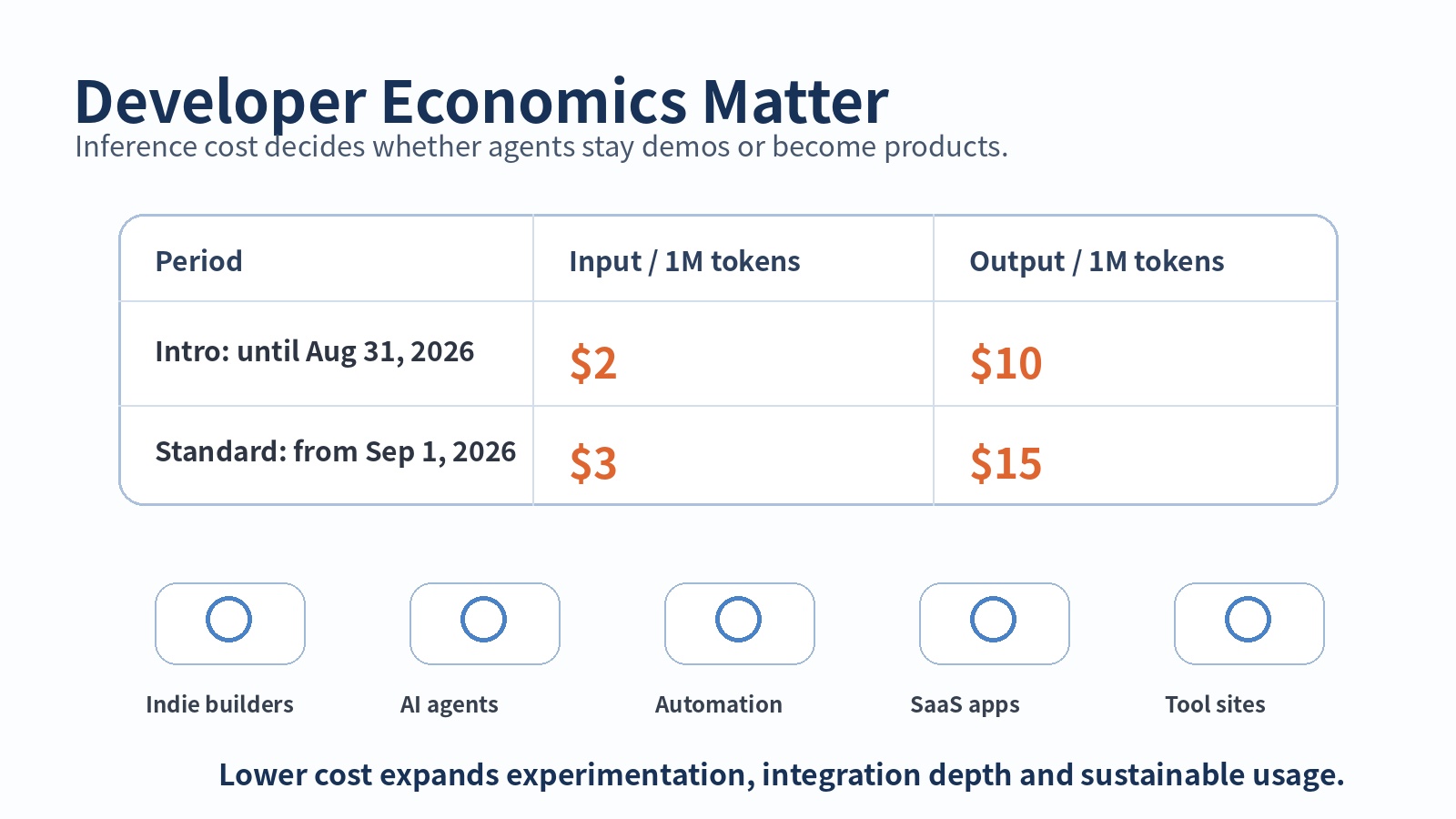
Anthropic also put pricing at the center of the announcement. Through August 31, 2026, Claude Sonnet 5 is priced at $2 per million input tokens and $10 per million output tokens on the Claude Platform. From September 1, it moves to $3 and $15 respectively. Anthropic says Sonnet 5 improves over Sonnet 4.6 across reasoning, tool use, coding, and knowledge work, and can approach Opus 4.8 on certain higher-effort tasks.
The obvious story is that Anthropic has released a stronger and cheaper Sonnet model. The more important story is that the AI race is moving from model capability to default workflow ownership. The question is no longer only “which model is best?” It is increasingly “which model becomes the place where work starts?“
1. Defaults Are Distribution Power
Most users do not choose a model every time they use AI. They open an app, type a task, and use whatever the product has already selected. Developers open an IDE and expect the assistant to explain errors, write tests, refactor code, or interact with a terminal. Enterprise users expect AI to show up inside documents, spreadsheets, knowledge bases, customer systems, and workflow tools.
This makes the default model more than a technical setting. It is distribution power. In consumer technology, default browsers, search engines, office suites, and mobile apps have shaped user behavior for decades. Once an entry point becomes habitual, usage compounds into feedback, ecosystem depth, and commercial leverage.
AI is likely to follow the same path. Models will not only compete as isolated products in a menu. They will compete as invisible layers inside the tools people already use. That is why Sonnet 5 becoming a default model is strategically meaningful: it gives Anthropic a better shot at owning the first AI interaction in a user’s daily workflow.
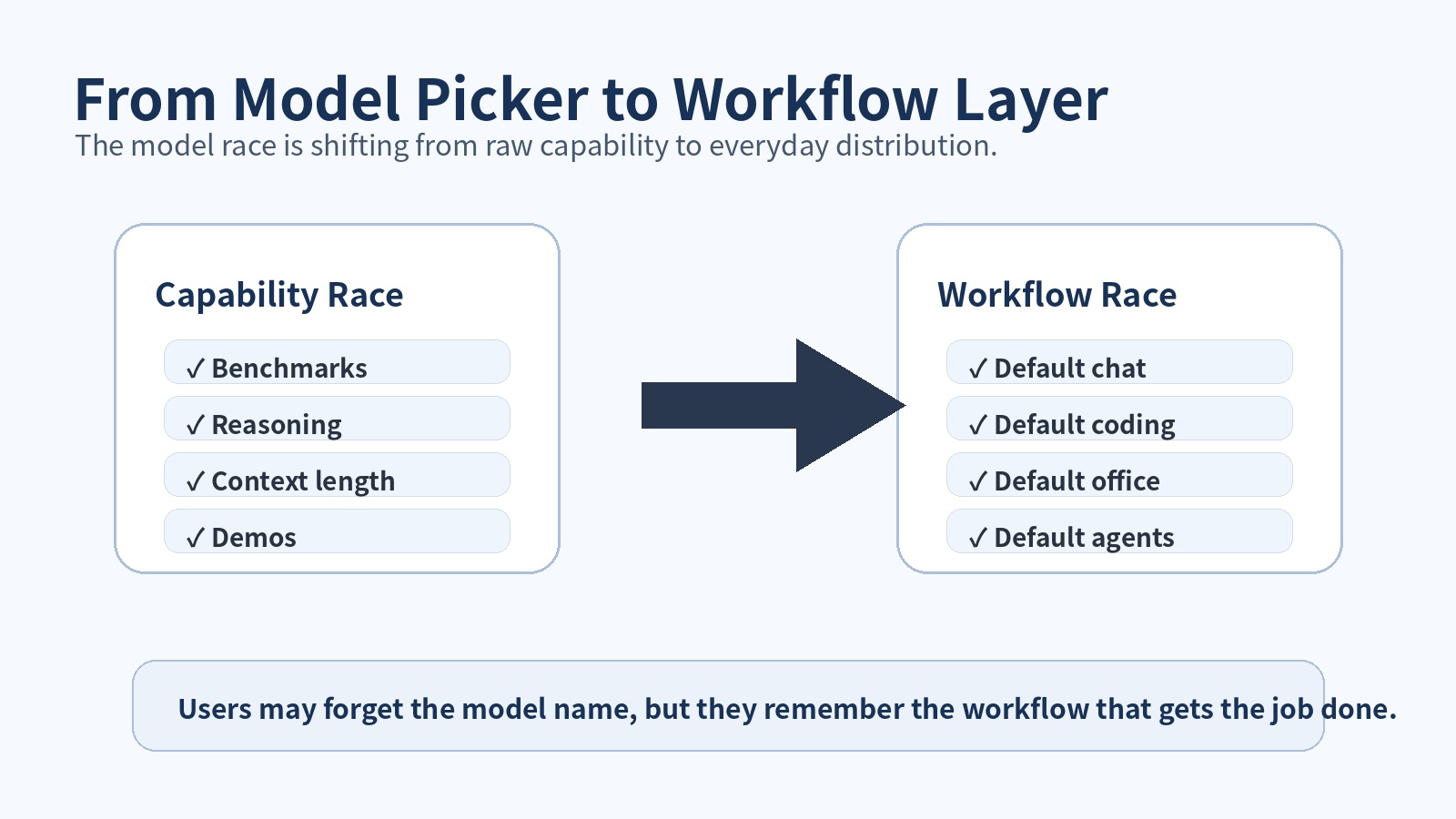
2. Claude Is Moving from Chatbox to Workflow Layer
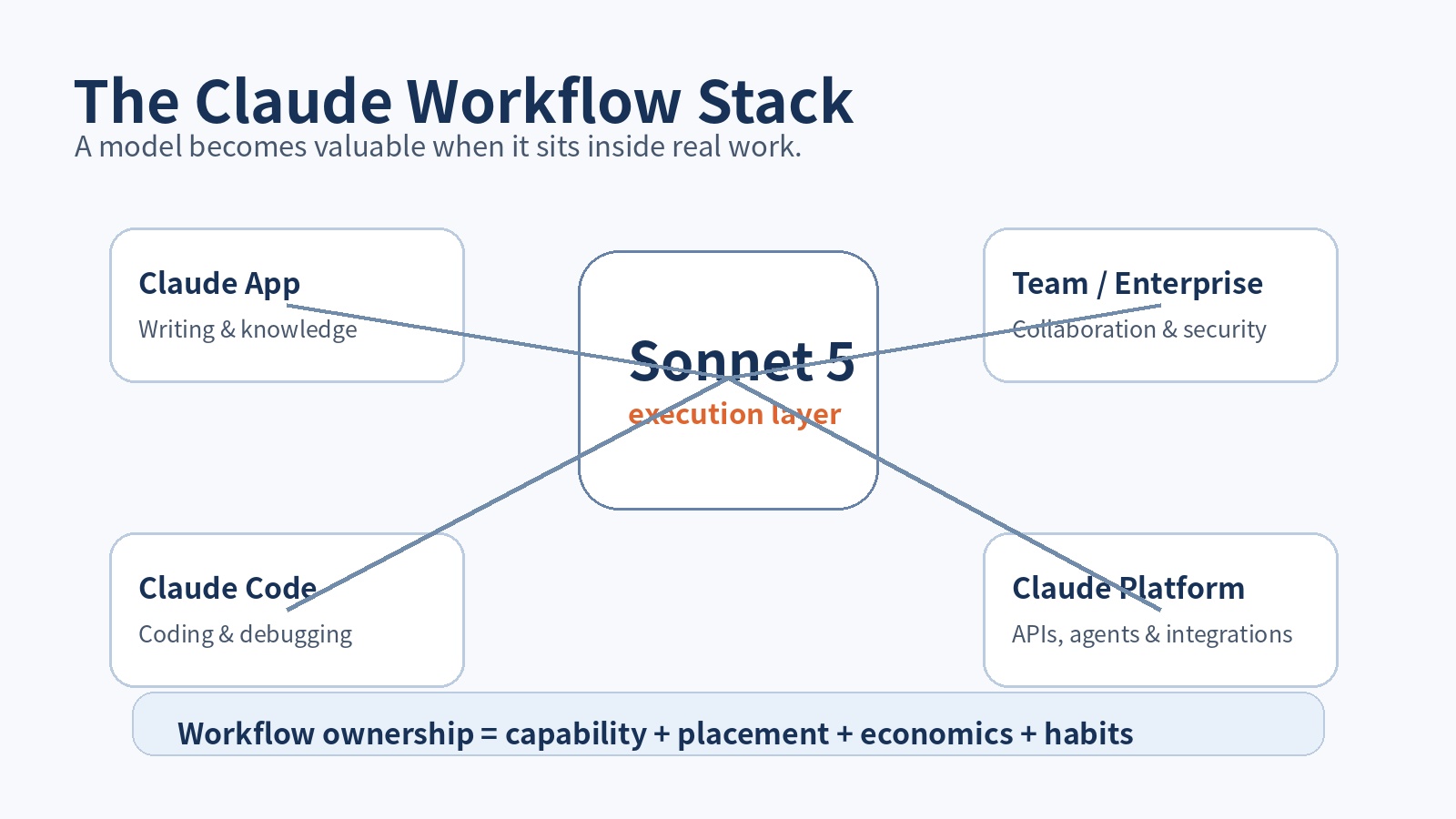
The launch is not just about chat. Sonnet 5 spans Claude App, Claude Code, Team, Enterprise, and Claude Platform. That turns the model into a workflow layer across consumer, developer, enterprise, and API contexts.
For individual users, it can support writing, summarization, research, and everyday knowledge work. For developers, it can sit inside code reading, debugging, test generation, refactoring, and agentic software tasks. For enterprises, it can enter documents, spreadsheets, internal knowledge bases, approval flows, and business systems. For builders, it becomes a programmable model layer for agents, SaaS products, automation tools, and vertical apps.
This is the shift from “model as product” to “model inside product.” The chat window still matters, but the highest-frequency use cases happen inside concrete work: fixing a bug, preparing a report, checking a spreadsheet, running a browser workflow, or completing a business process. A model becomes valuable when it stops being a demo and starts being infrastructure.
3. Pricing Is Ecosystem Strategy
The introductory API price looks like a promotion, but for developers it is a product design variable. AI agents, browser automation, coding assistants, small tools, mini apps, and SaaS features usually require repeated and multi-step calls. If inference cost is too high, margins disappear. If latency and reliability are weak, users leave.
So Sonnet 5’s pricing is not only about being cheaper. It reduces the cost of testing, migration, and deeper integration. Model companies compete for developers because developers create the distribution network for future AI usage. A model integrated into a small tool today may become part of a team workflow tomorrow and a customer-facing SaaS feature after that.
There is also a caveat. Anthropic notes that Sonnet 5 uses an updated tokenizer, and the same input can map to roughly 1.0 to 1.35 times as many tokens depending on content. Developers should therefore evaluate real workload cost, not only sticker price. Prompt length, caching, batch processing, retry rates, tool calls, and output length all matter.
4. The Next AI Race Is About Complete Workflows
OpenAI, Anthropic, Google, and major Chinese AI companies are all moving in the same direction: models are entering browsers, documents, spreadsheets, email, code repositories, terminals, cloud platforms, and enterprise systems. The battlefield is no longer a single chat interface.
That means the basis of competition is expanding. Model quality remains the foundation, but it is not enough. The next race includes product placement, developer tools, API economics, enterprise controls, safety boundaries, partner ecosystems, and user habits. The winner is not only the lab with the best benchmark score, but the platform that connects capability to work.
Sonnet 5 sits at that inflection point. It is not positioned as the most expensive flagship model. It is positioned as a cost-efficient execution layer for everyday agents and professional work. In commercial terms, that kind of model may be more important than the flagship model because it is closer to high-volume, daily usage.
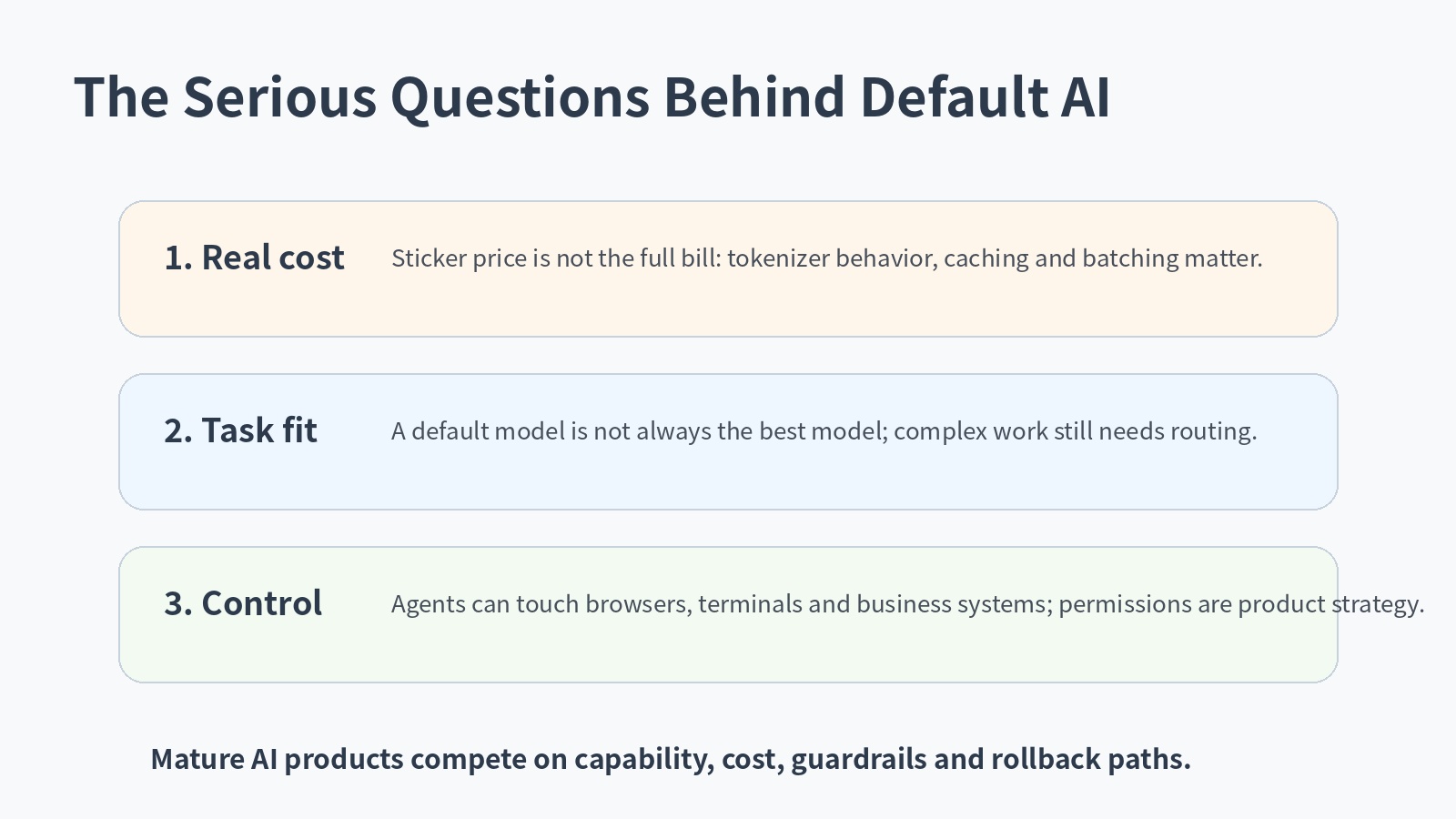
5. The Serious Questions Behind Default AI
A default model is not always the best model. Making Sonnet 5 the default means it is intended to work well for many tasks, not that it is optimal for every task. Complex work still needs model routing, evaluation, human review, and fallback paths.
Cost also requires scrutiny. Tokenizer changes, context compression, prompt caching, batch processing, failed retries, and tool-call patterns can change the real bill. For independent developers, the most dangerous cost is the one they have not measured. Before launch, builders should simulate cost with real user tasks, not idealized prompts.
Safety and control become more important as agents become more capable. If an AI system can use a browser, terminal, file system, enterprise tool, or external API, then permission design, audit logs, sandboxing, and rollback mechanisms become product requirements. The deeper the default workflow, the stronger the guardrails need to be.
6. What Builders and Creators Should Learn
For developers, the key question is not simply whether to switch models. The better question is how model economics change product structure. Which user tasks can be turned into agentic workflows? Which manual operations can be automated with a browser or API? Which features can become sustainable products rather than impressive demos?
For tool-site and mini-app builders, lower inference cost opens the door to lighter AI products: PDF processing, receipt organization, research summarization, web monitoring, spreadsheet generation, code review, and content formatting. These products may not need the absolute strongest model. They need a reliable, affordable, and easy-to-integrate default model.
For writers and creators, the lesson is similar. AI writing is no longer just a chatbox. A real content workflow includes topic discovery, source verification, outlining, drafting, translation, image direction, formatting, and publishing checks. The productivity gain comes when AI becomes the default workspace rather than a separate tool.
Conclusion: The AI Race Is Leaving the Model Menu
Claude Sonnet 5 is more than a new model release. It is a signal that AI competition is moving from “choose a model” to “let AI appear inside the workflow.”
Users may not remember every model name, but they will remember which tool helps them finish work every day. For model companies, the next moat may not be only parameters, benchmark scores, or context length. It may be default placement, developer adoption, cost structure, and workflow habit.
The next phase of AI competition may not be decided by asking which model is the strongest. It may be decided by asking which AI becomes the default place where work begins.
Sources: [1] Anthropic official blog, Introducing Claude Sonnet 5, 2026-06-30. [2] Anthropic product page, Claude Sonnet, accessed 2026-07-02. [3] TechCrunch, Anthropic launches Claude Sonnet 5 as a cheaper way to run agents, 2026-06-30. [4] Axios, Anthropic debuts Sonnet 5 for everyday work, 2026-06-30.
ChatGPT Adoption Shows AI Is Becoming a Daily Global Utility
OpenAI data reveals that users send 50% more messages after 6 months, non-English speakers now make up the majority of active users, and the number of distinct use cases per user has doubled — signaling ChatGPT is moving from a novel chatbot to a daily global utility.

AI Agents Are Moving From Chat to Delegated Work
OpenAI research shows 80.6% of Codex users have delegated tasks exceeding 30 minutes of human work. The age of AI-as-chatbot is giving way to AI-as-delegated-worker, and the implications extend far beyond software engineering.
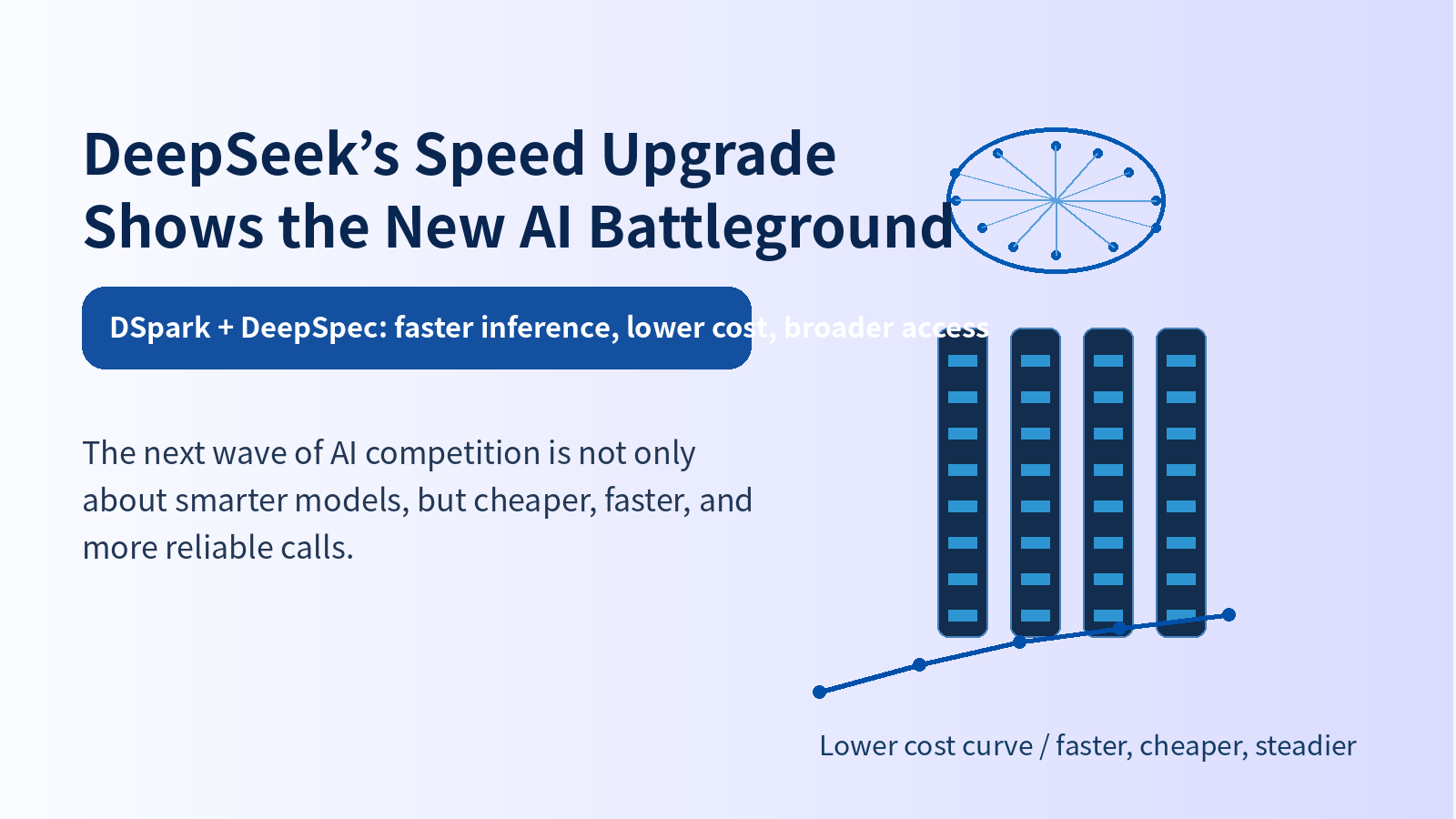
DeepSeek's Speed Upgrade Shows the New AI Battleground
DeepSeek V4 introduces DSpark speculative decoding, boosting inference speed by 60-85%. The next AI battleground is not smarter models but cheaper, faster, more reliable engineering.