AI Agents Are Moving From Chat to Delegated Work
OpenAI research shows 80.6% of Codex users have delegated tasks exceeding 30 minutes of human work. The age of AI-as-chatbot is giving way to AI-as-delegated-worker, and the implications extend far beyond software engineering.
For most people, AI has so far meant asking a question and receiving an answer. But the next phase looks different: instead of answering one prompt at a time, AI agents are beginning to take on entire blocks of work. That is the key signal behind OpenAI’s latest Codex research. The story is no longer about whether AI can help with a task. It is about whether AI can accept a delegated assignment, execute multiple steps, and return a usable deliverable.

1. The data that changes the conversation
OpenAI’s June 25, 2026 research note provides a strong indicator of this shift. In a sampled group of individual Codex users who opted in to research use of their data:
- 80.6% had made at least one Codex request estimated to exceed 30 minutes of human work
- 70.2% had made at least one request estimated to exceed one hour
- 25.6% had made at least one request estimated to exceed eight hours
These are not casual prompts. They are clear signs that users are beginning to hand over longer-horizon work — the kind of work that previously required sustained human attention across multiple contexts.
2. Why this shift matters
The difference between a chatbot and an agent is not merely better language output. A chatbot solves isolated questions; an agent works through a sequence. In its original product introduction, OpenAI described Codex as a cloud-based software engineering agent that can work on many tasks in parallel, each in its own sandboxed environment. The newer research now shows what happens when those capabilities become easier to use: people naturally move from short interactions to delegated workflows.
The shift is also spreading beyond engineering. OpenAI reports that Codex became the primary AI tool across every department at the company, with engineering leading the way and legal, finance, and recruiting crossing into majority Codex usage around April 2026. That is an important clue for the broader economy. AI agents are not only changing how code gets written; they are changing how research, analysis, reporting, documentation, and coordination get done.
3. Why Codex is well suited to half-day tasks
First, Codex supports parallel work. OpenAI’s knowledge-work update says people increasingly use Codex to produce reports, spreadsheets, presentations, contracts, research, data analysis, workflow automation, and lightweight internal tools. The implication is simple: the unit of work is becoming larger. Instead of prompting step by step, users can delegate a package of work and let the system coordinate multiple streams in parallel.
Second, Codex is becoming a remote workbench rather than a purely local tool. OpenAI’s Remote connections documentation says users can connect the ChatGPT mobile app to a Mac or Windows Codex host, start or continue threads, send follow-up instructions, approve actions, and review outputs, test results, terminal output, and screenshots. This makes Codex feel less like a static assistant and more like a remotely managed execution environment.
Third, the surrounding environment is becoming easier to provision. According to the Codex changelog, Remote Control now uses authenticated one-to-one QR pairing, and a new DigitalOcean plugin allows Codex to provision a Droplet, configure SSH access, and connect that machine as a remote workspace. In practice, this lowers the friction of moving from a prompt to a runnable work environment.
4. What changes for four kinds of work
For individual productivity, the biggest gain is not faster typing; it is lower switching cost. A user can ask Codex to clean a dataset, analyze the trend, generate charts, and draft a summary in one delegated flow. That changes how people allocate attention.
For public-sector and policy work, the value lies in structuring repeated workflows. Agents can help with collecting policy materials, organizing outlines, comparing data, drafting first-pass reports, and extracting meeting notes. Human review and responsibility still matter, but the repetitive preparation layer can become much more efficient.
For indie developers and lightweight internal tooling, Codex shortens the distance between idea and prototype. OpenAI’s knowledge-work update notes that users are increasingly building lightweight tools that previously required engineering support. That is a meaningful change for people building small utilities, internal dashboards, automations, or publication workflows.
For content production, the agent model is especially powerful. A publishing workflow can be decomposed into research, source filtering, outlining, drafting, translation, table generation, and visual planning. Instead of juggling many disconnected tools, users can increasingly orchestrate these as a unified workflow.
5. The next competitive frontier
The previous phase of AI competition focused on who could answer best. The next phase will focus on who can complete cross-step work most reliably. That requires more than eloquent output: models need planning ability, tool use, context management, iterative checking, and the discipline to ask for confirmation when needed. OpenAI’s own framing is direct: agentic AI changes the unit of knowledge work from single interactions to delegated, long-horizon tasks.
That is why the Codex story matters beyond software. It points to a broader reorganization of work. The people who benefit most may not be those who personally execute every step, but those who can define tasks clearly, decompose them well, and validate results effectively.
Conclusion
Codex shows that AI is moving from helping with part of a task to taking responsibility for a meaningful block of work. Once more than four-fifths of sampled users have delegated at least a 30-minute task, and one quarter have tried tasks exceeding eight hours, the conversation changes. This is no longer about novelty. It is about a new production model. The practical question is no longer whether AI can do work for us, but which work is now ready to be delegated.
Written by Cirbinus. The views expressed are the author’s own and do not represent OpenAI or any other organization.
References
- OpenAI, How agents are transforming work, 2026-06-25.
- OpenAI Developers, Remote connections – Codex, accessed 2026-06-29.
- OpenAI Developers, Codex changelog, relevant June 2026 updates.
- OpenAI, Codex is becoming a productivity tool for everyone, 2026-06-02.
- OpenAI, Introducing Codex, originally published 2025-05-16, updated 2025-06-03.
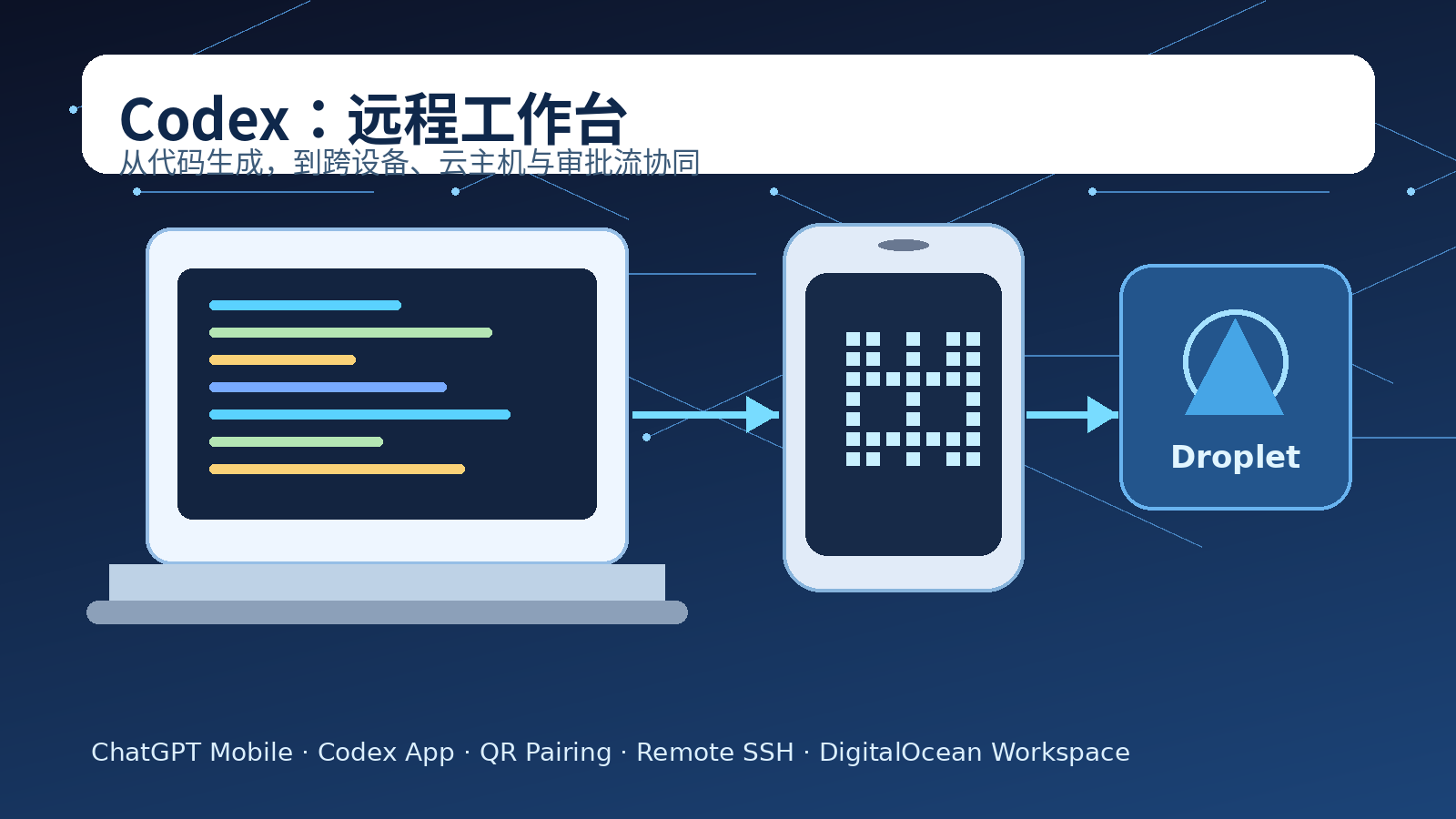
Codex Is Becoming a Remote Workspace, Not Just a Coding Tool
OpenAI Codex Remote reaches GA — Codex is shifting from a code generation assistant to a supervised remote workspace that connects mobile, hosts, SSH, and cloud environments into one workflow.

ChatGPT Adoption Shows AI Is Becoming a Daily Global Utility
OpenAI data reveals that users send 50% more messages after 6 months, non-English speakers now make up the majority of active users, and the number of distinct use cases per user has doubled — signaling ChatGPT is moving from a novel chatbot to a daily global utility.
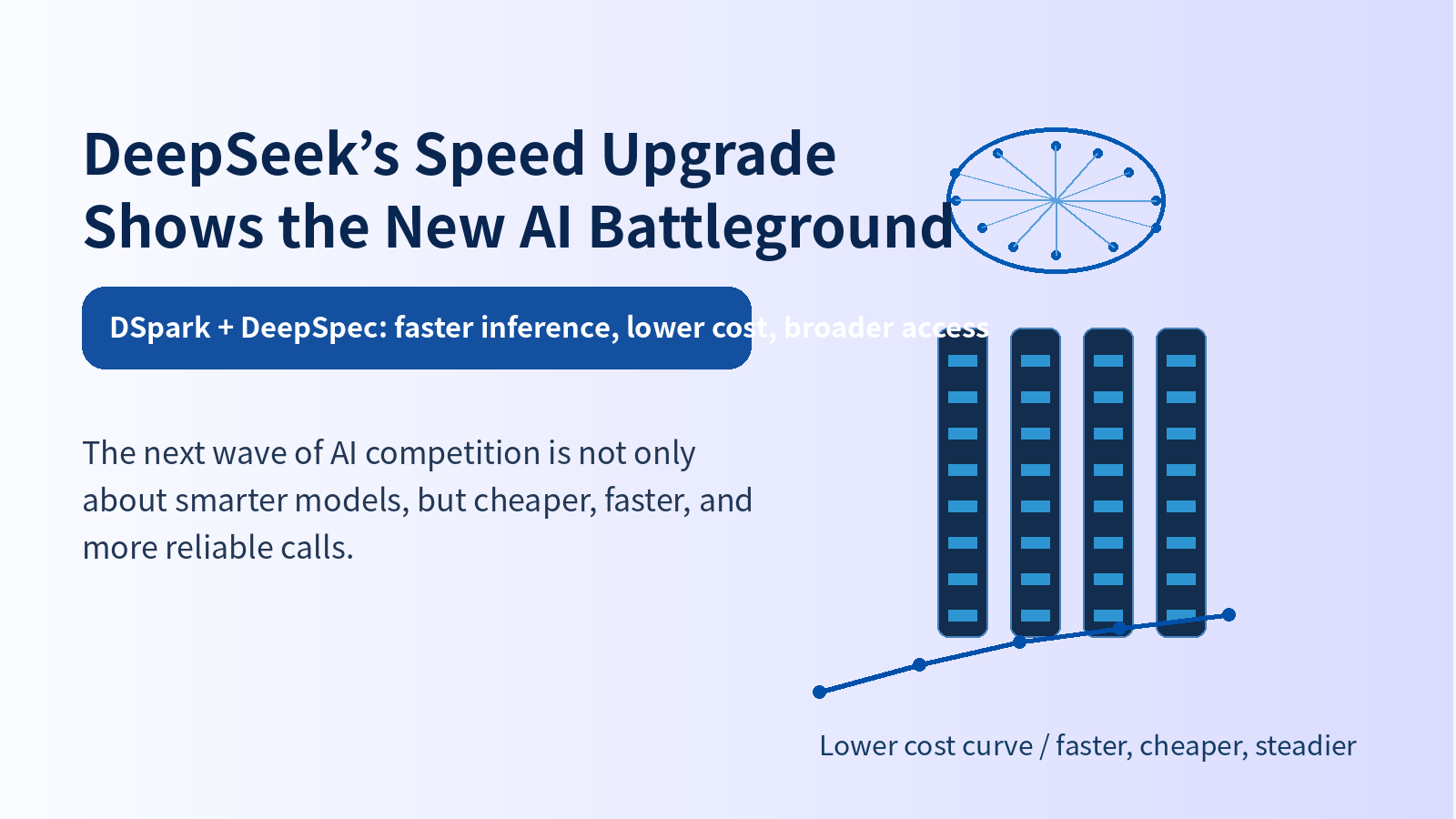
DeepSeek's Speed Upgrade Shows the New AI Battleground
DeepSeek V4 introduces DSpark speculative decoding, boosting inference speed by 60-85%. The next AI battleground is not smarter models but cheaper, faster, more reliable engineering.