Codex Is Becoming a Remote Workspace, Not Just a Coding Tool
OpenAI Codex Remote reaches GA — Codex is shifting from a code generation assistant to a supervised remote workspace that connects mobile, hosts, SSH, and cloud environments into one workflow.
The next stage of AI development is not only about writing code faster. It is about turning projects, devices, hosts, permissions, tests, and approvals into a supervised workflow.
1. What changed
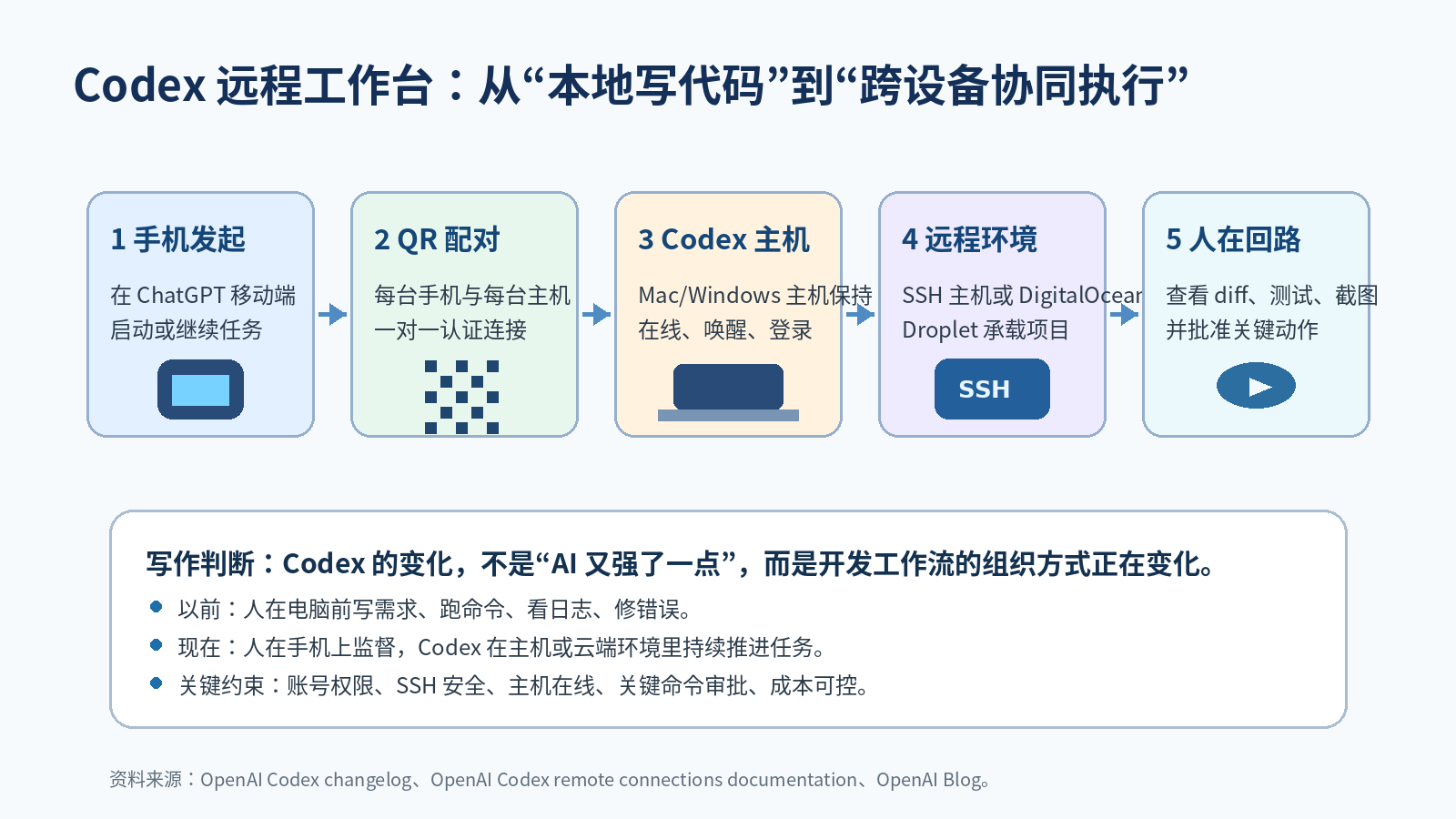
On June 25, 2026, OpenAI added a small but important item to the Codex changelog: Codex Remote has reached general availability. According to the official note, users can use Codex from the ChatGPT mobile app to start or continue work on a connected Mac or Windows host, review progress, and approve actions from their phone. Remote Control now uses authenticated one-to-one QR pairing between each iOS or Android device and each host. OpenAI also introduced a DigitalOcean plugin that lets Codex provision a Droplet, configure SSH access, and connect it to the Codex App as a remote workspace.
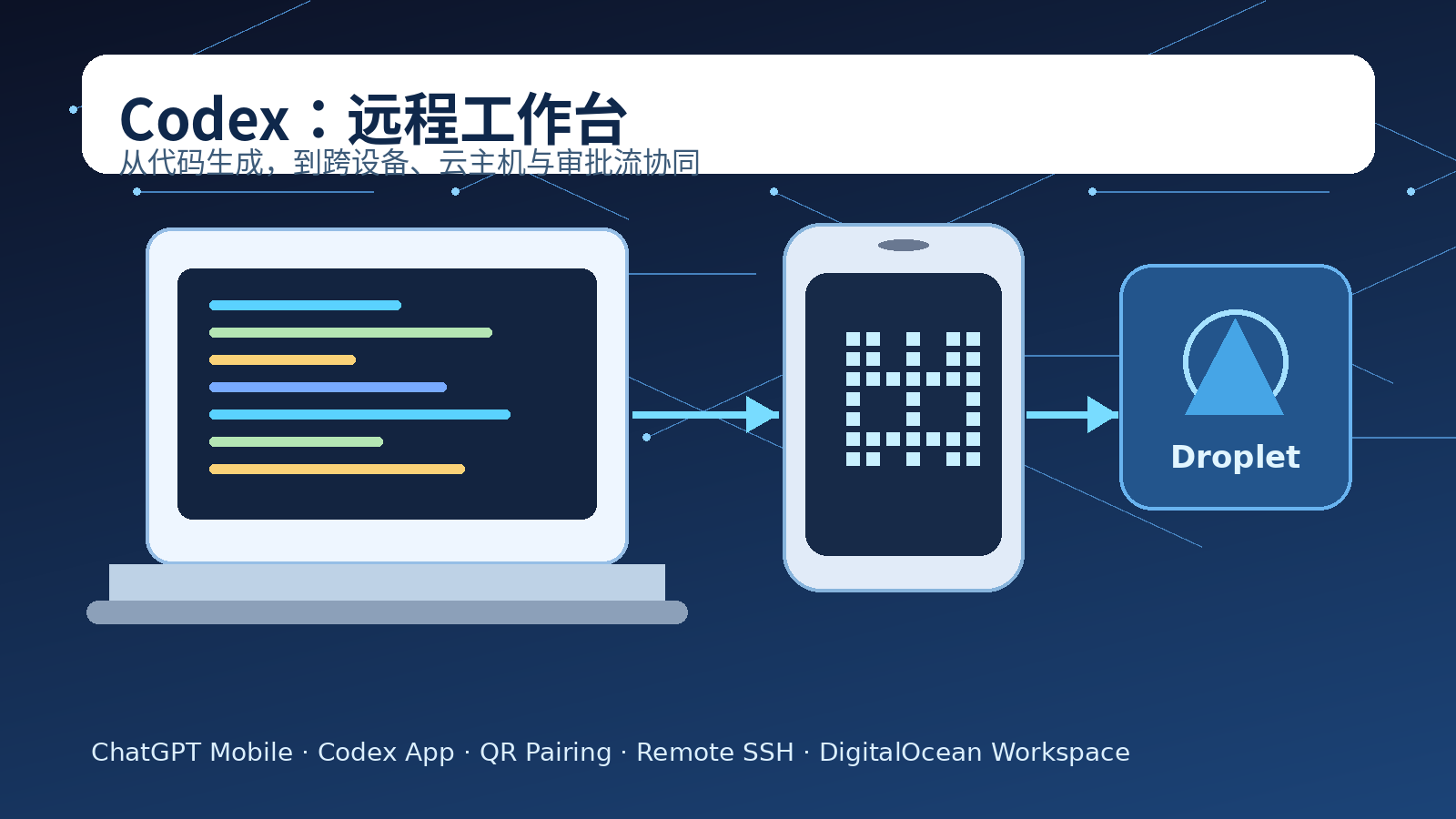
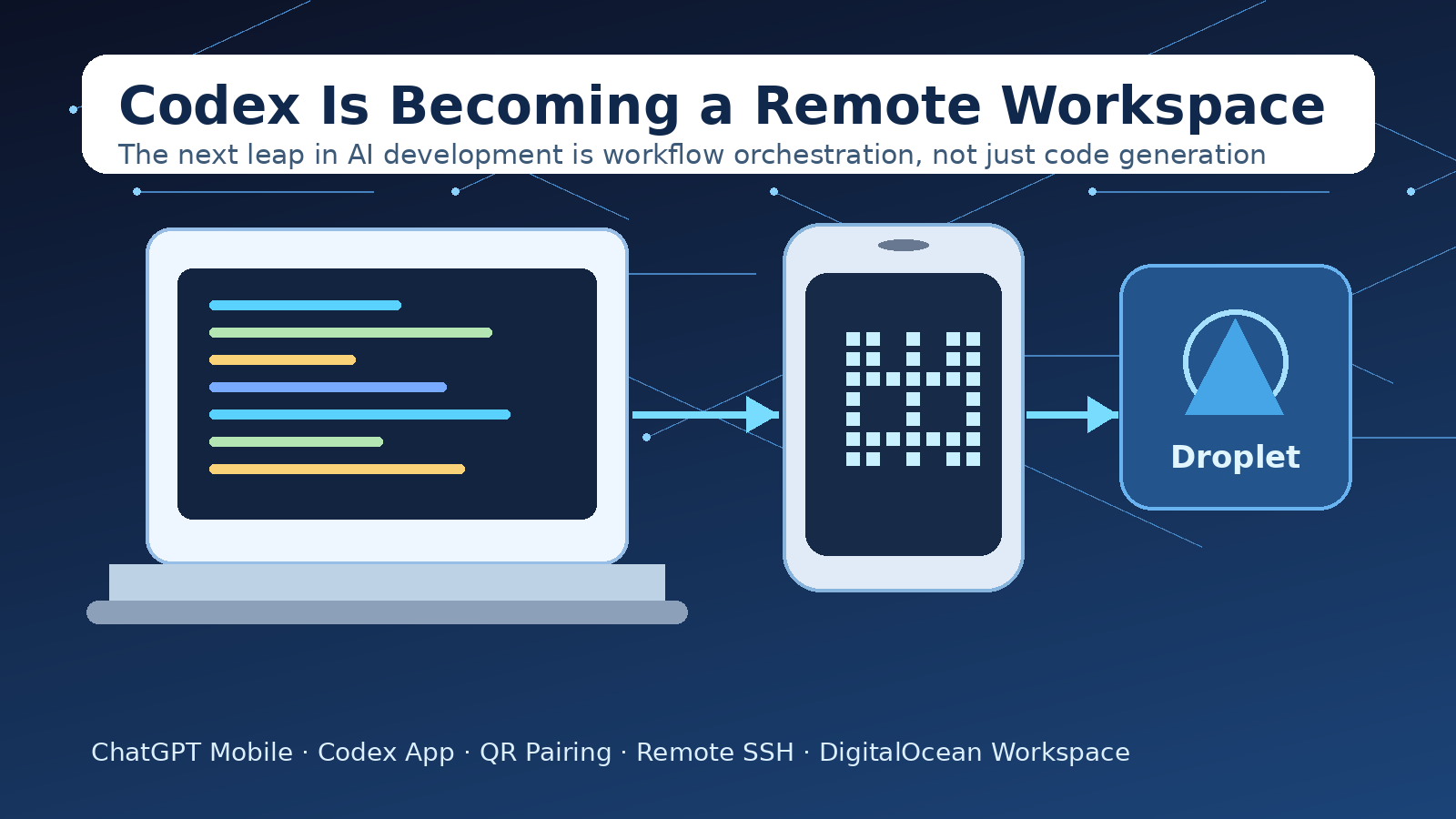
Taken together, these updates suggest a product shift. Codex is no longer just a coding assistant that lives inside an editor, terminal, or browser tab. It is moving toward a remote workspace model, where a person can supervise work from a phone while Codex executes tasks on a local host, an SSH machine, or a cloud development environment.
2. From code generation to task execution
Most people still evaluate AI coding tools by asking whether they can write code, fix bugs, and explain unfamiliar repositories. Those are still important capabilities, but they are only part of real software development. A real project also involves environment setup, dependency management, tests, logs, permissions, diffs, screenshots, reviews, deployments, and rollback plans.
This is why OpenAI’s earlier description of the Codex App as a “command center for agents” matters. The app supports multiple agents running in parallel, project-based threads, diff review, manual handoff to editors, and worktrees that let agents work on isolated copies of the same codebase. With Remote SSH now generally available, Codex can also connect to managed remote environments that already contain approved dependencies, credentials, security policies, and compute resources.
3. Why the remote workspace model matters
A remote workspace changes the role of the user. The human is no longer required to sit in front of a laptop and manually execute every command. Instead, the human defines the goal, supervises progress, reviews outputs, approves sensitive actions, and keeps the workflow within safe boundaries.
The official remote connection documentation shows the scope of this model: users can start new threads, continue existing ones, send follow-up instructions, answer questions, approve commands, review outputs, inspect diffs, check test results, examine terminal output, and look at screenshots. In other words, the interface is less like a code editor and more like a control room.
4. What this means for indie developers
The DigitalOcean plugin is particularly relevant for indie developers. Many small products do not need a complicated cloud-native architecture on day one. A small virtual machine, a Git repository, SSH, a runtime, and a repeatable deployment process may be enough. If Codex can help provision a Droplet, configure SSH, and connect it to the Codex App, the barrier between “I have an idea” and “I have a working development environment” becomes lower.
But this also raises a practical discipline: AI agents should not be given unlimited power. OpenAI’s remote connection documentation reminds users to treat SSH hosts with the same security expectations as normal SSH access, including trusted keys, least-privilege accounts, and no unauthenticated public listeners. The stronger the agent workspace becomes, the more important it is to design permissions, secrets, approvals, and rollback carefully.
5. The broader lesson: learn workflow design
The most useful lesson from Codex Remote is not “switch tools immediately.” The lesson is that AI development is moving from prompt writing to workflow design. The winning skill is not only knowing how to ask for code. It is knowing how to break a project into verifiable tasks, prepare the right environment, define safe permissions, run tests, inspect changes, and decide when a result is good enough to merge or deploy.
In that sense, Codex becoming a remote workspace is a signal for a broader change in knowledge work. AI tools are no longer just chat windows. They are becoming systems that can enter a project, use tools, connect to machines, run processes, and wait for human approval. The people who benefit most will be those who can turn their ideas into structured, reviewable, and executable workflows.
Reference
- [1] OpenAI Developers, Codex changelog, 2026-06-25: https://developers.openai.com/codex/changelog
- [2] OpenAI Developers, Remote connections - Codex: https://developers.openai.com/codex/remote-connections
- [3] OpenAI Blog, Work with Codex from anywhere, 2026-05-14: https://openai.com/index/work-with-codex-from-anywhere/
- [4] OpenAI Blog, Introducing the Codex app, 2026-02-02 / 2026-03-04 update: https://openai.com/index/introducing-the-codex-app/
- [5] OpenAI Help Center, ChatGPT Business release notes: https://help.openai.com/en/articles/11391654-chatgpt-business-release-notes
- [6] OpenAI Developers, Codex web: https://developers.openai.com/codex/cloud

AI Agents Are Moving From Chat to Delegated Work
OpenAI research shows 80.6% of Codex users have delegated tasks exceeding 30 minutes of human work. The age of AI-as-chatbot is giving way to AI-as-delegated-worker, and the implications extend far beyond software engineering.

ChatGPT Adoption Shows AI Is Becoming a Daily Global Utility
OpenAI data reveals that users send 50% more messages after 6 months, non-English speakers now make up the majority of active users, and the number of distinct use cases per user has doubled — signaling ChatGPT is moving from a novel chatbot to a daily global utility.
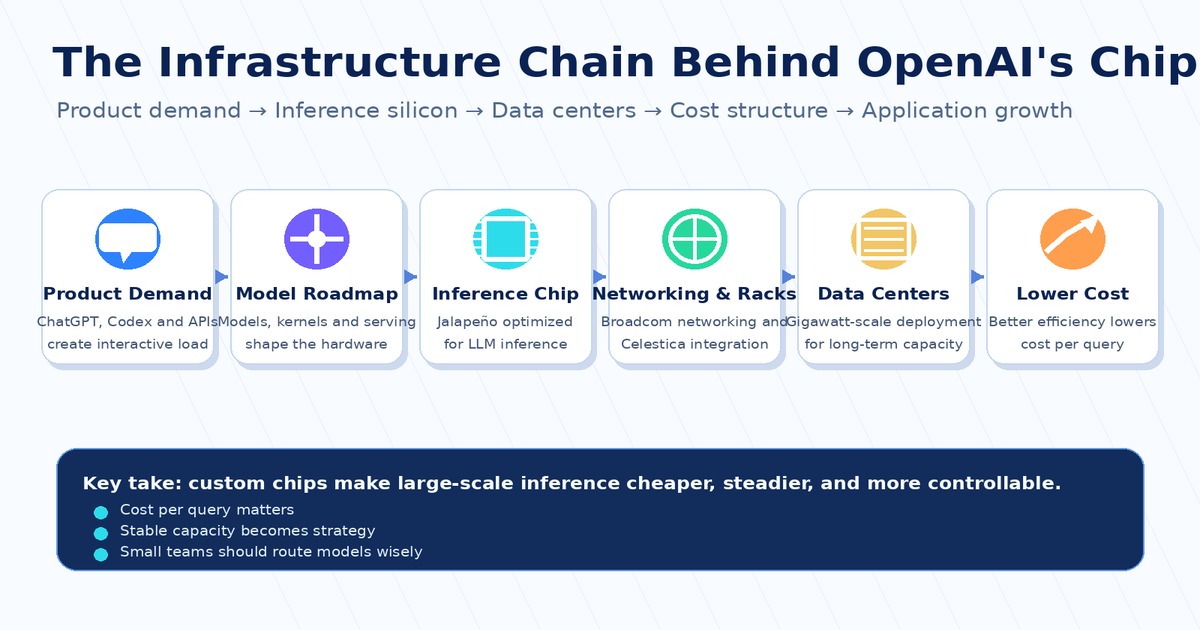
OpenAI's Custom Chip Shows the Next AI Battleground: Compute
OpenAI and Broadcom unveiled Jalapeño on June 24, 2026 — not just a chip announcement, but a signal that AI competition is shifting to compute infrastructure.