Food Safety for Children Aged 2–3: A Practical, Evidence-Based Family Guide
An evidence-based family guide to choking prevention, foodborne illness, allergy emergencies, fish safety and first aid for toddlers aged 2–3.
This guide is for family health education. It is not a substitute for pediatric assessment or accredited first-aid training. Call emergency services immediately for severe choking, breathing difficulty, altered consciousness, anaphylaxis, or ingestion of a high-risk object.
Toddlers often look increasingly “adult” at the table, yet the ability to chew, coordinate swallowing, control impulses, and remain still during meals is still developing. The American Academy of Pediatrics has long identified children age 3 and younger as a particularly important group for choking prevention, and food shape, size, and consistency are central to that risk.[1]
Foodborne illness also deserves more attention in this age group. Children under 5 are more vulnerable to some foodborne pathogens, and vomiting or diarrhea can produce dehydration more quickly than in older children or adults.[5] A useful family safety system therefore has four layers: prevent choking, prevent microbial contamination, recognize serious allergic reactions, and know what to do in an emergency.
The 12 rules worth remembering
-
Have the child sit upright for food and snacks. Avoid eating while walking, crawling, lying down, or riding in a moving car/stroller, and keep meals calm and supervised.[2]
-
Do not serve whole nuts, popcorn, hard candy, chewing gum, marshmallows, whole grapes/cherry tomatoes, or hard raw chunks of apple or carrot to a 2–3-year-old.[2][3]
-
Quarter grapes and small tomatoes lengthwise. Split sausages/hot dogs lengthwise before cutting into small pieces; coin-shaped slices can behave like plugs.
-
Chopped nuts are not automatically safe. CDC lists whole or chopped nuts/seeds as potential choking hazards for young children. Use finely ground nuts or a thin layer of smooth nut butter instead.[2]
-
Remove bones and fish bones carefully. Meat should be tender and easy to break apart.
-
Choose pasteurized milk, dairy products, and juice. Avoid raw/unpasteurized milk and dairy for young children.[5][7][8]
-
Avoid raw or undercooked meat, poultry, eggs, fish, shellfish, and raw sprouts.
-
Keep the refrigerator at 4°C (40°F) or below. Refrigerate perishable food within 2 hours, or within 1 hour when ambient temperature is above 32°C (90°F).[6]
-
Use a food thermometer when useful: poultry 74°C/165°F; ground meat 71°C/160°F; whole cuts 63°C/145°F plus a 3-minute rest; leftovers 74°C/165°F.[6]
-
For fish, favor lower-mercury “Best Choices.” FDA/EPA guidance averages about 1 oz (28 g) per serving for ages 1–3, two servings per week.[9]
-
If the child can cough effectively, cry, or make sounds, let them cough and observe closely. Never perform a blind finger sweep.[4]
-
For severe choking in a responsive child, the 2025 AHA guideline recommends repeated cycles of 5 back blows and 5 abdominal thrusts; if the child becomes unresponsive, begin CPR.[4]
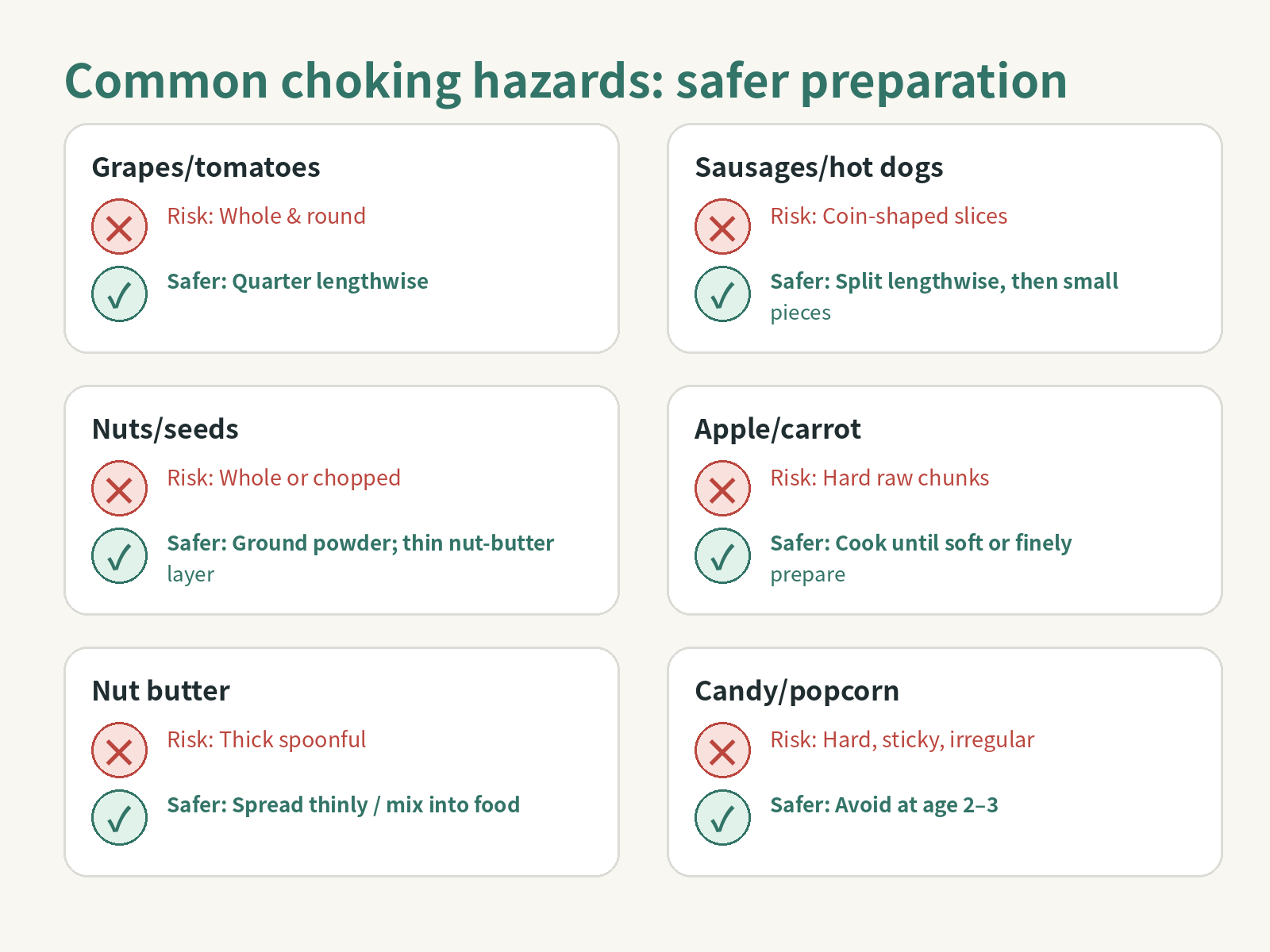
Figure 1 | Common choking hazards and safer preparation (original illustration based on CDC/AAP principles)
1. Choking: the most immediate food hazard
Why toddlers remain vulnerable
Choking risk is not simply a question of whether a child “has teeth.” A young child may not grind hard foods efficiently, may try to swallow food before chewing is complete, and may suddenly talk, laugh, or move while eating. Foods that are round, cylindrical, firm, compressible, or sticky can lodge tightly in a small airway.[1]
Clinical studies support the emphasis on hard snack foods and nuts. In a review of foreign-body aspiration in children under 3, nuts, raw carrots, and popcorn kernels made up a substantial share of aspirated items among the youngest patients. A 2020 study reported that about 90% of pediatric nut aspiration events occurred before 36 months of age.[12][13]
Four features that make a food dangerous
| Feature | Why it matters | Examples |
|---|---|---|
| Shape | Round/cylindrical pieces can seal the airway | Grapes, cherry tomatoes, coin-cut sausage |
| Hardness | Difficult to crush before swallowing | Nuts, raw carrot, hard apple |
| Stickiness/elasticity | Can form a cohesive plug | Gummy candy, marshmallow, thick nut butter |
| Size/compressibility | Can match and mold to airway diameter | Whole grape, hot dog, meatball |
Safer preparation by food
| Food | Higher-risk form | Safer approach |
|---|---|---|
| Grapes / cherry tomatoes | Whole or only halved crosswise | Quarter lengthwise; remove pits/seeds as needed |
| Hot dogs / sausages | Whole or coin-shaped slices | Split lengthwise, then cut into small pieces |
| Nuts / seeds | Whole or chopped | Finely ground; smooth nut butter spread thinly |
| Nut/seed butter | Thick spoonful | Thin spread or mix into yogurt/oatmeal |
| Apple / carrot | Hard raw chunks | Cook until soft or prepare finely for the child’s chewing skill |
| Popcorn / hard or gummy candy / gum / marshmallow | Served as-is | Avoid in this age group; AAP advises keeping high-risk foods away until around age 4 or later depending on development[3] |
| Meat / cheese | Large tough chunks or round pieces | Cook tender; shred or cut into small, non-round pieces |
| Fish / bone-in meat | Bones or fine fish bones present | Remove carefully and re-check before serving |
The meal environment is part of choking prevention
-
Seat the child upright in a stable chair.
-
Supervise throughout the meal, not only when a “dangerous” food is served.
-
Avoid chasing a child with food, feeding during active play, or combining screen distraction with repeated spoon-feeding.
-
Do not deliberately make the child laugh or rush them to swallow.
-
Make the same rules explicit for grandparents, babysitters, daycare staff, and other caregivers.
CDC specifically recommends seated eating, calm meals, avoidance of distractions and rushing, and continuous supervision while young children eat.[2]
2. Foodborne illness: Clean, Separate, Cook, Chill
Children under 5 have a higher risk of serious foodborne illness because their immune defenses are still developing. Diarrhea and vomiting also create a greater dehydration risk in small children.[5][10]
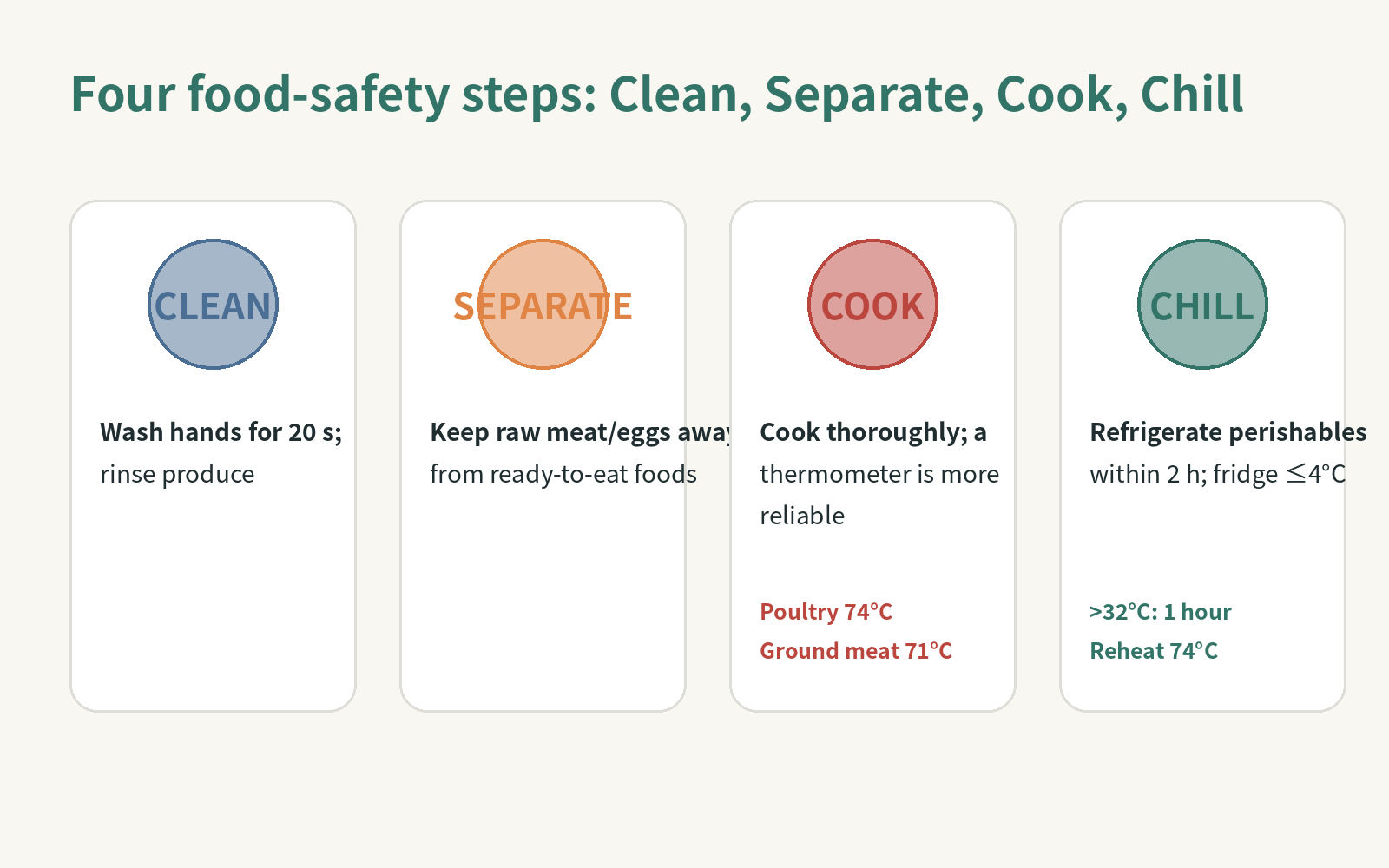
Figure 2 | Clean, Separate, Cook, Chill (original infographic; temperatures based on FoodSafety.gov/CDC)
Clean
Wash hands with soap and running water for at least 20 seconds before preparing food, after handling raw meat or eggs, after using the toilet, and after diaper changes. Rinse produce under running water before cutting or serving. Do not wash fruits or vegetables with household detergent or disinfectant.
Separate
Keep raw meat, poultry, eggs, and seafood away from ready-to-eat food. Use separate cutting boards when practical, or wash equipment thoroughly between raw and ready-to-eat foods. Never return cooked food to a plate that held raw meat unless the plate has been properly cleaned.
Cook
| Food | Minimum internal temperature / endpoint |
|---|---|
| Poultry, including ground poultry | 74°C / 165°F |
| Leftovers and casseroles | 74°C / 165°F |
| Ground beef/pork and sausage | 71°C / 160°F |
| Whole cuts of beef/lamb/pork | 63°C / 145°F + 3-minute rest |
| Fish | 63°C / 145°F, or opaque and flakes easily |
| Eggs | Yolk and white firm; egg dishes about 71°C / 160°F |
These are minimum food-safety targets, not a requirement to probe every bite. A thermometer is especially useful for thick poultry pieces, ground meat, casseroles, and reheated leftovers.[6]
Chill
-
Keep the refrigerator at 4°C/40°F or below and the freezer at about −18°C/0°F.
-
Refrigerate perishable foods within 2 hours; use a 1-hour limit above 32°C/90°F.[6]
-
Use shallow containers so leftovers cool more quickly. General guidance is to use refrigerated leftovers within 4 days and reheat to 74°C/165°F. For toddlers, discard food whenever storage history is uncertain.
-
Do not rely on smell or taste to detect foodborne pathogens; unsafe food can look and smell normal.
Foods with avoidable microbial risk in toddlers
| Riskier choice | Safer choice / reason |
|---|---|
| Raw/unpasteurized milk or dairy | Choose pasteurized products; raw dairy can carry Salmonella, E. coli, Listeria, Campylobacter and other pathogens.[7][8] |
| Unpasteurized juice/cider | Choose pasteurized or otherwise safely treated juice.[5] |
| Raw or runny eggs / raw batter | Cook eggs until firm; use pasteurized egg products in uncooked recipes. |
| Raw/undercooked meat, fish or shellfish | Serve fully cooked food. |
| Raw sprouts | Cook until steaming hot; germination conditions favor bacterial growth.[5] |
| Unwashed produce / cut melon left warm | Rinse produce; refrigerate cut fruit promptly. |
3. Fish and seafood: focus on bones, doneness, and mercury
Fish supplies useful nutrients, and the safest strategy is not to eliminate seafood but to choose lower-mercury varieties, cook them, and remove bones carefully. FDA/EPA guidance lists an average serving of about 1 oz (28 g) for ages 1–3 and recommends two weekly servings from the “Best Choices” category.[9]
Examples of lower-mercury choices include salmon, sardines, cod, shrimp, tilapia, trout, catfish, and canned light tuna. The FDA/EPA “Choices to Avoid” list includes king mackerel, marlin, orange roughy, shark, swordfish, Gulf of Mexico tilefish, and bigeye tuna.[9]
-
Check fish again with your fingers after cooking; fine bones can remain even after filleting.
-
Avoid raw oysters, sashimi, ceviche, and other raw/undercooked seafood for a 2–3-year-old.
-
For locally caught fish, follow local fish-consumption advisories when available.
4. Food allergy and anaphylaxis
Common food allergens include milk, egg, peanut, tree nuts, wheat, soy, fish, and shellfish. Reactions can be limited to the skin or can involve several organ systems. Anaphylaxis is a rapid, potentially life-threatening reaction and can occur without a skin rash.[11]
| Pattern | Examples | What to do |
|---|---|---|
| Mild / single system | Limited hives, mild itching, local redness | Stop the suspected food; observe and follow the child’s established medical plan. |
| Possible anaphylaxis | Breathing difficulty, wheeze, hoarse voice, throat swelling, fainting, severe pallor/altered responsiveness, or rapidly evolving multi-system symptoms | Treat as an emergency. Call EMS. If the child has prescribed epinephrine and an action plan, use it promptly as instructed. |
AAAAI states that anaphylaxis requires immediate medical treatment and prompt epinephrine. Caregivers of a child at risk should know the prescribed device and the individualized action plan. Antihistamines are not a substitute for epinephrine in anaphylaxis.[11]
5. What to do when a child is choking: 2025 AHA guidance
The first distinction is mild versus severe foreign-body airway obstruction. A child with mild obstruction can still cough or make sounds. Severe obstruction may involve a weak or absent cough, inability to speak or make sounds, cyanosis, altered mental status, or apnea.[4]
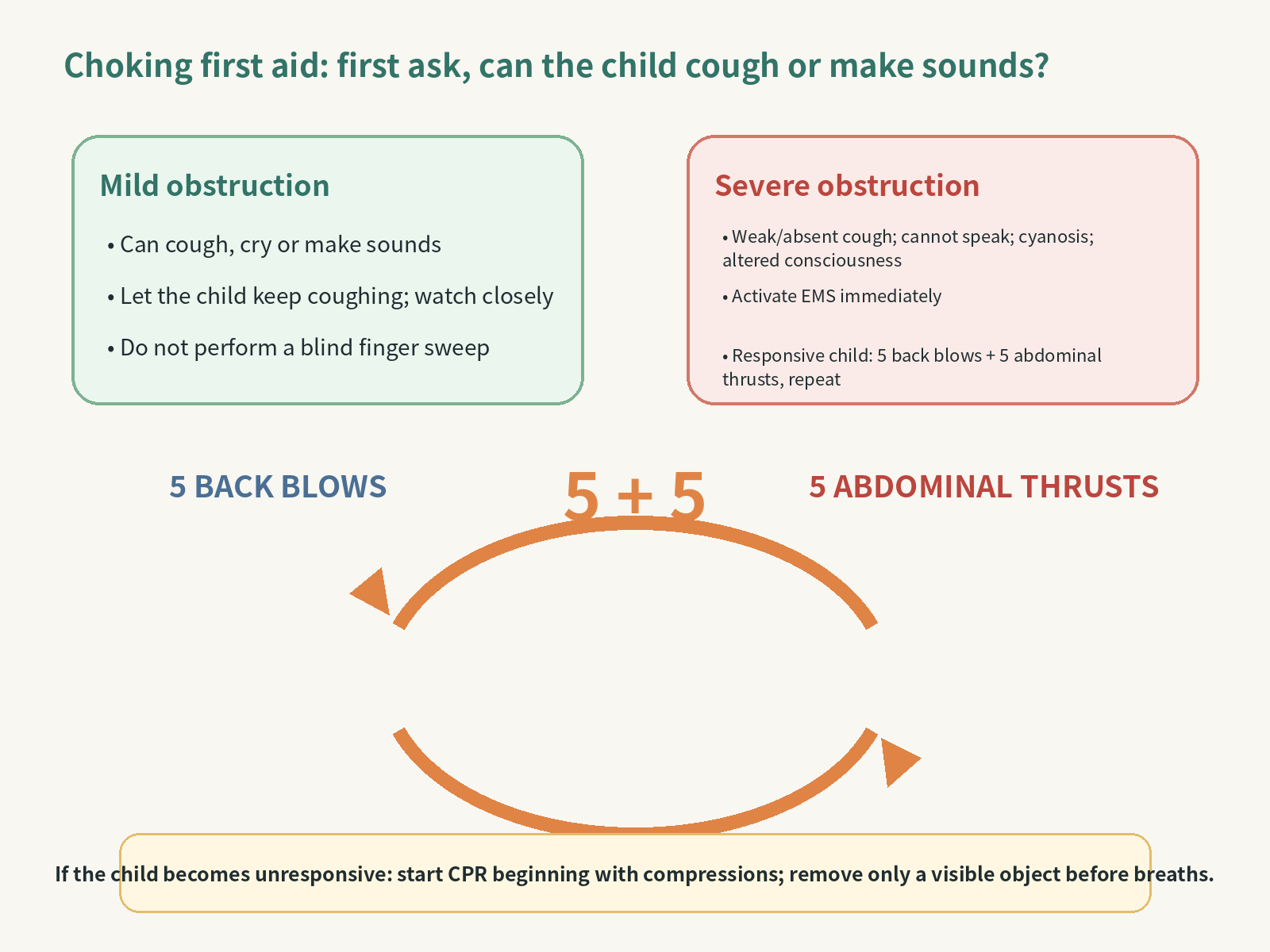
Figure 3 | Choking first-aid flow for a 2–3-year-old (based on 2025 AHA pediatric FBAO guidance; not a substitute for hands-on training)
If the child can cough effectively
-
Let the child keep coughing and observe closely.
-
Do not perform a blind finger sweep. AHA specifically recommends against blind sweeps because they can worsen obstruction.[4]
-
Escalate immediately if coughing becomes weak/silent or the child cannot make sounds, turns blue, or becomes less responsive.
If the child is responsive but has severe obstruction
Activate emergency medical services immediately. For a child older than 1 year with severe foreign-body airway obstruction, the 2025 AHA guideline recommends repeated cycles of 5 back blows followed by 5 abdominal thrusts until the object is expelled or the child becomes unresponsive.[4]
-
Back blows: lean the child forward and deliver five firm blows with the heel of the hand between the shoulder blades.
-
Abdominal thrusts: from behind the child, perform quick inward-and-upward thrusts above the navel and below the lower end of the breastbone. Learn exact hand placement in an accredited pediatric first-aid course.
-
After an object is expelled, continue to monitor. Persistent wheeze, cough, pain, swallowing difficulty, or concern for retained material warrants medical assessment.
If the child becomes unresponsive
Begin CPR on a firm surface and get EMS/AED support. The 2025 AHA pediatric FBAO guidance says to start with chest compressions and not to delay for a pulse check. Each time the airway is opened for breaths, remove an object only if it is clearly visible; do not sweep blindly.[4]
| Important Commercial suction-based anti-choking devices should not replace standard first aid. The 2025 AHA guideline states that evidence is insufficient to recommend these devices for infants or children.[4] |
|---|
6. Food poisoning: when to seek medical help
Common food-poisoning symptoms include diarrhea, abdominal pain or cramps, nausea, vomiting, and fever. CDC advises medical evaluation for severe features such as bloody diarrhea, diarrhea lasting more than three days, high fever, vomiting that prevents fluid intake, or signs of dehydration.[10]
-
Bloody diarrhea.
-
Repeated vomiting with inability to keep fluids down.
-
Markedly reduced urination, dry mouth, no tears, unusual sleepiness or lethargy.
-
Severe or persistent abdominal pain, seizures, confusion, or a child who appears significantly different from baseline.
-
High or persistent fever, especially when accompanied by poor drinking or reduced responsiveness.
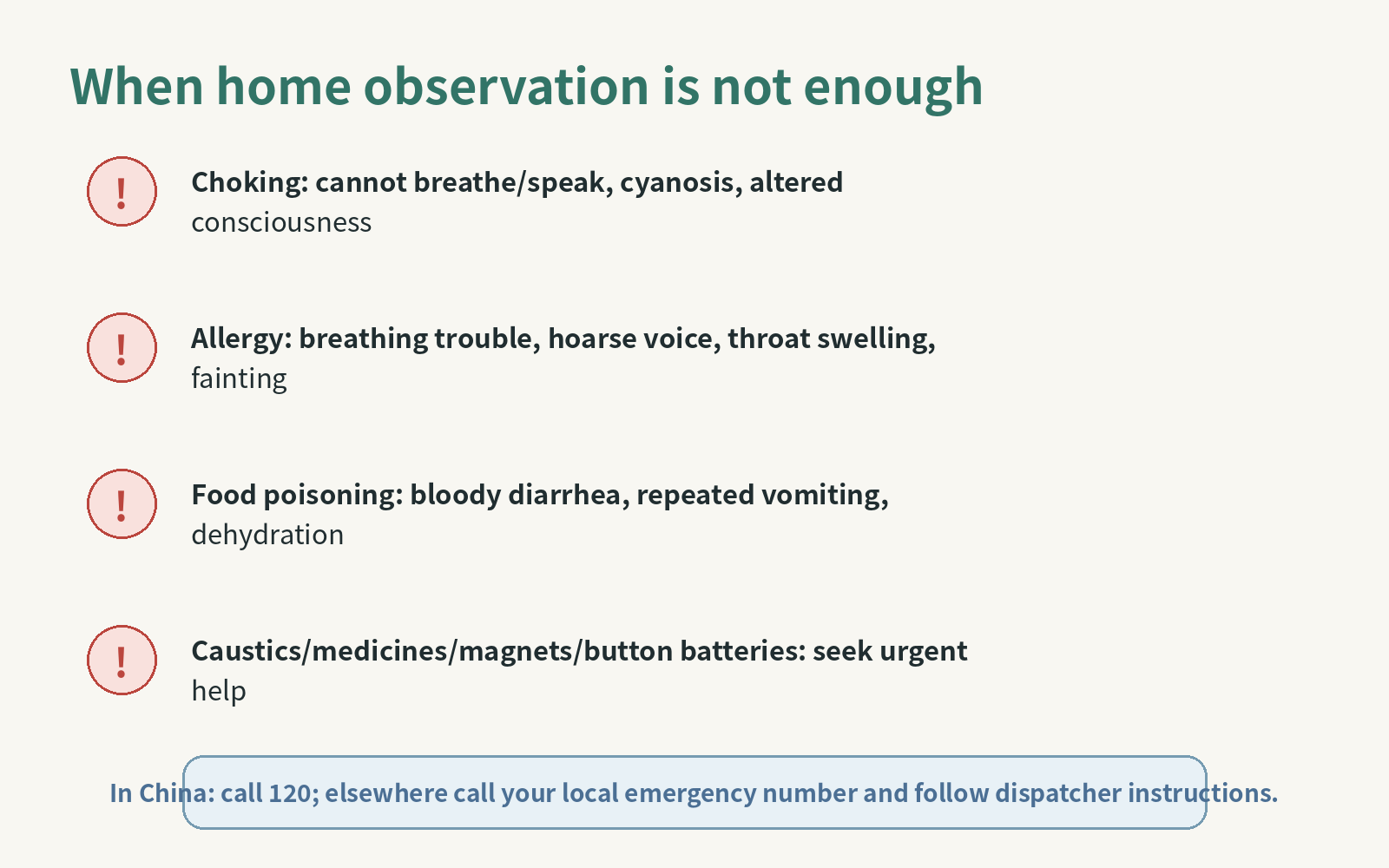
Figure 4 | Emergency warning signs (original infographic)
7. Ten real-life mistakes that matter
| Situation | Safer response |
|---|---|
| A grandparent offers one peanut or sunflower seed | Make a household rule: no whole nuts/seeds for a 2–3-year-old. |
| A toddler eats grapes in a car seat | Avoid high-risk solid food in a moving vehicle; supervision and access are limited. |
| A round meatball comes from a hot pot | Cut it, cool it, and make sure the center is cooked. |
| A large spoonful of peanut butter | Spread thinly or dilute/mix into another food. |
| “Raw milk is more natural” | Natural does not mean microbiologically safe; use pasteurized dairy. |
| Cooked rice sits on the table all afternoon | Refrigerate perishable cooked food promptly; reheating is not a substitute for safe storage. |
| The child tries sashimi or a raw oyster | Serve fully cooked seafood instead. |
| Feeding while the child watches a video | Reduce distraction and let the child control chewing/swallowing. |
| Back blows are started whenever the child coughs | If coughing is effective, encourage coughing; severe obstruction requires the 5+5 sequence. |
| A caregiver puts fingers deep into the mouth | Remove only a clearly visible, easily reachable object; never sweep blindly. |
8. Refrigerator-door checklist
-
□ Sit upright + adult supervision.
-
□ Quarter grapes/tomatoes lengthwise; split sausage lengthwise before cutting small.
-
□ No whole/chopped nuts as loose pieces; use ground nuts or a thin nut-butter layer.
-
□ No popcorn, hard/gummy candy, gum, or marshmallows at age 2–3.
-
□ Remove fish bones and small bones; keep meat tender and small.
-
□ Use pasteurized milk/juice; avoid raw egg, raw meat, raw seafood, and raw sprouts.
-
□ Fridge ≤4°C; refrigerate perishables within 2 h (1 h if >32°C).
-
□ Poultry 74°C; ground meat 71°C; leftovers 74°C.
-
□ Know anaphylaxis warning signs and the child’s prescribed emergency plan.
-
□ Mild choking: cough. Severe choking: 5 back blows + 5 abdominal thrusts. Unresponsive: CPR + EMS.
References
[1] Committee on Injury, Violence, and Poison Prevention. Prevention of Choking Among Children. Pediatrics. 2010;125(3):601–607. doi:10.1542/peds.2009-2862.
[2] U.S. Centers for Disease Control and Prevention (CDC). Choking Hazards | Infant and Toddler Nutrition. Updated 2026-03-11.
[3] American Academy of Pediatrics / HealthyChildren.org. Choking Prevention for Babies & Children. Updated 2026-02-27.
[4] American Heart Association. 2025 Guidelines, Part 6: Pediatric Basic Life Support; Child Foreign-Body Airway Obstruction Algorithm. 2025.
[5] CDC. Safer Food Choices for Children Under 5 Years Old. 2024.
[6] FoodSafety.gov. 4 Steps to Food Safety; Safe Minimum Internal Temperatures; Cold Food Storage Chart.
[7] CDC. Raw Milk | Food Safety. 2024.
[8] Costard S, Espejo L, Groenendaal H, Zagmutt FJ. Outbreak-Related Disease Burden Associated with Consumption of Unpasteurized Cow’s Milk and Cheese, United States, 2009–2014. Emerg Infect Dis. 2017;23(6):957–964. doi:10.3201/eid2306.151603.
[9] U.S. FDA / EPA. Advice about Eating Fish for children ages 1–11 years. Serving guidance and mercury categories.
[10] CDC. Food Poisoning Symptoms: Complications and When to Seek Help. Updated 2025-11-24.
[11] American Academy of Allergy, Asthma & Immunology (AAAAI). Anaphylaxis: Symptoms, Diagnosis, Treatment & Management. Updated 2026-07-29.
[12] D’Souza JN, Valika TS, Bhushan B, Ida JB. Age based evaluation of nut aspiration risk. J Otolaryngol Head Neck Surg. 2020;49:73. doi:10.1186/s40463-020-00473-y.
[13] Morley RE, Ludemann JP, Moxham JP, Kozak FK, Riding KH. Foreign body aspiration in infants and toddlers: recent trends in British Columbia. J Otolaryngol. 2004;33(1):37–41. doi:10.2310/7070.2004.00310.
[14] Chinese Center for Disease Control and Prevention. Prevention of childhood suffocation/choking health education. 2026-07-28.
[15] Chinese Nutrition Society. Chinese Infant and Young Child Feeding Guidelines (2022) and Preschool Child Dietary Guidance.
Selected source links
AHA: Pediatric Basic Life Support
CDC: Safer Food Choices for Children Under 5
FoodSafety.gov: Safe Minimum Internal Temperatures

The Things We Truly Have to Do in Life Are Few
A reflection on unfinished projects, health, family, and learning to stop before life itself becomes an endless task list.

Nietzsche’s Philosophy
What remains when inherited sources of truth, morality, and meaning lose their authority?

From Land Taxes to Corvée Labor: How Qin Funded an Empire
Qin had no modern income taxes or bond market. Its fiscal power came from turning land, households, grain, labor, and military manpower into resources the state could identify and mobilize.