Finance: Describing, Controlling, and Proving Reality
Finance is not merely about handling money or keeping books. It abstracts real operations into economic information, governs resource use, and preserves traceable evidence of responsibility.
Introduction: Finance Is Not the Business Itself
Inside any organization, operational teams experience reality as a sequence of concrete events: a road is repaired, equipment is purchased, a service contract is signed, a project is accepted, and a payment is made. Finance sees the same reality differently. It converts these events into amounts, accounts, budget categories, assets, liabilities, expenses, receivables, payables, and eventually financial statements.
That conversion is the key to understanding what finance really is. Finance is not merely the handling of money, and accounting is not merely bookkeeping. At a deeper level, finance is a structured model of the organization’s economic reality. It deliberately reduces a complex world into standardized information that can be compared, summarized, controlled, and audited.
A concise way to put it is this: operations create reality; finance describes that reality, constrains the use of resources, and preserves evidence of what happened.
1. A Single Payment Contains More Reality Than Any Journal Entry
Imagine that a public organization spends 100,000 yuan to repair a drainage ditch. In the real world, the transaction contains far more information than the amount itself. Why was the repair needed? Who proposed it? Who approved it? Who performed the work? How much was completed? Was the work accepted? What did the contract require? When was payment due? Was there any warranty obligation?
Finance cannot copy all of that reality into the ledger. It must first identify the economic meaning of the event. The organization incurred an expenditure of 100,000 yuan; the payment belongs to a specific budget item and economic classification; a particular supplier received the money; the event may create an expense, an asset, or a change in a receivable or payable.
Once documents are collected and accounting judgments are made, the event is converted into vouchers, ledger entries, account balances, and eventually a small number of figures in a financial statement. A rich, multidimensional event has become a standardized economic representation.
2. Finance as Abstraction
A useful analogy is a map. A map is not the physical world. It ignores most trees, sounds, people, and buildings, yet it preserves the features that matter for navigation: location, distance, direction, and connection. Finance performs a similar reduction.
An organization may experience thousands of events, but the finance system retains only selected information that matters for economic measurement, institutional compliance, and accountability. Accounts, budget codes, vouchers, ledgers, and statements are the language of that model.
The process can be expressed as a chain: real business → economic event → source documents → accounting judgment → accounts and entries → ledgers → financial statements. Each step increases structure and comparability, but it also removes some of the original context.
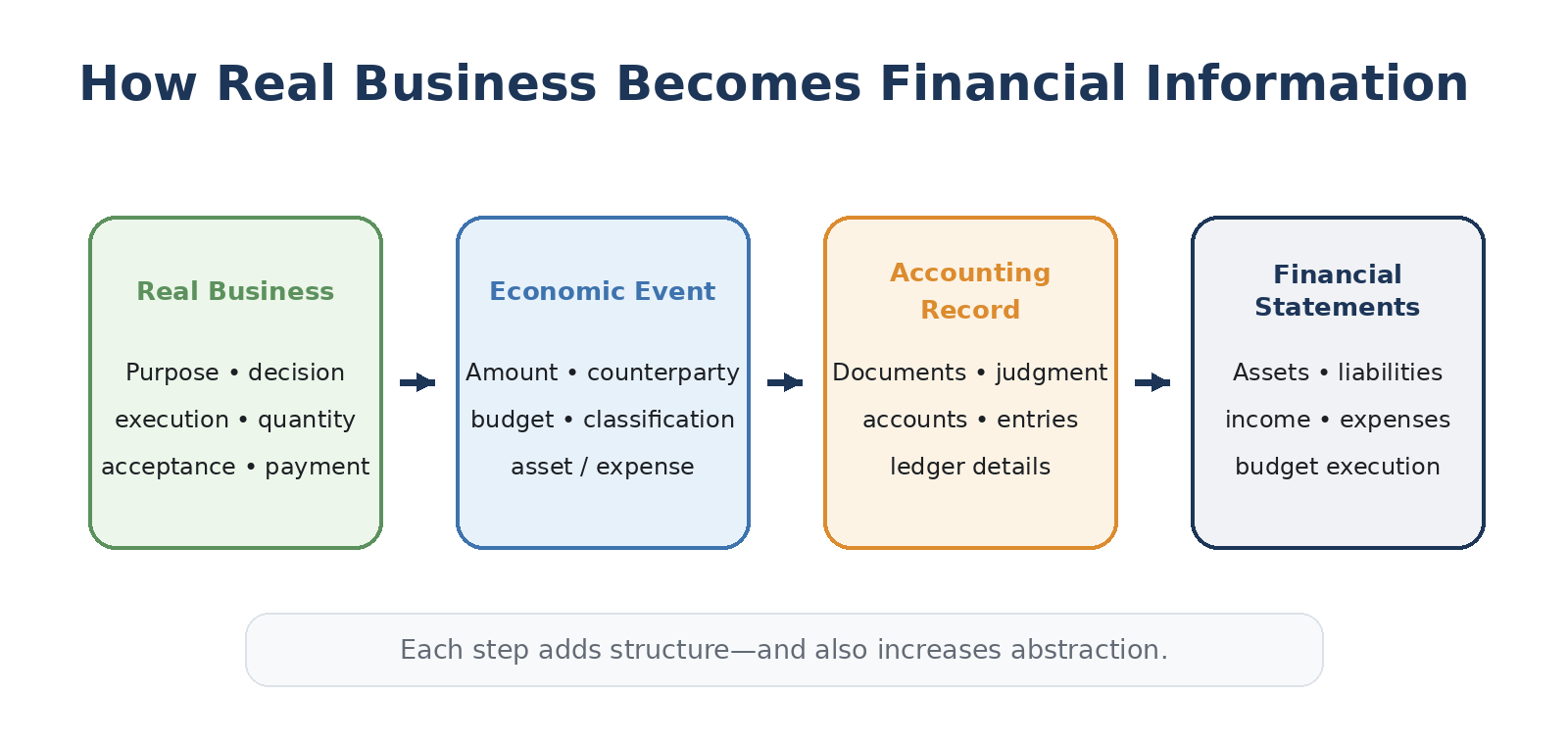
Figure 1 | From real business to financial statements: more structure, greater abstraction.
Figure 1 | From real business to financial statements: more structure, greater abstraction.
3. Abstraction Is Also Compression
Thousands of real-world events may become thousands of accounting records. Those records are grouped into account balances, and the balances are compressed again into a relatively small set of statement figures. This compression is one of finance’s greatest strengths.
Executives do not need to read every invoice to understand the organization’s broad economic condition. They can instead look at assets, liabilities, income, expenses, cash, budget execution, and major receivables or payables. A few dozen indicators create an economic outline of the organization.
But compression has a cost. A correct-looking total can hide operational problems. For that reason, financial information must remain expandable. A summarized number should never become a dead end; it should remain connected to the details, documents, contracts, and real events that produced it.
4. Finance as a Resource-Control System
In a public organization, finance must answer more than “How should this event be recorded?” It must also ask “Was this event allowed to happen in this way?”
Before money is spent, the organization may need a valid budget, proper authorization, and an appropriate procurement route. During execution, contracts, acceptance procedures, invoices, and payment conditions must comply with applicable rules. After the event, the organization must determine whether an asset was created, whether obligations remain, and whether the intended result was achieved.
This means that public-sector finance combines an accounting logic with an internal-control logic. Accounting focuses on faithful representation after and during events; control focuses on the boundaries within which resources may be committed and used. Finance is therefore not simply the final step after operations are completed. It is part of the architecture through which organizational resources are governed.
5. Finance as an Accountability and Evidence System
Real events disappear with time. Projects finish, meetings end, people transfer to other positions, and memories fade. What remains is the institutional record.
Contracts, approvals, invoices, acceptance documents, payment records, and accounting vouchers are not merely attachments required for reimbursement. Together, they form an evidence chain. Years later, an auditor or manager should be able to ask why a payment was made, to whom it was made, under what authority, and whether the promised work was completed.
For this reason, a voucher is more than paper. It is a durable institutional trace of a business event. Finance is one of the mechanisms through which an organization creates memory and assigns responsibility across time.
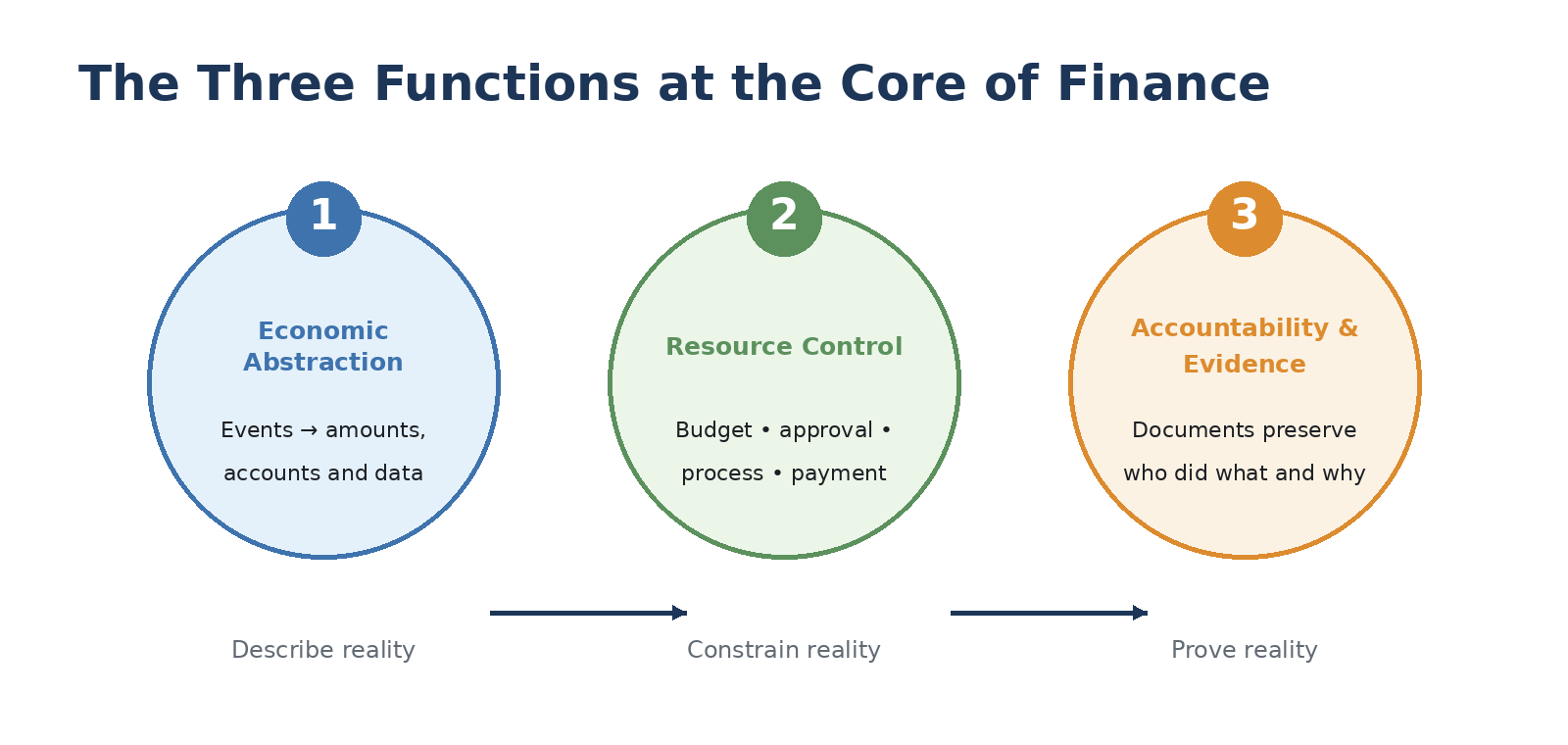
Figure 2 | Finance as abstraction, resource control, and institutional evidence.
Figure 2 | Finance as abstraction, resource control, and institutional evidence.
6. A Good Finance System Must Work in Both Directions
The first direction is forward: when a business event occurs, it should be captured accurately in the finance system. The amount, period, counterparty, project, classification, and economic effect should correspond to the underlying reality.
The second direction is backward: when a manager sees a financial number, that number should be traceable to the real events that created it. Suppose a statement shows 3.27 million yuan of other receivables. A useful system should allow the organization to identify the counterparties, years of origin, source documents, contracts, reasons for the balances, and recovery status.
If the system can show the total but cannot explain its composition, it has completed bookkeeping but not management. Traceability is therefore a defining quality of meaningful financial information.
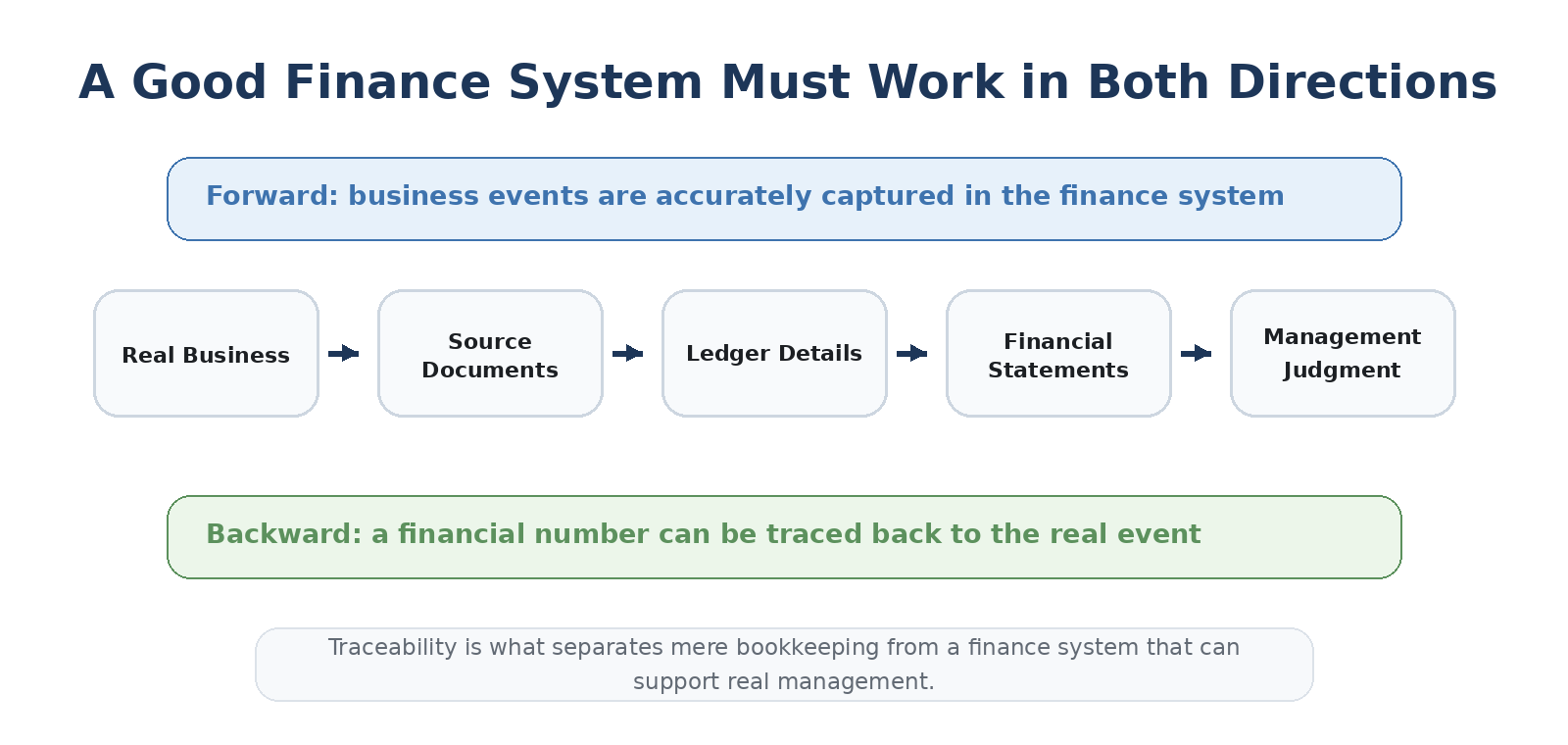
Figure 3 | Meaningful finance must support both forward capture and backward traceability.
Figure 3 | Meaningful finance must support both forward capture and backward traceability.
7. Why Strong Finance Requires Business Understanding
Accounts are a language; business reality is the object being described. A person can memorize accounting rules and still misunderstand the underlying transaction. The same invoice format can represent very different economic substance depending on the contract, purpose, delivery, and obligations involved.
That is why finance professionals must understand the business. They need to know what the organization was trying to achieve, how the transaction was structured, what was delivered, and what economic consequences remain. Only then can the accounting abstraction faithfully represent reality.
The reverse is also true. Operational managers should understand the financial consequences of their decisions. A project is not complete simply because the physical work is finished; it may create an asset, a future maintenance obligation, a payable, a receivable, or a continuing control responsibility.
8. From Ledger-Centered Finance to a Digital Economic Model
Traditional finance systems are organized around vouchers, accounts, and statements. Digital systems can go further by organizing information around business objects and relationships: projects, contracts, vendors, assets, budget allocations, approvals, employees, and payments.
In such a system, a payment is not an isolated amount. It is a node connected to the contract that authorized it, the budget that funded it, the supplier that received it, the project that generated it, the asset or expense it created, and the approvals that supported it.
This turns finance from a static historical record into a living economic model of the organization. Managers can move from a project to its contracts, from a contract to its payments, from a payment to its voucher, or from a financial statement figure back to the underlying events. Finance then moves beyond recording reality and begins to help the organization understand reality.
Conclusion
A more complete definition of organizational finance is therefore possible: finance is an information and control system that institutionally identifies real economic activity, measures it in monetary terms, expresses it in standardized structures, preserves it in traceable records, and governs resource use through budgets, authority, and procedures.
Its core functions are threefold. It abstracts reality into usable information. It constrains the use of organizational resources. And it preserves evidence so that past events can be reconstructed and responsibility can be understood.
That is why good finance never lives only in the ledger. One end is connected to real operations; the other is connected to management decisions. Between them, rules, data, and evidence transform countless daily events into an economic model that can be understood, supervised, and traced.
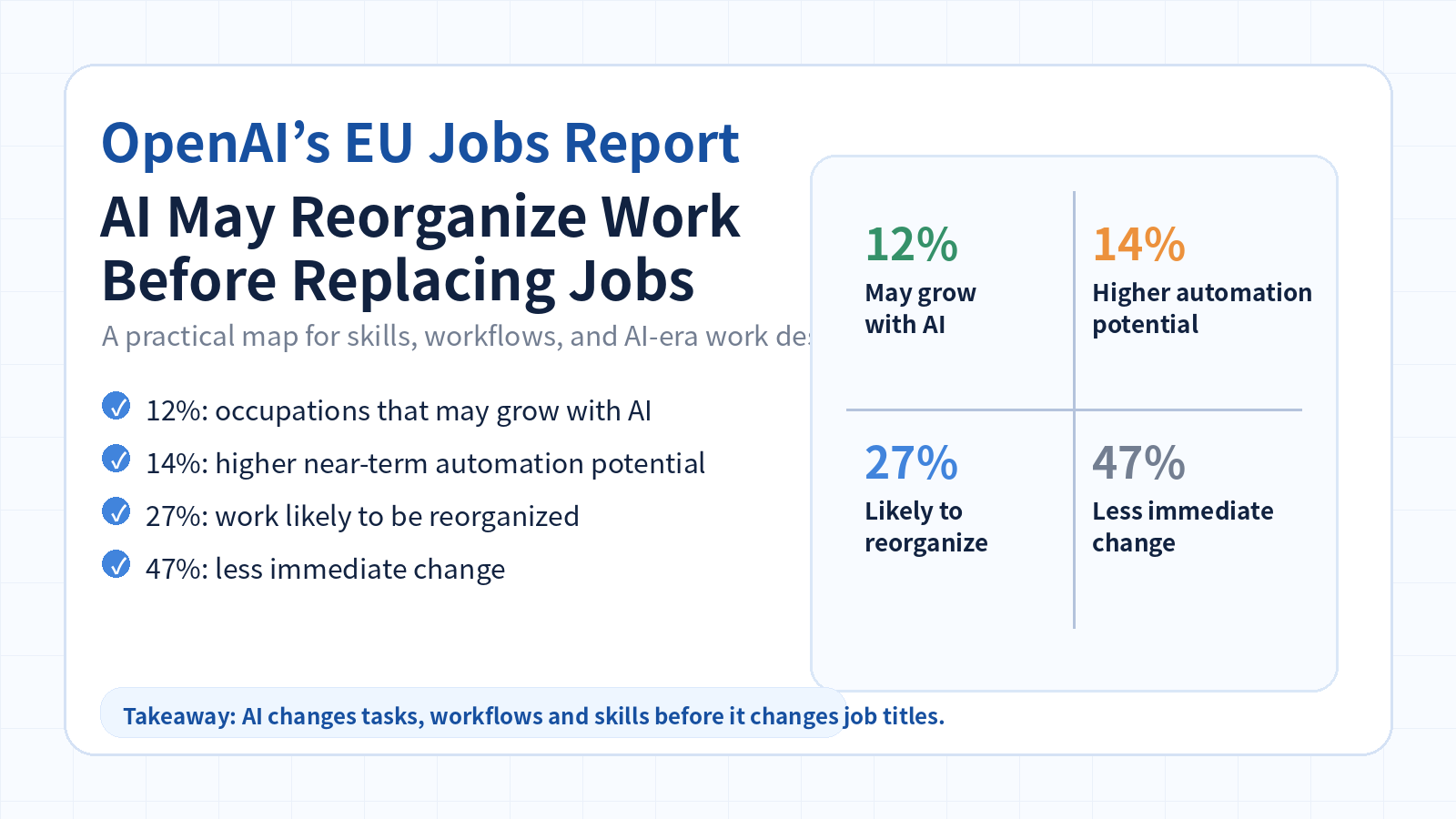
OpenAI's EU Jobs Report: AI May Reorganize Work Before Replacing Jobs
OpenAI maps 2,609 EU occupations across four AI transition archetypes. The largest near-term story may not be automation — it may be workflow reorganization.
AI Will Not Transform Work Unless Workers Are Trained to Use It
The AI jobs debate often focuses on replacement. The more immediate bottleneck may be skills, adoption, and whether workers can actually use the tools.

The Things We Truly Have to Do in Life Are Few
A reflection on unfinished projects, health, family, and learning to stop before life itself becomes an endless task list.