AI Will Not Transform Work Unless Workers Are Trained to Use It
The AI jobs debate often focuses on replacement. The more immediate bottleneck may be skills, adoption, and whether workers can actually use the tools.
The loudest AI work debate is about replacement: which jobs will disappear, which tasks will be automated, and who is most exposed. That debate is important, but it misses a more immediate bottleneck. AI cannot transform work if workers are not trained to use it well.
The OECD has argued that making AI work requires investment in skills. That point sounds obvious until you look at how many AI rollouts skip the boring middle: workflow redesign, training, evaluation, and time for workers to learn.
Buying an AI tool is easy. Turning it into productivity is not.
AI adoption is uneven
Pew Research Center has found that a growing share of U.S. workers use AI at work, but many still use it little or not at all. That gap matters because AI benefits may concentrate among workers and organizations that already have more resources, more digital confidence, and more flexible jobs.
If AI becomes a productivity amplifier, unequal access to AI skills can become a labor-market divider. Some workers will use AI to write, analyze, summarize, code, design, and plan faster. Others may be judged against AI-enhanced output without receiving the same training.
That is not a technology inevitability. It is an implementation choice.
The missing layer is task redesign
Many companies introduce AI as an add-on: here is a chatbot, here is a copilot, now be more productive. But work is not a pile of isolated prompts. It is a chain of tasks, incentives, approvals, and habits.
If a support team uses AI to draft replies, the company must decide how accuracy is checked. If analysts use AI to summarize documents, someone must define source standards. If managers use AI to review performance data, the organization must guard against hidden bias and lazy interpretation.
Training cannot be limited to “how to prompt.” Workers need to understand where AI fits into the task, what it is bad at, and how to keep responsibility human.
The strongest skill may be verification
The basic AI skill is not typing clever prompts. It is verification. Workers need to check outputs, compare sources, notice missing context, and know when the system is making a confident guess.
This is especially true in everyday knowledge work. AI can make a mediocre draft quickly. The value of a human worker shifts toward judgment: what matters, what is wrong, what should be removed, and what decision should follow.
The better AI gets, the more important human review becomes in high-stakes contexts.
My take
The AI jobs story should not be reduced to fear or hype. The practical question is whether institutions will help people adapt. That includes schools, employers, unions, governments, and the software makers themselves.
Workers do not need to become machine learning engineers. They do need AI fluency: enough understanding to use tools productively, challenge outputs, protect sensitive data, and explain their own work.
If that training does not happen, AI will still spread. It will just spread unevenly, with more frustration, more surveillance, and fewer shared gains.
Sources
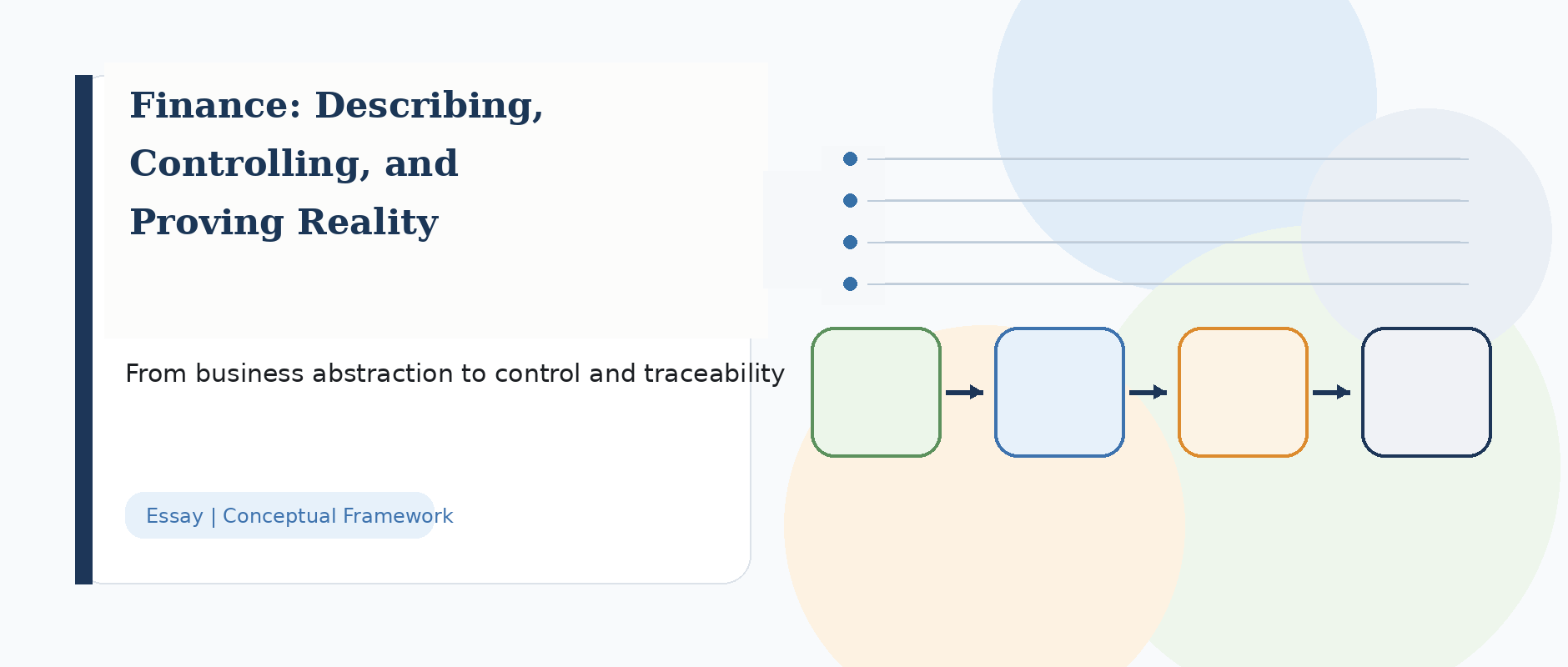
Finance: Describing, Controlling, and Proving Reality
Finance is not merely about handling money or keeping books. It abstracts real operations into economic information, governs resource use, and preserves traceable evidence of responsibility.
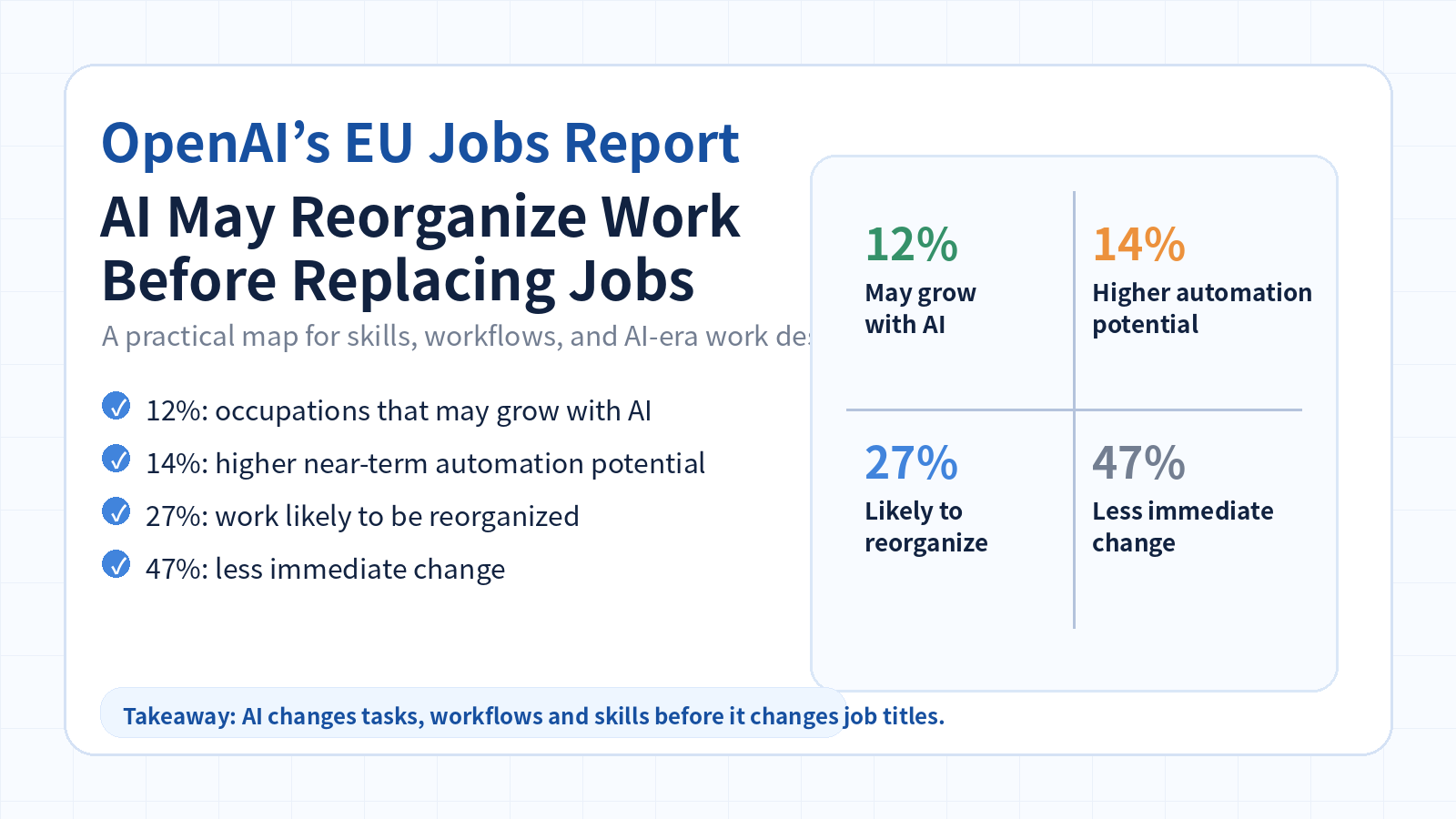
OpenAI's EU Jobs Report: AI May Reorganize Work Before Replacing Jobs
OpenAI maps 2,609 EU occupations across four AI transition archetypes. The largest near-term story may not be automation — it may be workflow reorganization.

Nietzsche’s Philosophy
What remains when inherited sources of truth, morality, and meaning lose their authority?