Apple''s Privacy Paradox on Google''s Servers
Apple is running its most powerful Siri AI models on Nvidia hardware inside Google Cloud. Here''s why their privacy architecture might actually work.
Apple’s long-delayed Siri upgrade—finally branded as “Siri AI”—runs on Google’s servers using Nvidia hardware. If you had told me this five years ago, I would have laughed. Apple, the company that built a multi-billion dollar business on the premise that it protects your data better than anyone else, is now renting compute from its biggest platform rival.
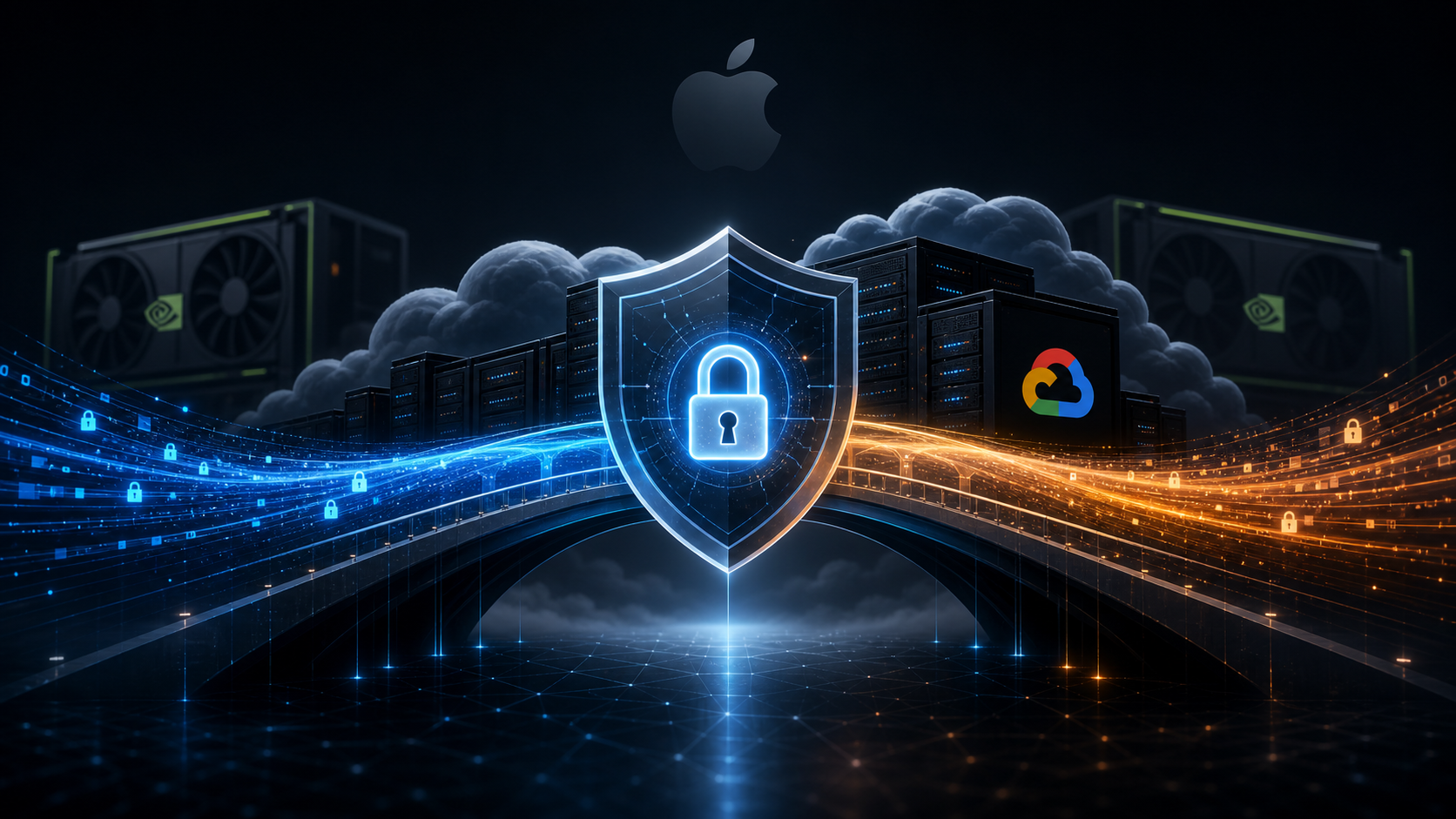
Except here is the twist: after digging through the technical details from WWDC, I think they might actually pull it off.
The Three-Tier Model
Apple’s AI architecture is surprisingly pragmatic. Instead of an all-or-nothing approach (everything on-device or everything in the cloud), they built a three-tier system:
Tier 1: On-device (AFM 3 Core / AFM 3 Core Advanced) — The simplest queries never leave your device. Any iPhone or Mac handles basic Siri requests, dictation, and the new expressive voice locally. Devices with 12GB+ RAM and recent chips (M3+ / A19 Pro) get “Core Advanced” which uses local storage for more capable on-device reasoning.
Tier 2: Apple’s own cloud (AFM 3 Cloud / ADM 3 Cloud) — For harder questions, your device contacts Apple’s Private Cloud Compute (PCC) servers running on Apple Silicon in Apple-controlled data centers. Your data is processed, the answer comes back, and everything is destroyed. No logs, no training data, no fingerprints.
Tier 3: Google’s Nvidia servers (AFM 3 Cloud Pro) — For “agentic tool use and complex reasoning”—the kind of multi-step tasks that need real LLM horsepower—Apple runs models on Google Cloud infrastructure powered by Nvidia GPUs.
How They Square the Circle
Craig Federighi made an interesting comment during the press Q&A. Standing in front of a blank slide, he said:
“This is the amount of the Google Assistant we use, which is none.”
The joke lands because the obvious fear is that Apple is just outsourcing AI to Google—that your Siri request is really going through Google’s pipes. Apple’s answer involves three specific technical mechanisms:
1. Confidential Computing Stack
Apple combines Nvidia’s Confidential Computing, Intel’s Trust Domain Extensions, and Google’s Titan security chip. This means the server hardware itself enforces isolation—Google’s own administrators cannot inspect the memory or state of the VMs running Apple’s models.
2. Verifiable Hardware Ledger
Apple maintains a cryptographically verifiable, append-only ledger of all Google Cloud hardware that is part of the PCC fleet. Your device checks this ledger before trusting a server. If a server is not on the list and is not running Apple-signed software, your device refuses to talk to it.
3. The System Orchestrator
An on-device component decides what data actually needs to leave your phone. If you ask “what was that recipe from last week’s Messages thread?”, the orchestrator can answer without sending the sender’s name, the time, or the context of the message. It minimizes what is sent in the first place.
Federighi described the data lifecycle bluntly:
“PCC itself, by design from the ground up, is going to vaporize any record of that data the moment after it answers your question. This is not stored. It is all in a form where it is completely transient.”
The Weak Point
Google Cloud servers do not yet support all the same protections as Apple’s own PCC fleet. Apple says they will “gradually ramp towards the complete set of protections throughout the summer preview period.” That requires trust.
What This Means for Indie Developers
Privacy is not binary. Apple’s pattern is replicable at a smaller scale:
- Minimize data sent — the Orchestrator principle: send the minimum viable payload
- Make data ephemeral by design — vaporization: if you don’t store it, it cannot leak
- Use hardware-level isolation, not just encryption — confidential computing is available to any cloud customer
- Publish a verifiable audit trail — the hardware ledger is just a public blockchain pattern
None of these technologies are Apple-exclusive. Nvidia Confidential Computing is available to any cloud customer. Intel TDX runs on standard server hardware.
The reason more companies do not build this way is not technical—it is that it takes engineering effort that does not ship features. Apple can afford to invest in privacy infrastructure because their business model does not depend on harvesting data. Most AI companies cannot say the same.
Bottom Line
I would not trust Google Cloud with my users’ data based on a policy document. But I might trust it based on hardware-level isolation plus cryptographic attestation plus ephemeral processing. That difference matters.
Apple’s approach is not perfect—the Google Cloud ramp-up period is a genuine risk, and the complexity of the system creates more surface area for bugs. But it is a meaningful step toward a world where powerful AI does not require surrendering privacy.
Siri AI and the new Apple Intelligence features launch as part of iOS 27, iPadOS 27, and macOS 27 Golden Gate this fall. Public beta drops in July.
Siri AI Privacy: Why Local Deployment Is the Endgame
Apple's Private Cloud Compute is a serious transition architecture, but the safer long-term direction for personal AI is local-first deployment.
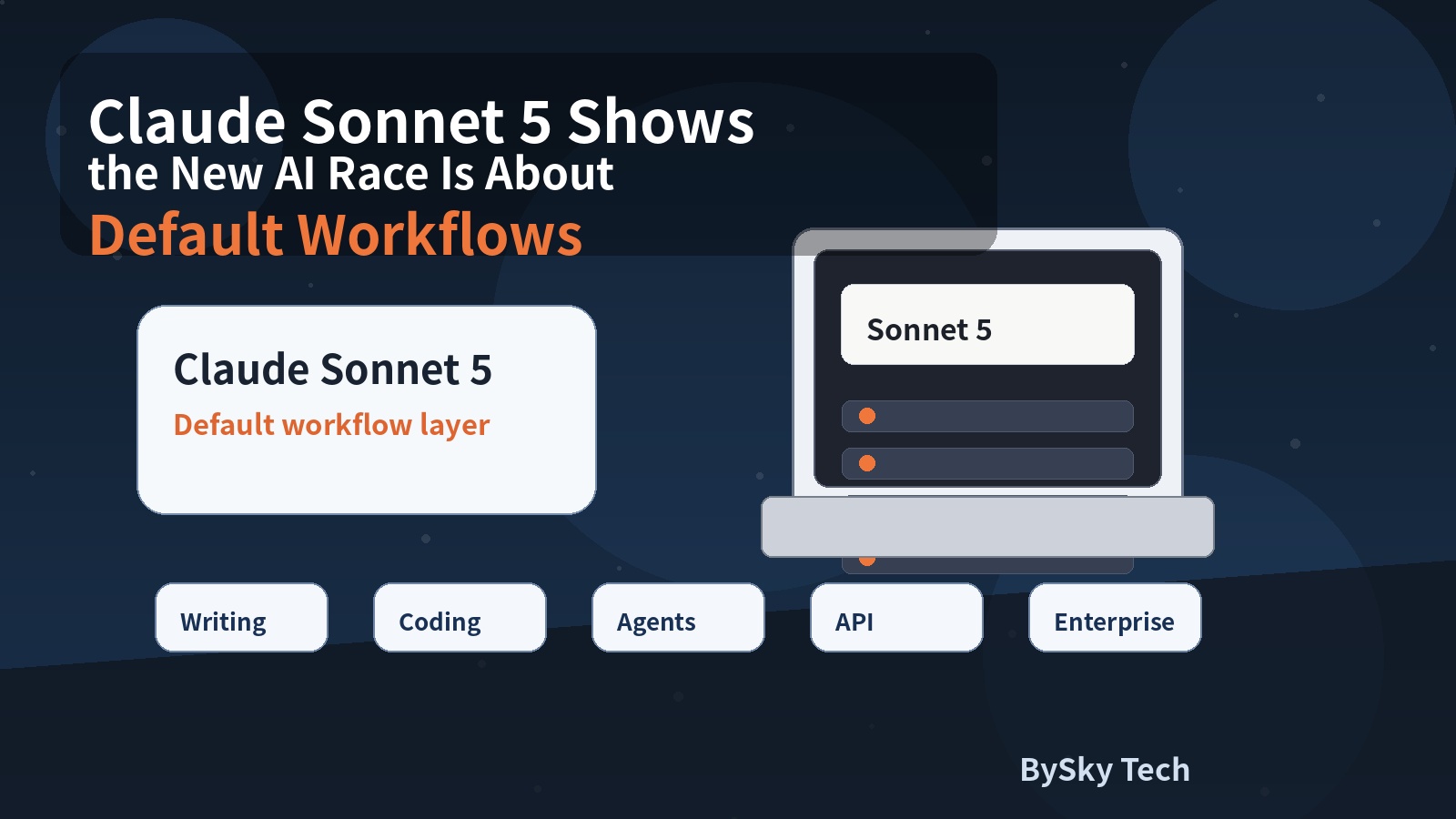
Claude Sonnet 5 Shows the New AI Race Is About Default Workflows
The next moat may be the place a model occupies in daily work, not only its benchmark score.
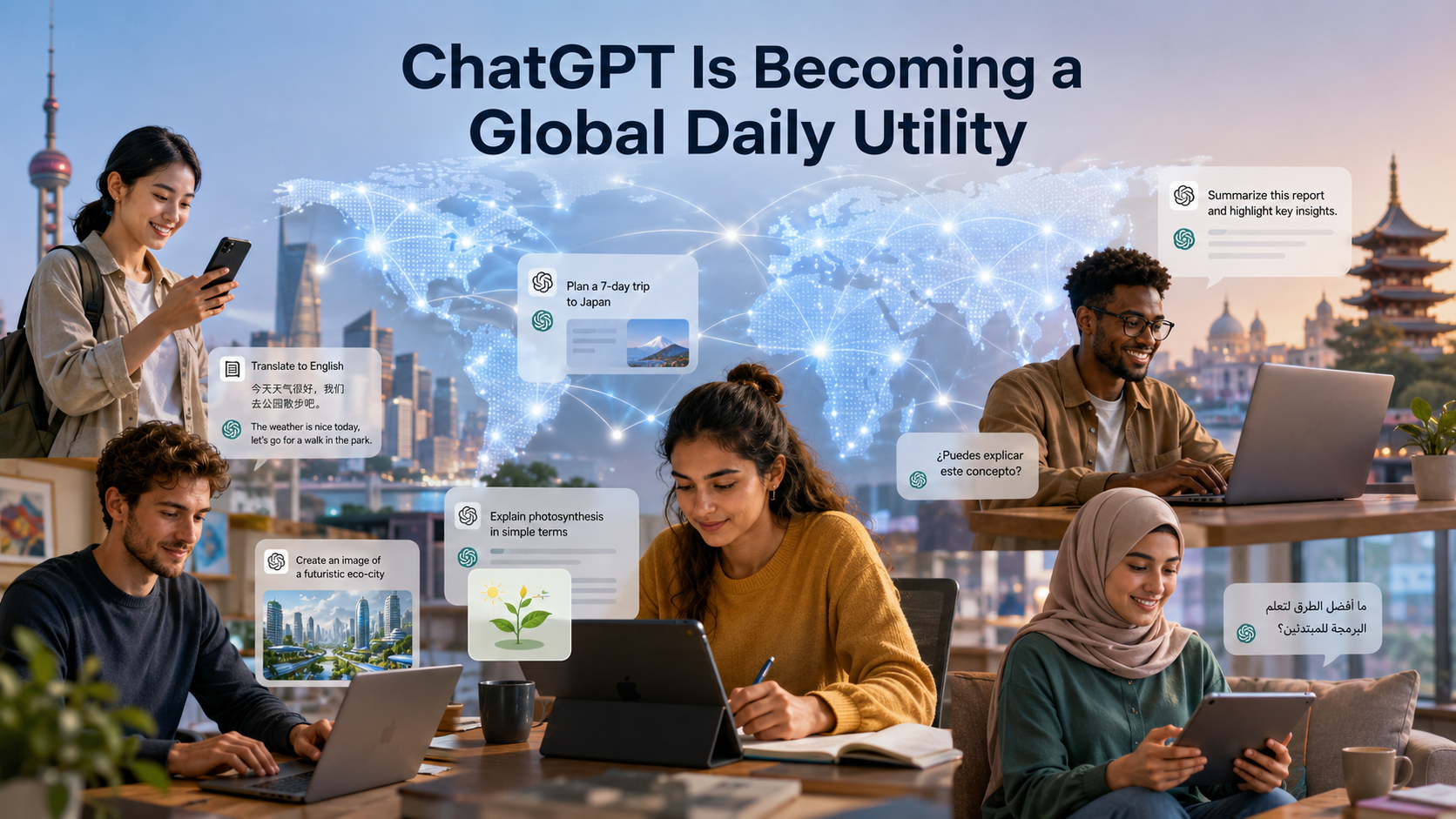
ChatGPT Adoption Shows AI Is Becoming a Daily Global Utility
OpenAI data reveals that users send 50% more messages after 6 months, non-English speakers now make up the majority of active users, and the number of distinct use cases per user has doubled — signaling ChatGPT is moving from a novel chatbot to a daily global utility.