AI Is Starting to Have Imagination: What Gemini Omni's World Model Actually Means
Google's Gemini Omni signals a shift from generating images to simulating worlds. What world models are, why they matter, and what they mean for ordinary people.
For the past year, AI video generation has felt like a straightforward improvement: clearer images, smoother motion, more cinematic shots. To most users, it looked like a better video tool — type a few sentences and get an animation, an ad clip, or a short video.
But framing it as “better video generation” misses what is actually shifting. The important change is that models are no longer just learning visual styles. They are also trying to understand objects, people, space, time, and causality. In other words, AI is moving from generating images to simulating worlds.
Google’s recent launch of Gemini Omni puts this shift front and center. Officially positioned as combining Gemini’s reasoning and creative capabilities, Omni accepts text, images, audio, and video inputs, then generates and edits video through natural language. The emphasis is not just on “generation” but on “understanding” and “continuous editing.”
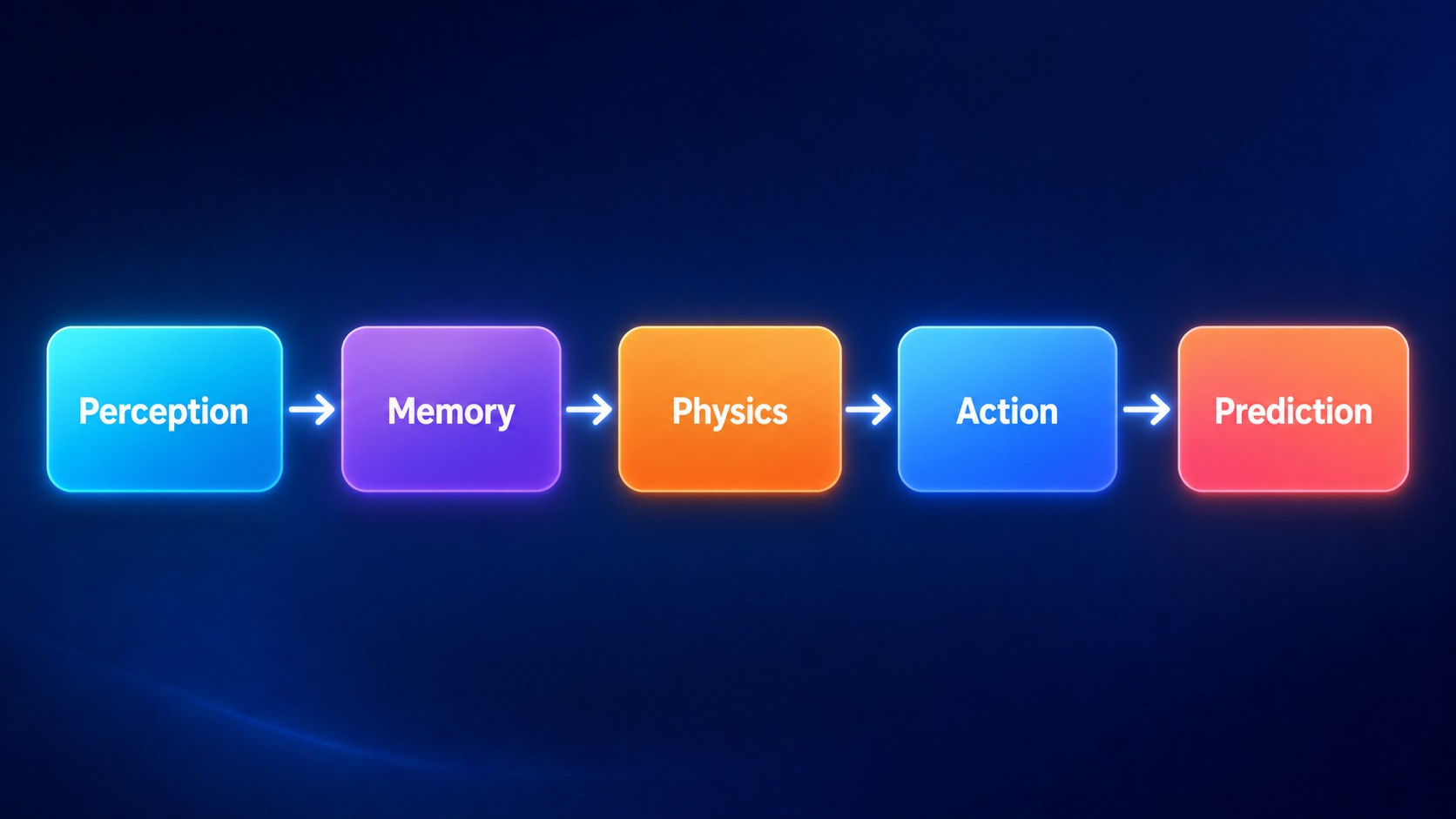
What is a world model?
“World model” sounds grandiose, but it can be understood in one sentence: it is a reality simulator inside the AI’s mind.
When humans see a cup near the edge of a table, we instinctively know it might fall. When we see someone turn around, we expect their clothes, shadow, and background to shift accordingly. When we see a car brake suddenly, we anticipate how the car behind and nearby pedestrians might react. We do not recalculate physics equations every time. We rely on an intuitive understanding of how the world works, built from years of experience.
A world model aims to give AI a similar capability: not just recognizing what is in a scene, but understanding how things relate to each other; not just predicting what the next frame looks like, but inferring what should logically happen next. This is why world models are deeply connected to robotics, autonomous driving, gaming, AR/VR, and video generation.
Why Omni belongs in this conversation
The key insight of Gemini Omni is not that it makes prettier videos. It is that it connects multimodal input, video generation, and conversational editing into a single pipeline. You give it an image, a video clip, an audio recording, or text, and the model fuses all that information into a coherent output that you can keep editing through natural language.
For example: give it a clip of someone walking through a room, then say “change the background to an underwater scene, but keep the person’s movements identical.” Then say “make the lighting look like sunset and pull the camera closer.” These edits seem simple, but they demand that the model maintain character consistency, scene continuity, physical plausibility, and instruction memory across frames.
If the model is only painting frames one by one, you get character faces changing, objects floating, lighting inconsistencies, and temporal incoherence. The stronger the world model, the better the AI can maintain a stable “scene state” over time and modify that state in response to human instructions.
Competition is shifting from image quality to understanding
Early video generation models competed on image quality, style, and duration: who was sharper, who looked more cinematic, who produced more appealing clips.
The next differentiator is likely understanding. Consider a prompt like “a glass being filled with water.” A basic model may only mimic the visual patterns in its training data. A stronger world model should understand that water flows, that the cup has a finite capacity, that gravity pulls liquid down, that overfilling causes spillage, and that the hand’s angle affects the pour.
Or take a selfie video with the instruction: “replace the background with a rainy night street, but keep the person’s movements, clothing reflections, and camera motion consistent.” The model must simultaneously handle spatial layout, lighting, material properties, body posture, and temporal coherence across frames. This is not a simple filter. It is a dynamic reconstruction of the scene.
What this means for ordinary people
First, the barrier to content creation will keep falling. Making a polished video used to require shooting, editing, voiceover, effects, color grading. Soon, an ordinary person may only need source footage and a few sentences to complete a full video production. For self-media creators, educators, product demonstrators, and short-video operators, this is a significant productivity shift.
Second, creative expression becomes freer. Many ideas were not impossible — they were just too expensive or technically demanding to execute. The stronger the world model, the easier it becomes to turn imagination into visuals: an old photo can extend into a memory short film, a street scene can become a cyberpunk city, an abstract concept can be turned into a dynamic story.
Third, AI will move from “helping you make content” to “helping you simulate outcomes.” World models will not only serve video creation. They will enter robot training, urban traffic simulation, autonomous driving testing, and industrial scenario modeling. Their value is not just generating a好看的画面, but helping us understand, inside a virtual environment, the consequences of different choices.
Risks and boundaries
Of course, stronger generation capabilities mean higher authenticity risks. As AI-generated video becomes more natural, it becomes harder for ordinary people to distinguish real from fake. Public video footage, news material, personal likenesses, and voice clones all face new trust challenges.
Watermarks, provenance markers, and content authentication will become increasingly important. In the future, when we watch a video, we may need to ask not just “is this real,” but also “where did it come from, what edits has it been through, and was it generated by AI?”
At the same time, we should not mythologize world models. Today’s AI is far from possessing a complete understanding of the real world. It still makes mistakes: physically implausible outputs, unstable details, confused causal relationships. More accurately, today’s world models represent a direction — AI is moving toward understanding the world, not already possessing a complete and accurate model of it.
Conclusion: AI’s next chapter is from language to world
For the past few years, the main line of AI progress has been language models: teaching machines to read and write text, to handle knowledge and logic tasks.
The next main line will likely be world models: teaching machines to understand space, time, motion, and causality.
Gemini Omni and models like it signal that AI video generation has moved beyond “drawing better pictures” or “editing more smoothly.” It is becoming a new form of reality simulation.
The future of AI is not only answering our questions. It may first generate a world inside its mind, on our behalf.
Sources
- Google Blog: Introducing Gemini Omni (2026-05-29)
- Google DeepMind: Gemini Omni model page
- Google DeepMind: Gemini Omni Flash Model Card (2026-05-19)
- Google DeepMind: Project Genie — Experimenting with infinite, interactive worlds (2026-01-29)
- Google DeepMind: Genie 2 — A large-scale foundation world model (2024-12-04)
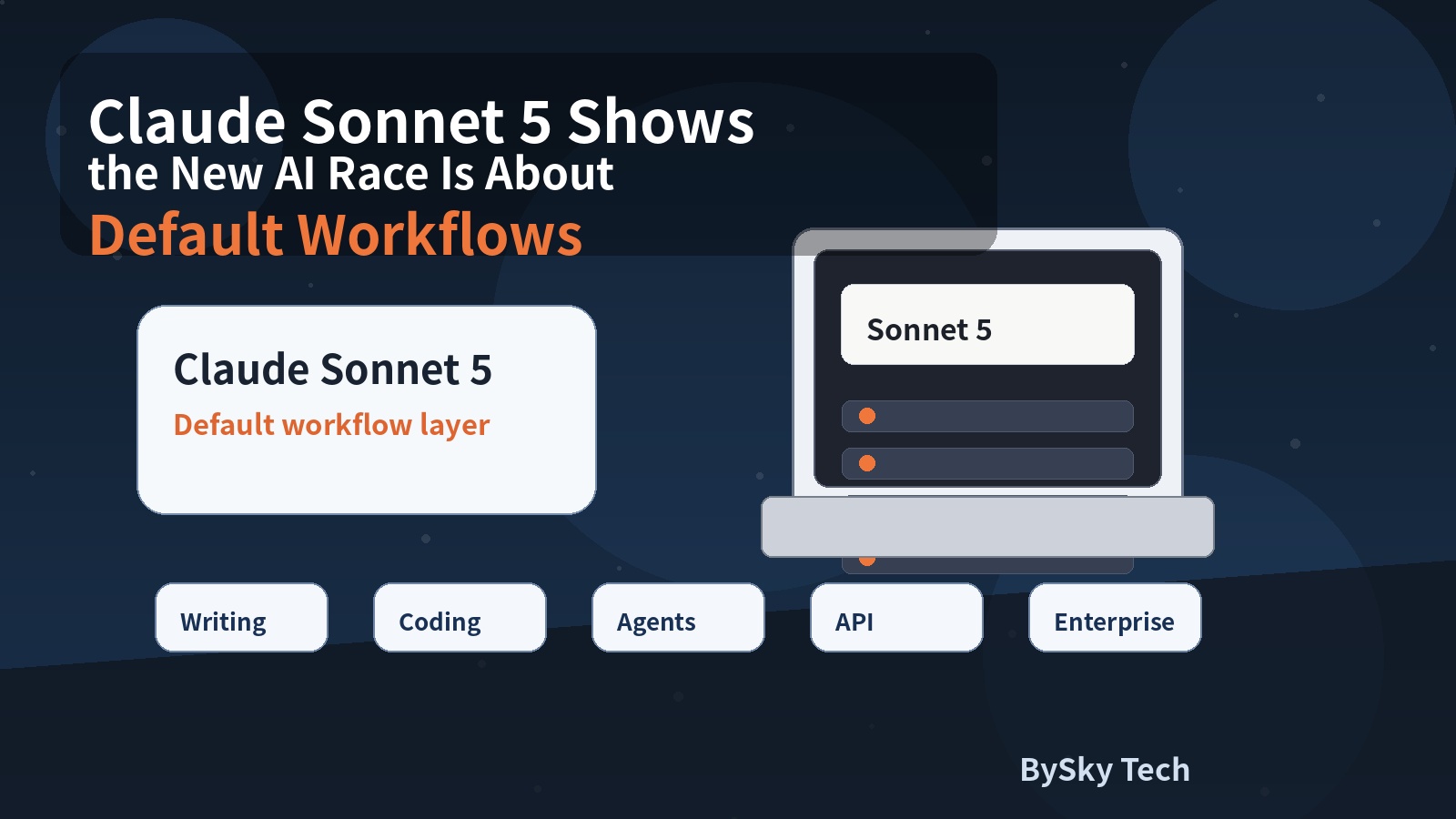
Claude Sonnet 5 Shows the New AI Race Is About Default Workflows
The next moat may be the place a model occupies in daily work, not only its benchmark score.
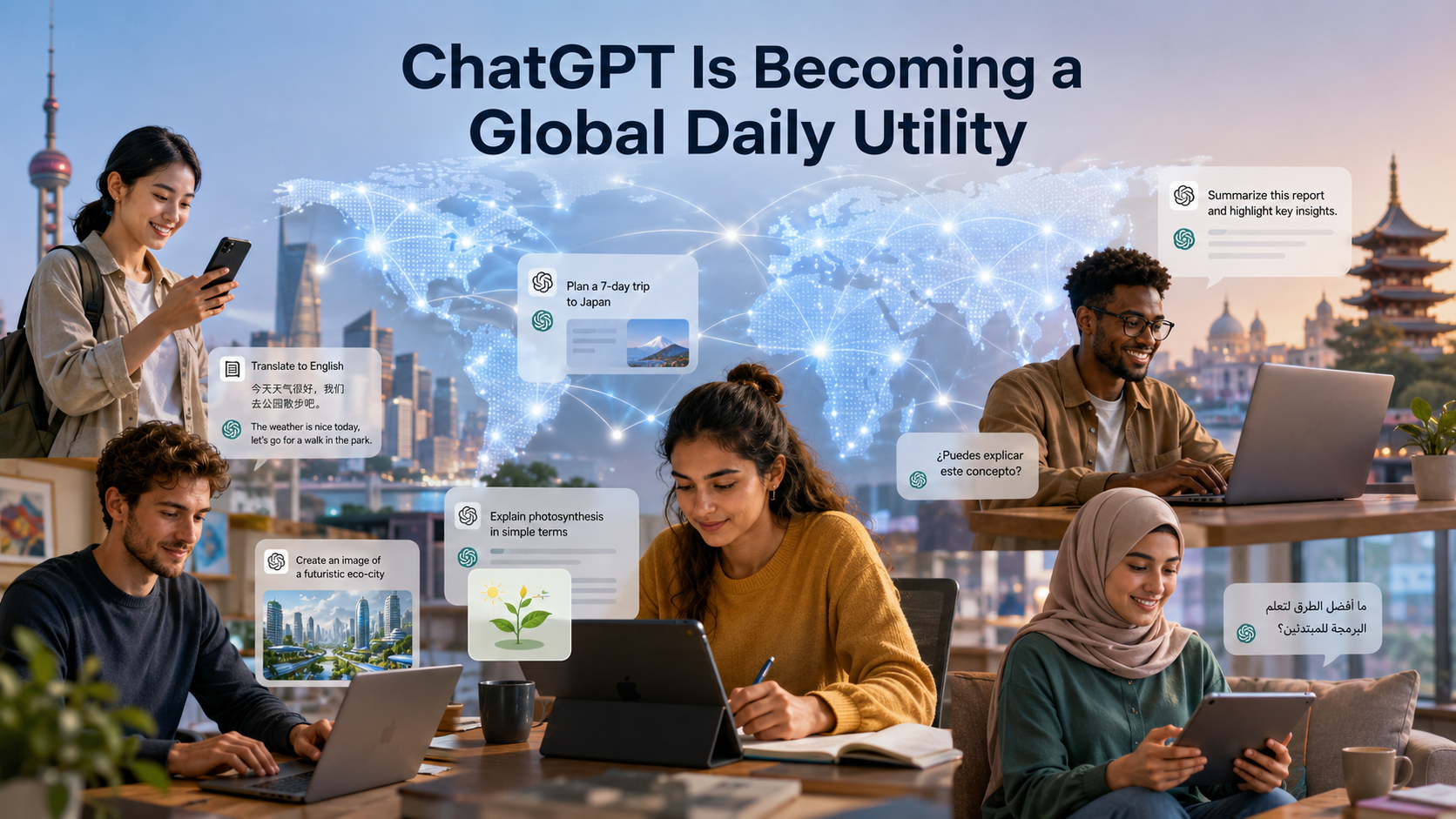
ChatGPT Adoption Shows AI Is Becoming a Daily Global Utility
OpenAI data reveals that users send 50% more messages after 6 months, non-English speakers now make up the majority of active users, and the number of distinct use cases per user has doubled — signaling ChatGPT is moving from a novel chatbot to a daily global utility.
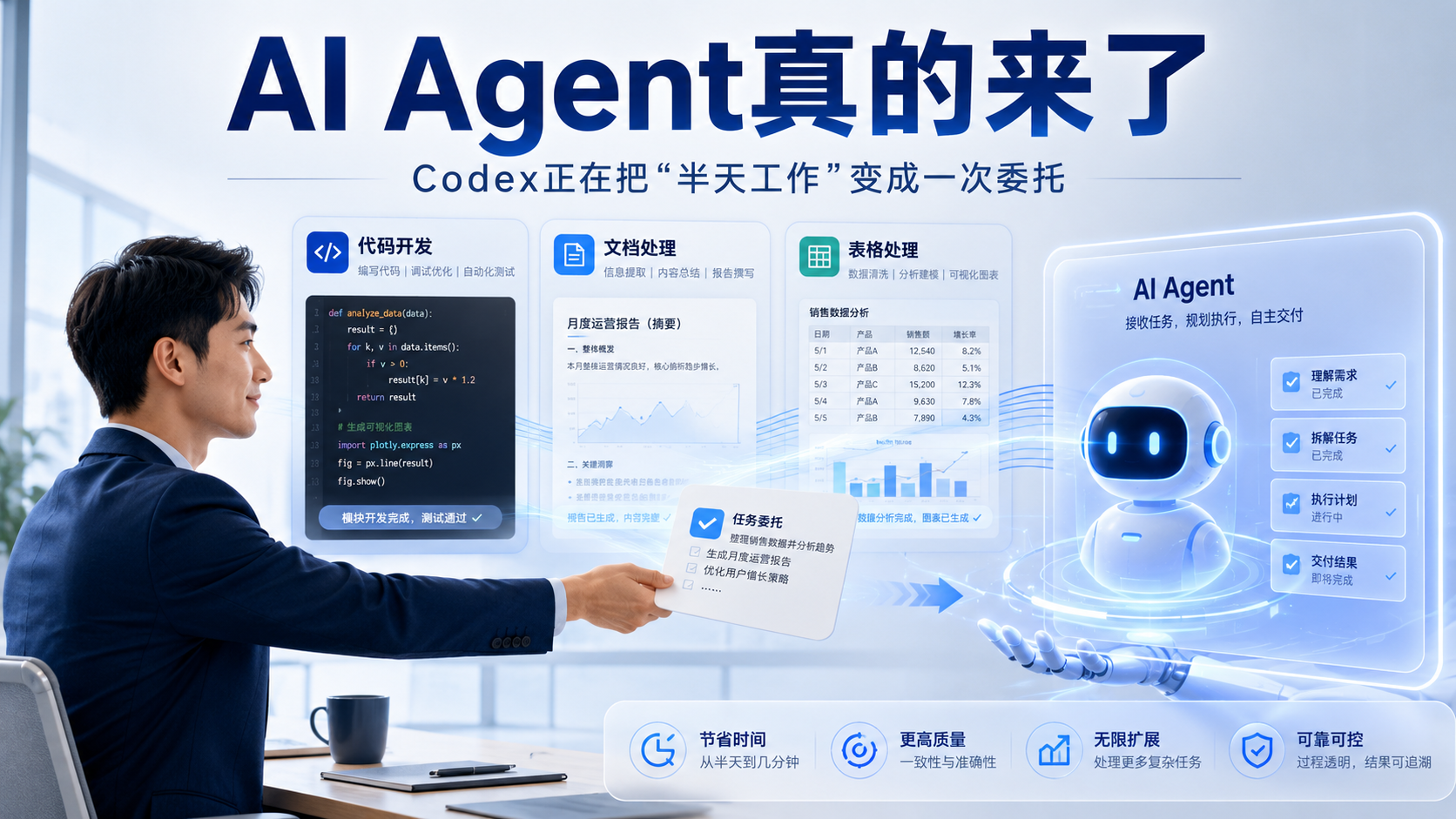
AI Agents Are Moving From Chat to Delegated Work
OpenAI research shows 80.6% of Codex users have delegated tasks exceeding 30 minutes of human work. The age of AI-as-chatbot is giving way to AI-as-delegated-worker, and the implications extend far beyond software engineering.