AI Is Everywhere. Trust Has Not Caught Up.
Public attitudes toward AI remain cautious even as usage grows. The gap between adoption and trust may define the next phase of AI.
AI has moved into daily life faster than public trust has grown. People use AI in search, writing, school, work, health information, entertainment, customer service, and news discovery. But use is not the same as confidence.
Pew Research Center’s 2026 summary of American views on AI shows a public that is aware, curious, and cautious. Many people interact with AI regularly, but concern remains high. Americans see promise in some areas, such as medical care and data analysis, while remaining worried about creativity, relationships, jobs, education, and misinformation.
This gap between adoption and trust may define the next stage of AI.
Convenience can outrun confidence
People often adopt technology before they trust it. Search engines, smartphones, online payments, and social media all followed that pattern. AI may be even more complicated because it does not merely connect people to information. It produces answers, summaries, recommendations, images, code, and decisions.
That makes uncertainty feel personal. If an AI gives a wrong answer about a recipe, the cost is small. If it gives wrong health, legal, financial, or educational guidance, the stakes rise quickly.
The more AI enters everyday decisions, the more people will ask not “Can it answer?” but “Can I rely on it?”
Experts and the public see different futures
Pew has also reported a gap between AI experts and the general public. Experts tend to be more optimistic about AI’s long-term impact, while the public is more cautious. That difference is not simply ignorance. It reflects different exposure to benefits and risks.
Experts see capabilities, research progress, and technical road maps. Ordinary users see confusing interfaces, hallucinations, deepfakes, job anxiety, school disruption, and companies asking for trust before earning it.
Both perspectives matter. Optimism without public legitimacy becomes fragile. Fear without understanding can become reactionary. The healthier path is grounded trust: confidence built through transparency, control, and demonstrated reliability.
Control is the trust primitive
Trust in AI will not come only from better benchmarks. It will come from user control.
People need to know:
- when AI is being used,
- what data it sees,
- whether outputs can be challenged,
- how errors are corrected,
- and whether a human can take over.
This is especially important for AI embedded invisibly into products. A chatbot is obvious. An AI ranking system, hiring filter, insurance workflow, school tool, or moderation system may not be.
Invisible AI creates invisible power. Trust requires making some of that power visible.
My take
The companies that win the next phase of AI may be the ones that treat trust as a feature, not a PR problem. That means fewer exaggerated demos, clearer limits, better citations, safer defaults, and honest explanations when AI should not be used.
AI does not need to be perfect to be useful. But it does need to be accountable enough for people to understand where it belongs in their lives.
Adoption is already happening. Trust still has to be built.
Sources
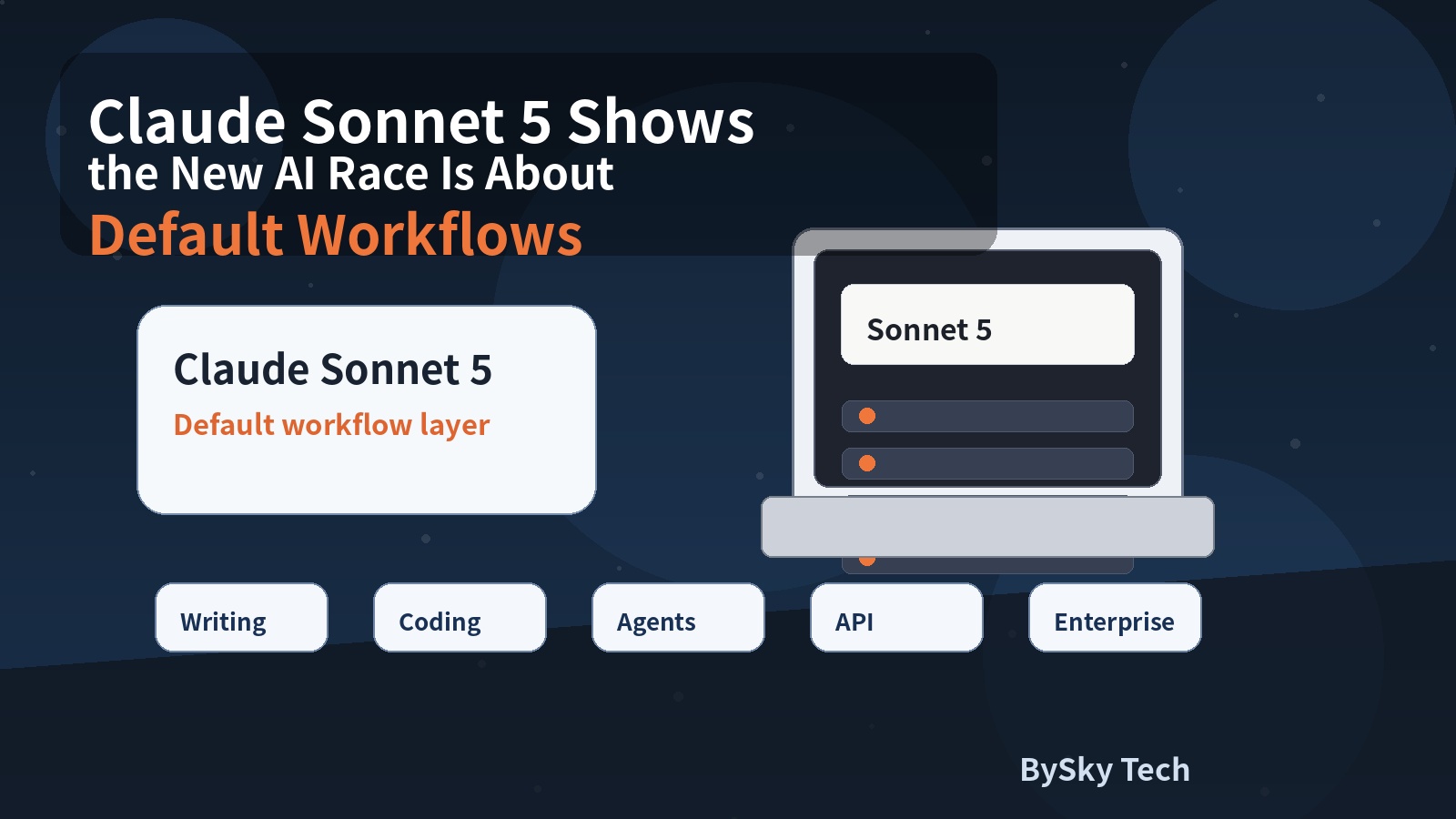
Claude Sonnet 5 Shows the New AI Race Is About Default Workflows
The next moat may be the place a model occupies in daily work, not only its benchmark score.

ChatGPT Adoption Shows AI Is Becoming a Daily Global Utility
OpenAI data reveals that users send 50% more messages after 6 months, non-English speakers now make up the majority of active users, and the number of distinct use cases per user has doubled — signaling ChatGPT is moving from a novel chatbot to a daily global utility.

AI Agents Are Moving From Chat to Delegated Work
OpenAI research shows 80.6% of Codex users have delegated tasks exceeding 30 minutes of human work. The age of AI-as-chatbot is giving way to AI-as-delegated-worker, and the implications extend far beyond software engineering.